Cybele and Juno Return to Stowe: South Front Portico Restored After 178 Years
Six Years In The Making
Stowe House Preservation Trust has completed the long-awaited reinstatement of the South Front portico statues, returning newly created copies of the seated figures of Cybele and Juno to their original niches for the first time since they were sold at the historic 1848 Stowe Sale.
The Project
Installed during December and January, the statues mark a significant milestone in the Trust’s decades-long mission to restore Stowe House to its former architectural and symbolic splendour. Only the final limewash coat now awaits application in spring, when conditions are suitable.
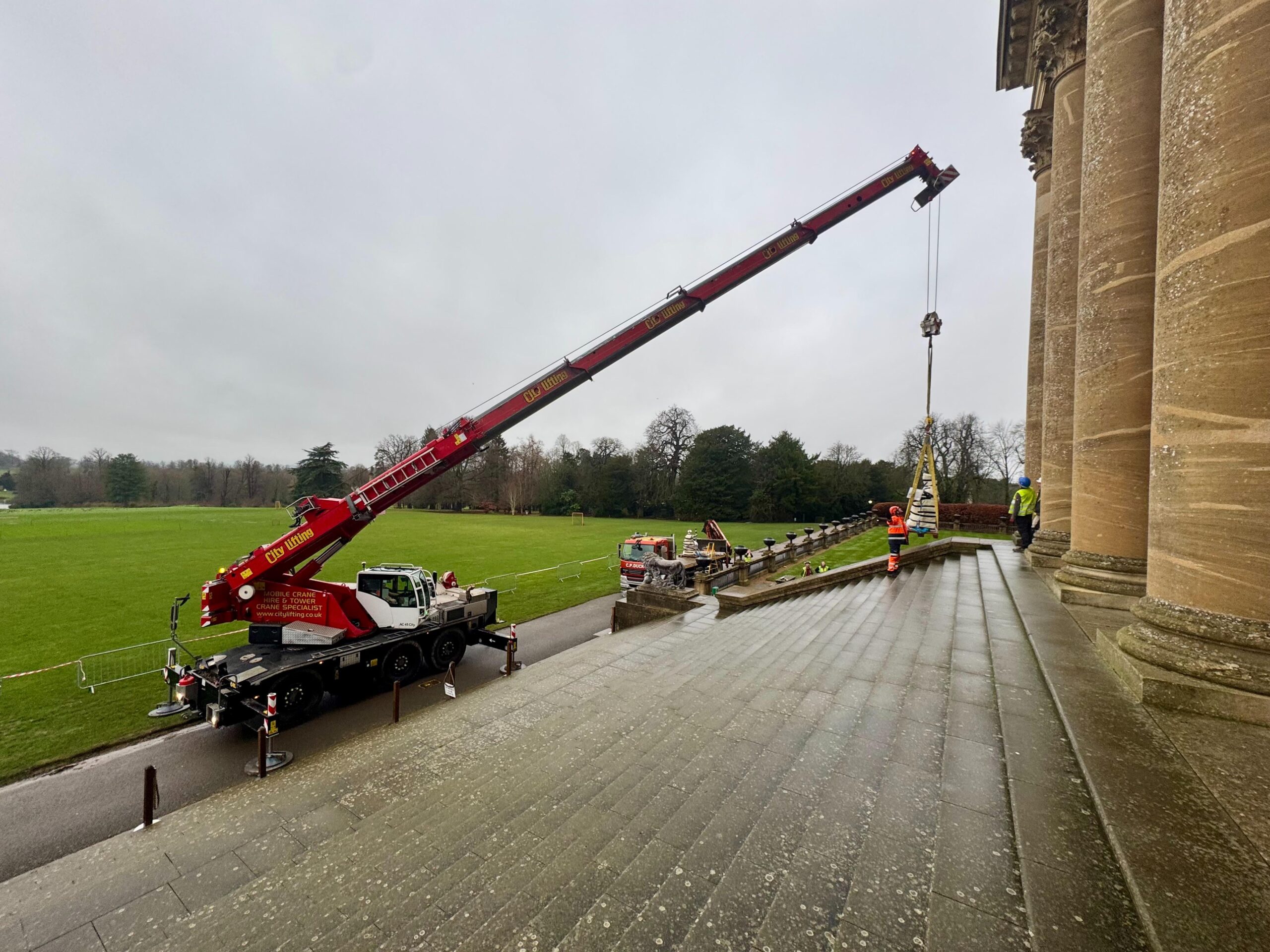
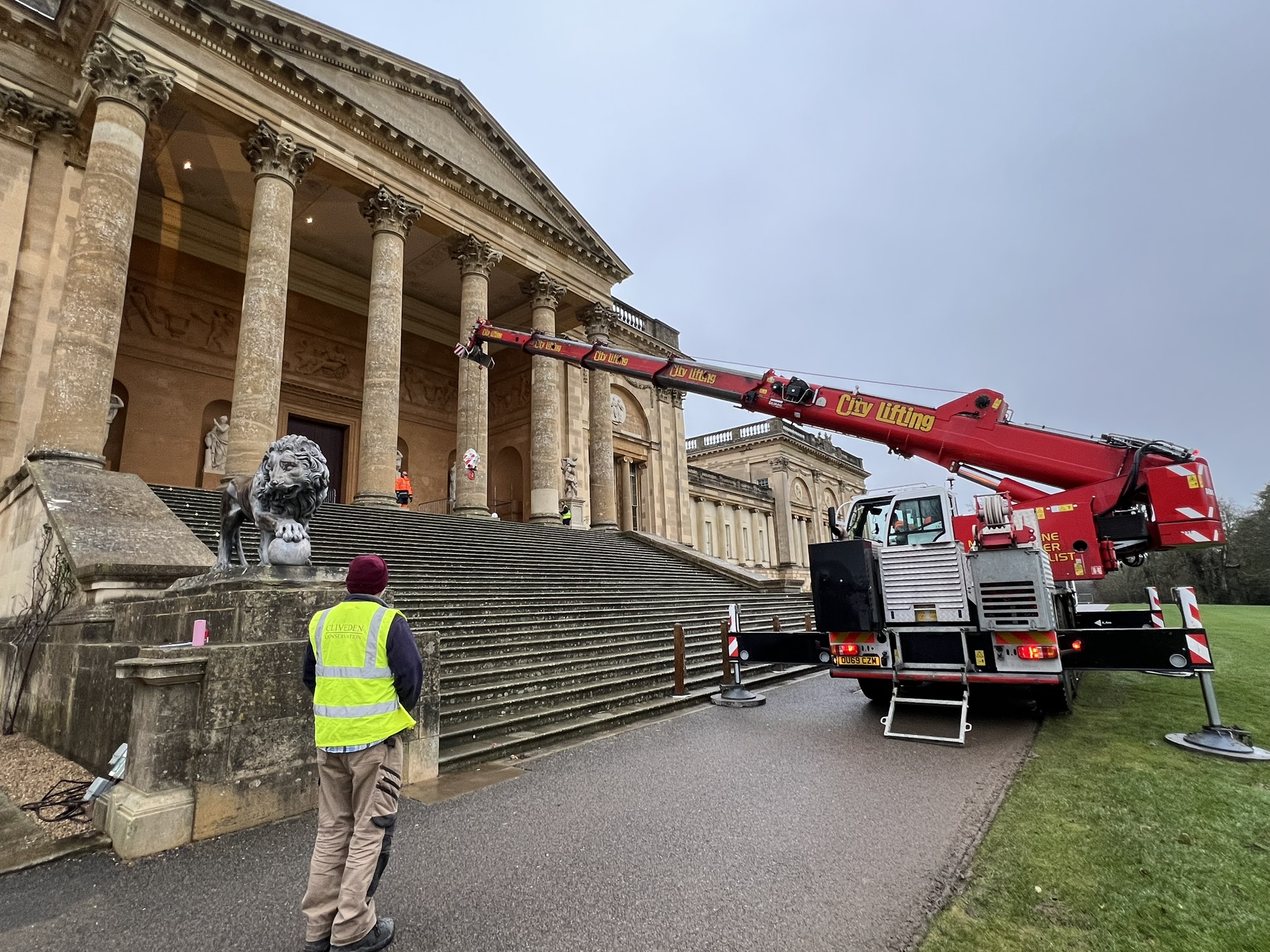
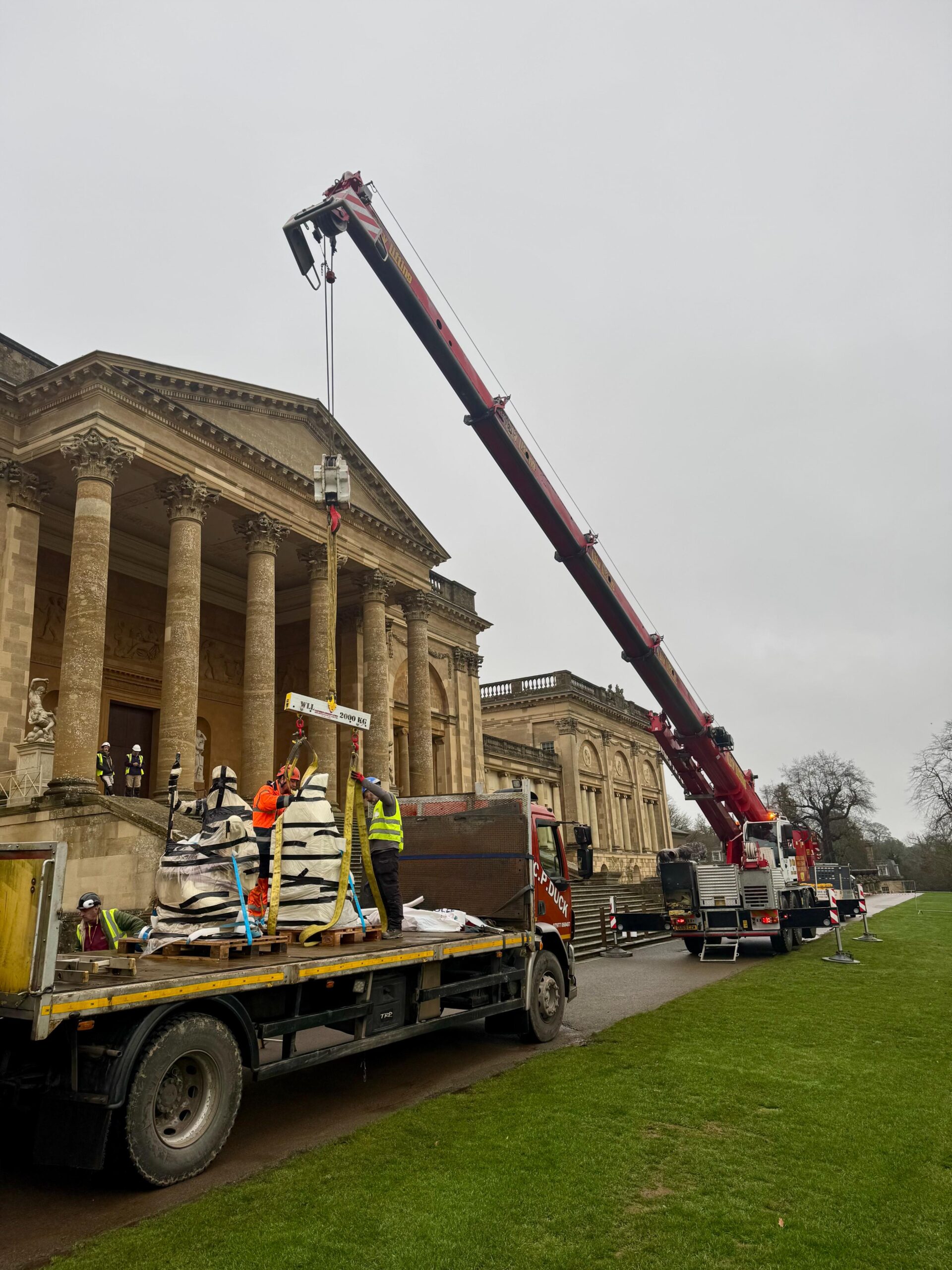
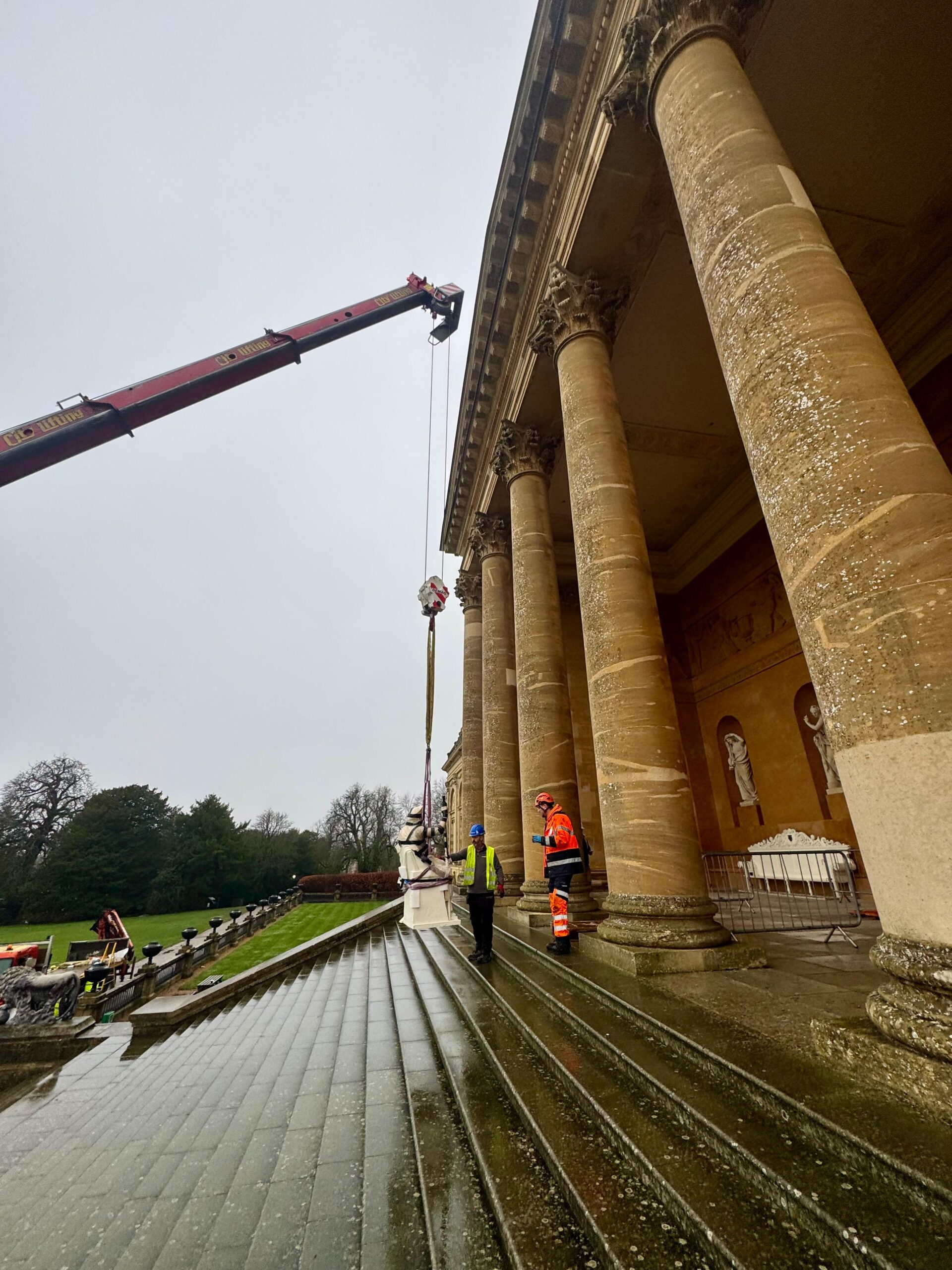
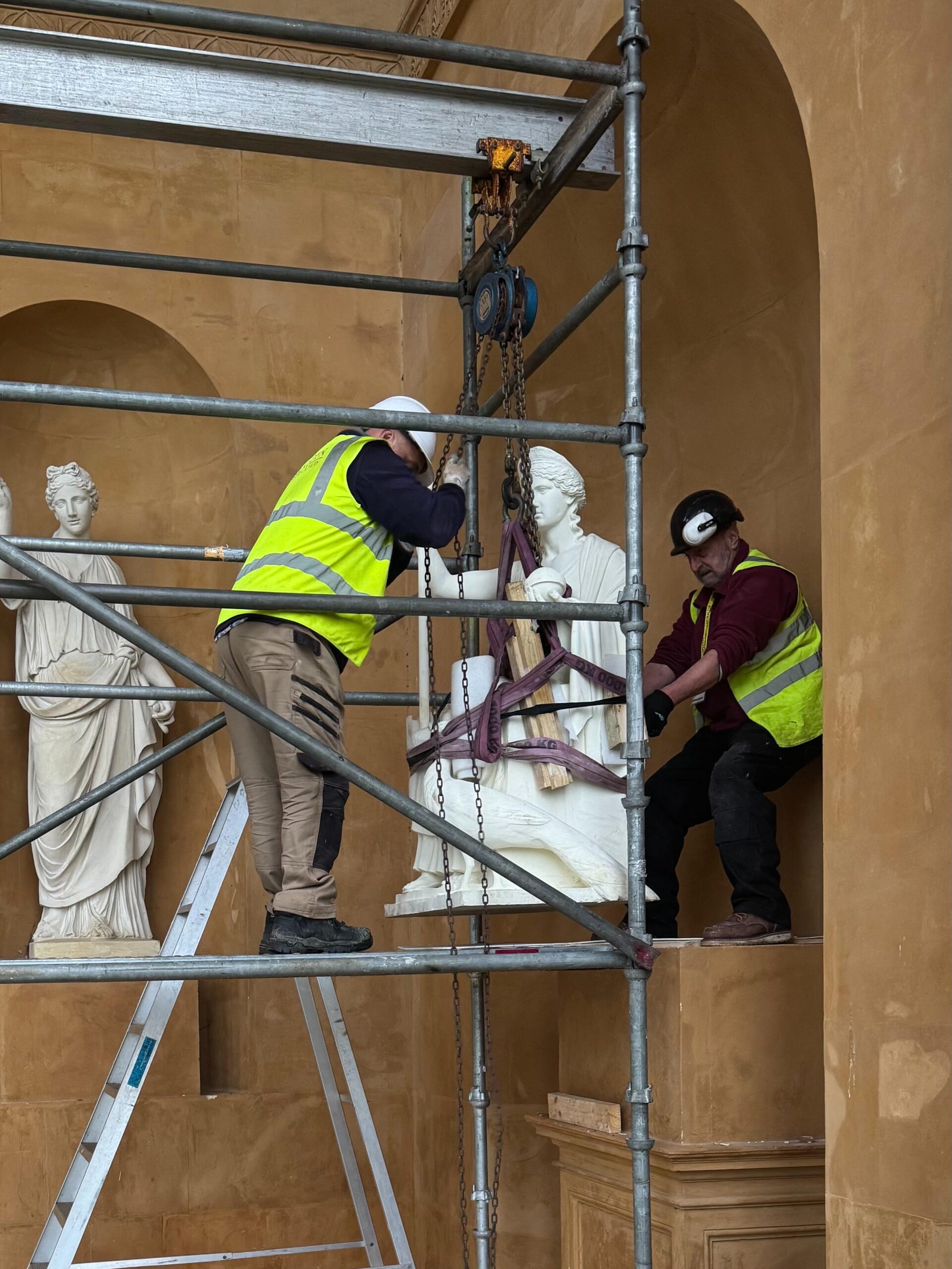
Each statue, weighing approximately 700kg, was lifted into position using a specialist crane, one of only two of its type in the UK. The pieces were then carefully hoisted onto a scaffold tower and slid into their historic niches on the South Front.
Recreating Two Lost Masterpieces
The original Cybele, a Roman sculpture dating from around AD 50, is now housed at the Getty Museum in Los Angeles. The whereabouts of Juno remain unknown. Their purchase by Mr Robertson of Fleet Street and Lady Glamis of the Bowes-Lyon family at the 1848 Stowe Sale left two prominent empty niches overlooking the south garden vista.
Reinstating the statues required years of research, technical innovation and careful decision-making. In 2019, the Getty Museum generously undertook a 3D scan of Cybele and shared the digital model with Stowe House Preservation Trust. This scan became the foundation for the reconstruction of Cybele and, ultimately, the reimagining of Juno.
Because seated Roman statues of female figures are extremely rare, and surviving depictions of Juno often recline too deeply for Stowe’s shallow niches, the team recognised that a direct copy was not possible. To develop a historically informed solution, the Trust commissioned Cliveden Conservation, who enlisted sculptor Sam Steel to design new statues using a research-led, hybrid approach.
Using a scaled 3D print of Cybele – known as a maquette (a small working model) – Sam created a full-size clay reconstruction, reintroducing lost details such as the nose, left hand and tympanum (hand-drum). Where required, he drew on archaeological comparanda, meaning comparable surviving examples used to inform missing or damaged areas.
Meet Cybele and Juno In Progress
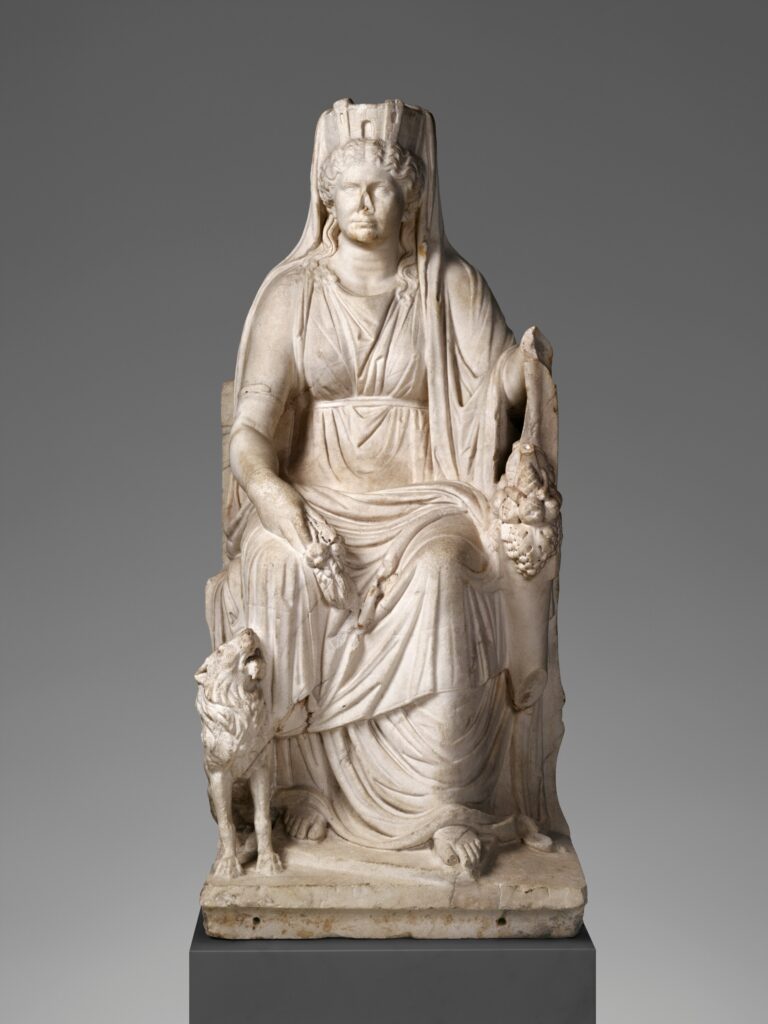
Stowe's original 'Statue of a Seated Cybele with the Portrait Head of her as a Priestess, about A.D. 50' now at the Getty USA ©Getty
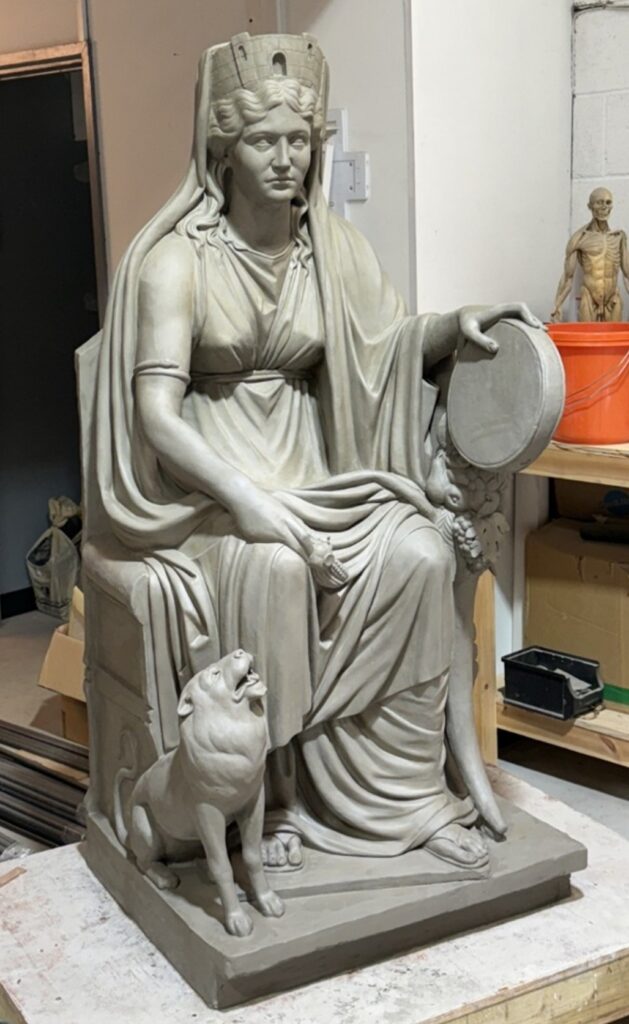
Cybele in clay, September 2025 ©Steelworks Sculpture Ltd
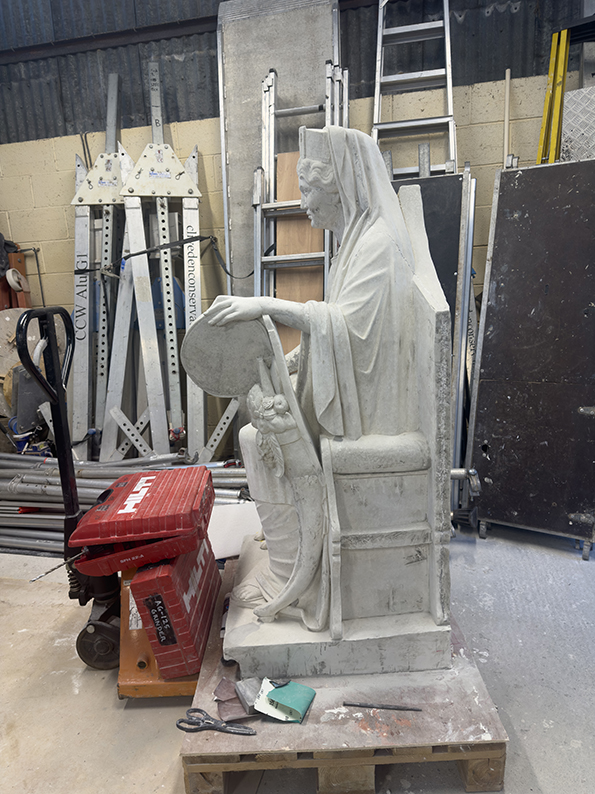
The statue of Cybele after being cast at Cliveden Conservation workshop ©Cliveden Conservation
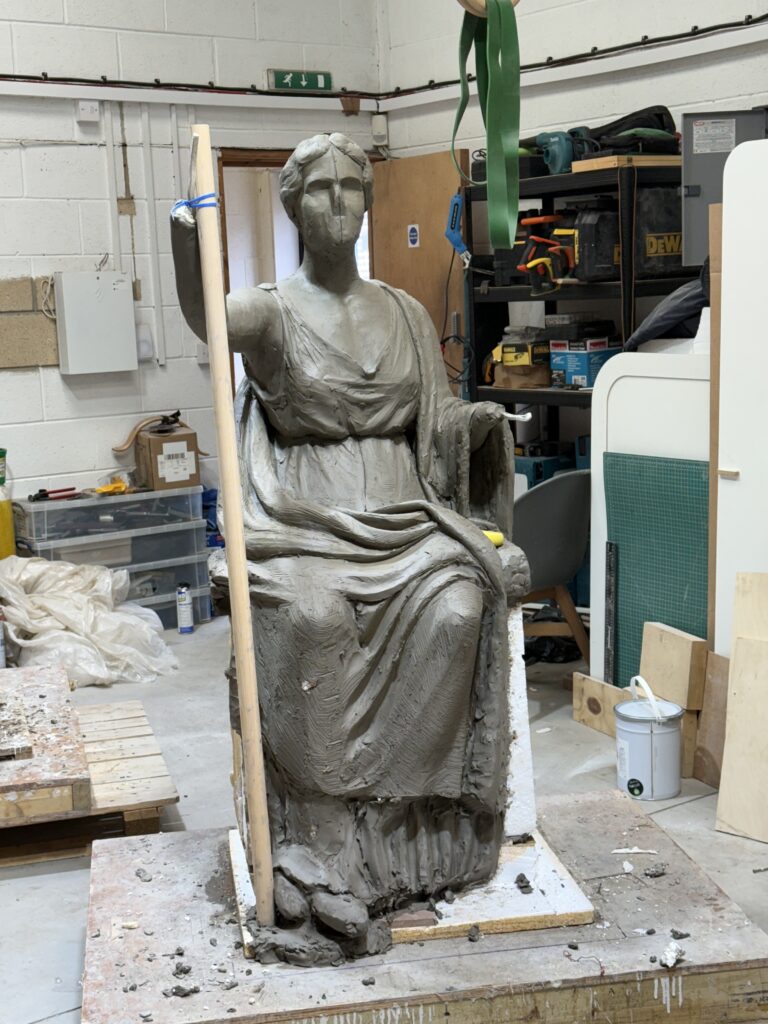
Juno moulded in clay, in progress ©Steelworks Sculpture Ltd
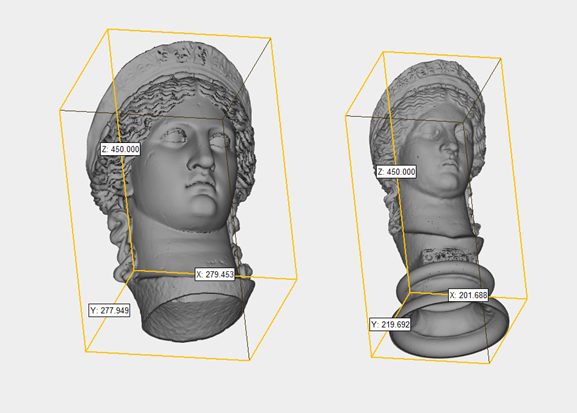
Scan of Juno ©Cliveden Conservation
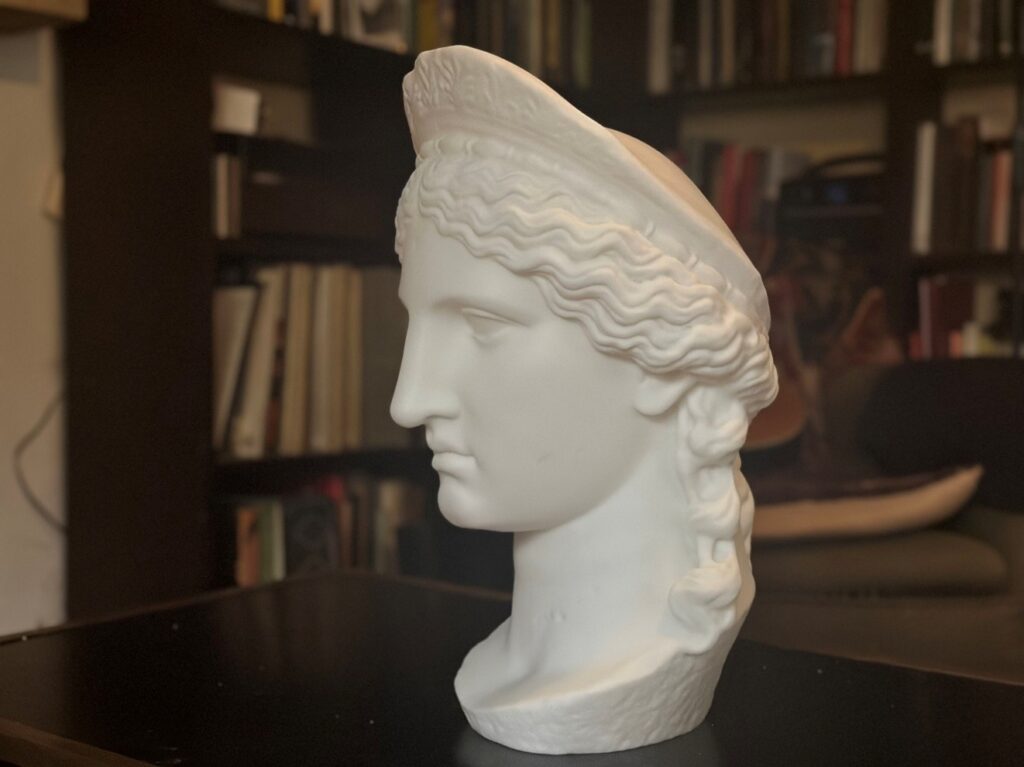
3D printed version of Juno ©Cliveden Conservation
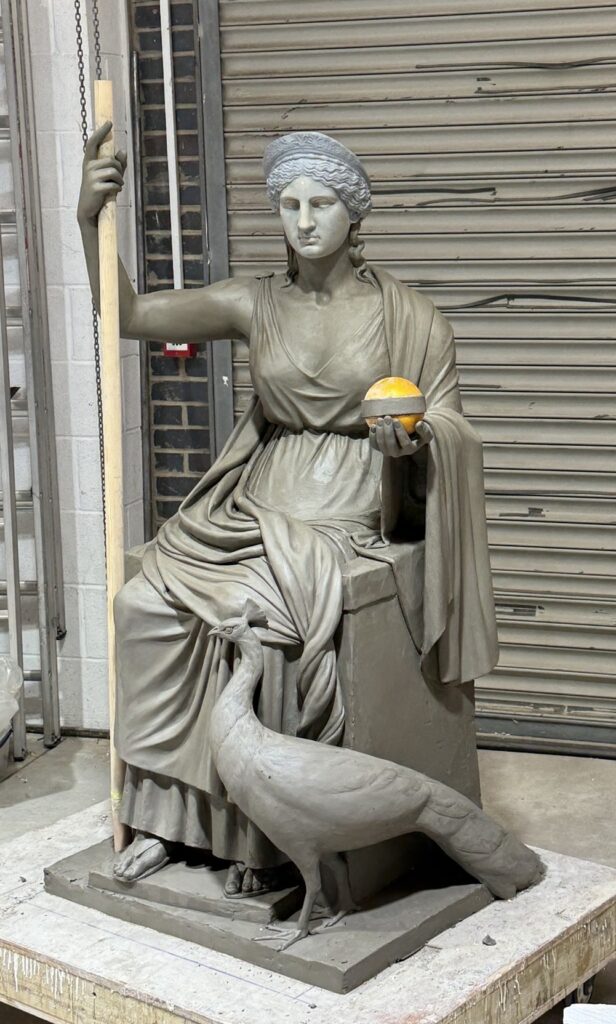
Juno complete clay with a 3D printed head ready to be moudled, September 2025 ©Steelworks Sculpture Ltd
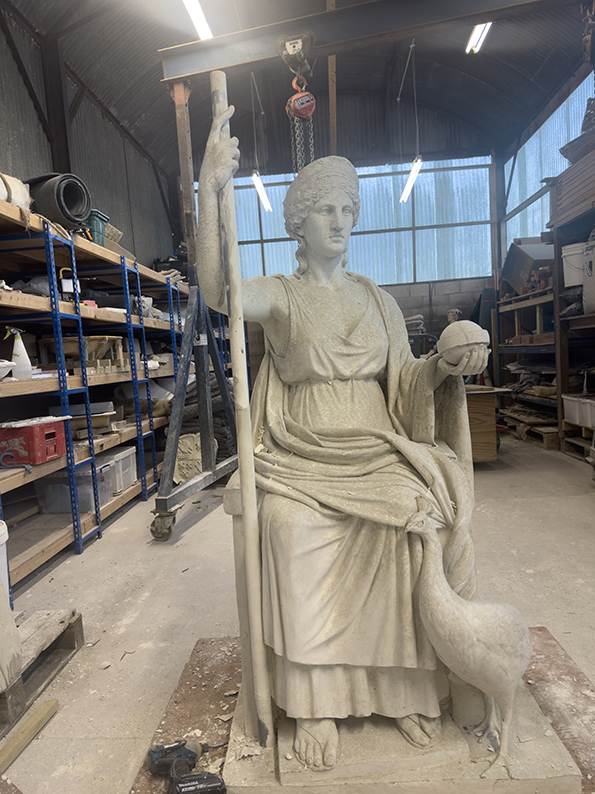
Juno after being cast after cast and fettled at the Cliveden Conservation workshop before its undercoat of keim ©Cliveden Conservation
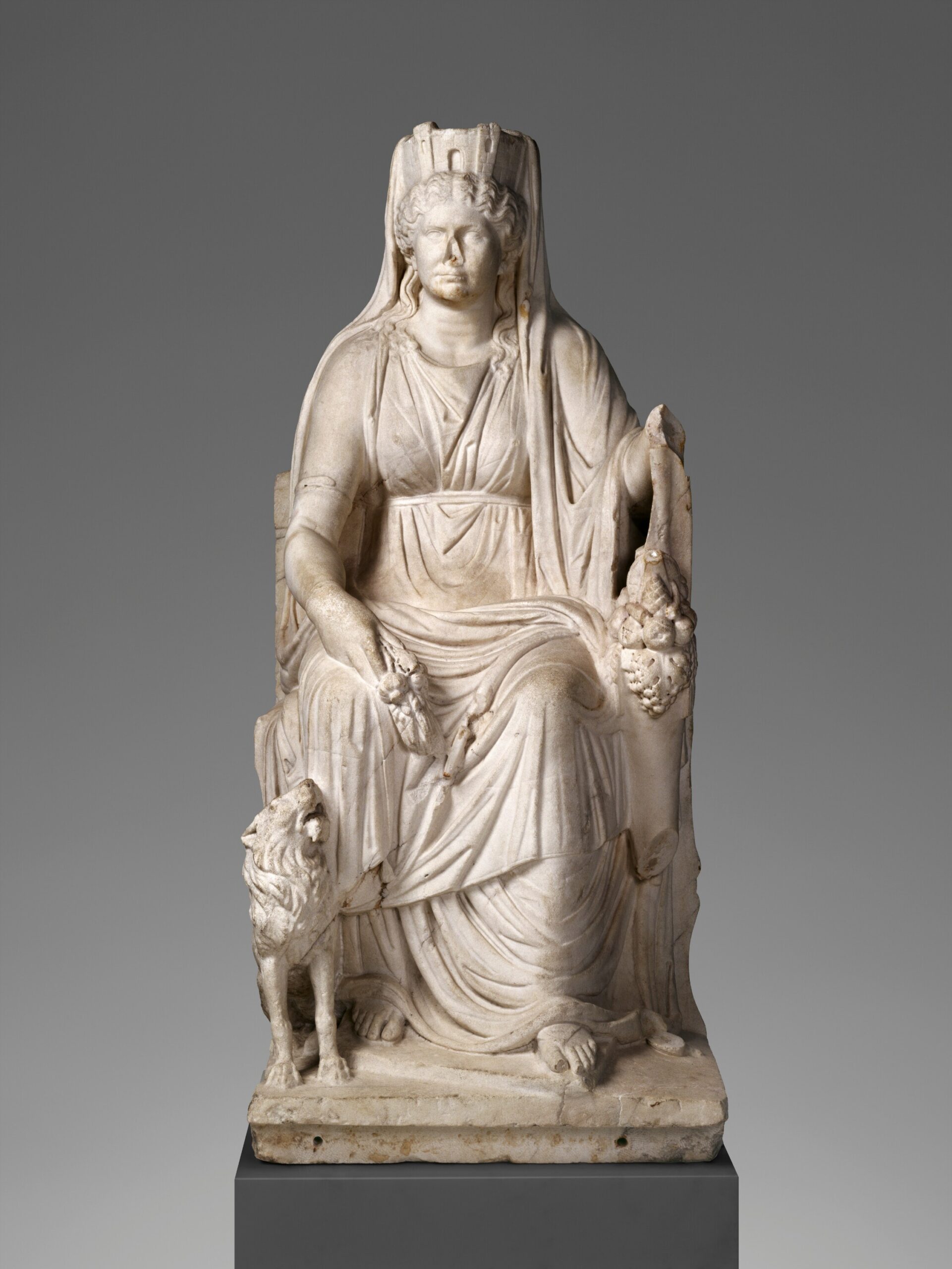
Stowe's original 'Statue of a Seated Cybele with the Portrait Head of her as a Priestess, about A.D. 50' now at the Getty USA ©Getty
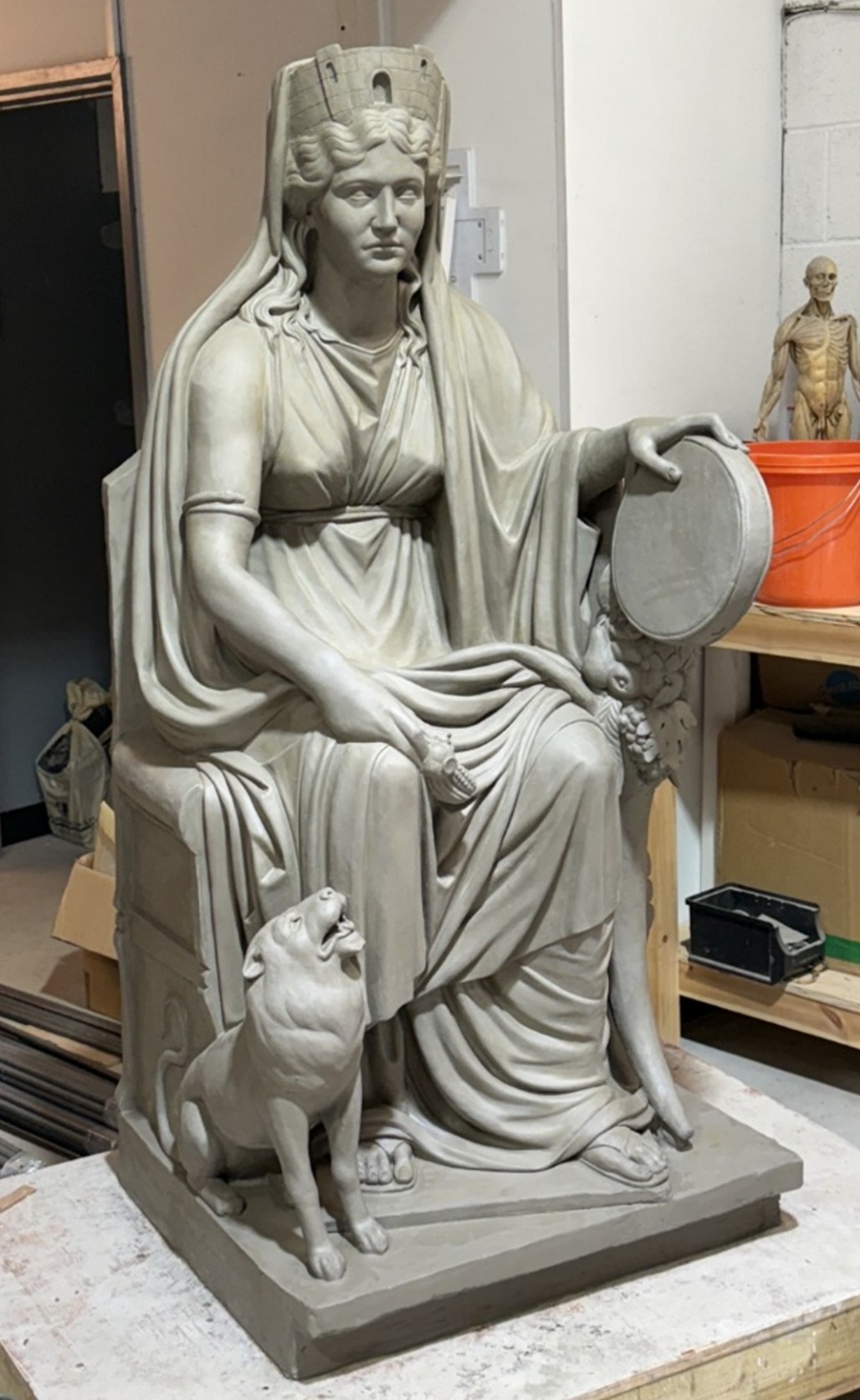
Cybele in clay, September 2025 ©Steelworks Sculpture Ltd
The statue of Cybele after being cast at Cliveden Conservation workshop ©Cliveden Conservation
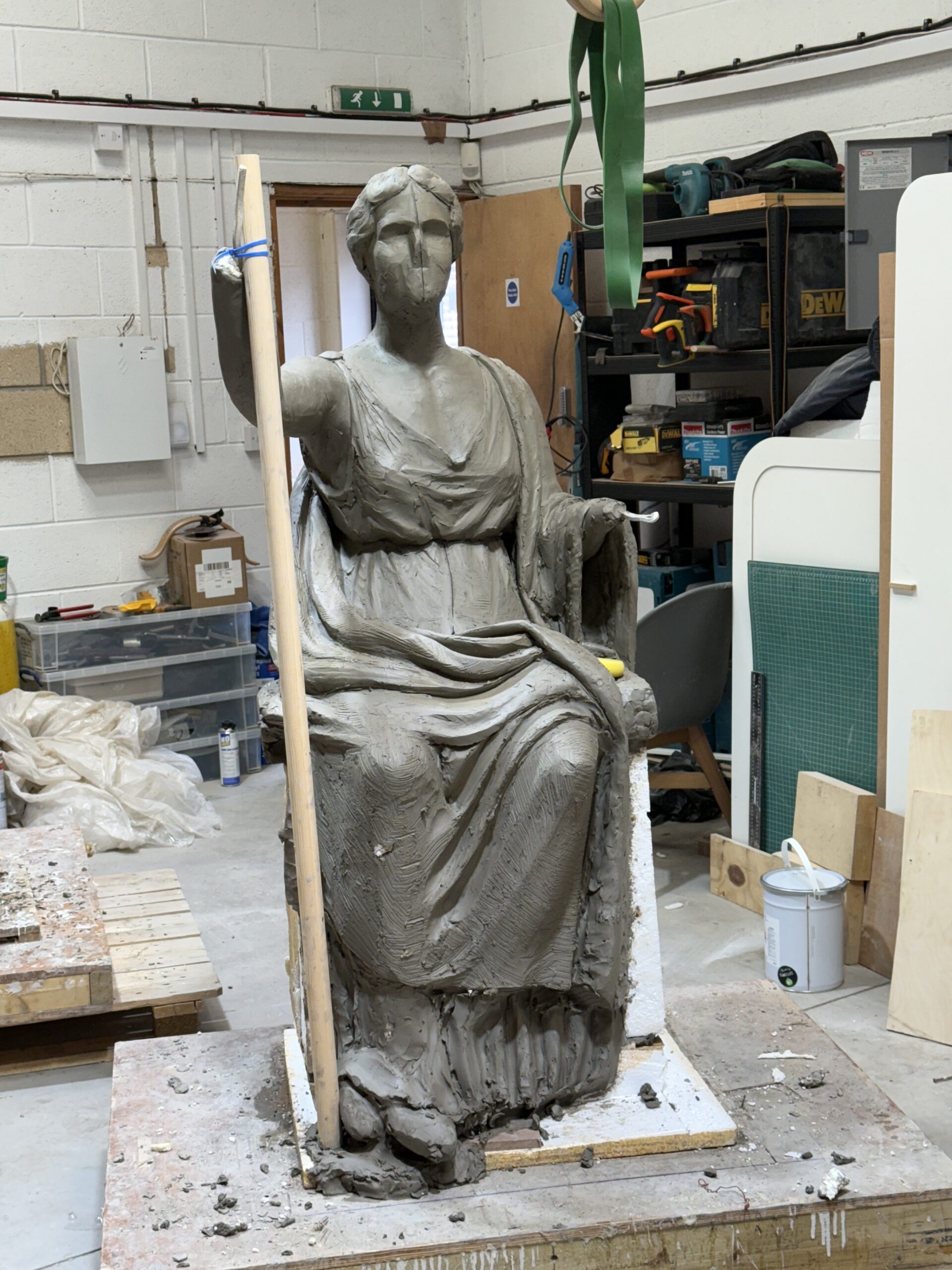
Juno moulded in clay, in progress ©Steelworks Sculpture Ltd
Scan of Juno ©Cliveden Conservation
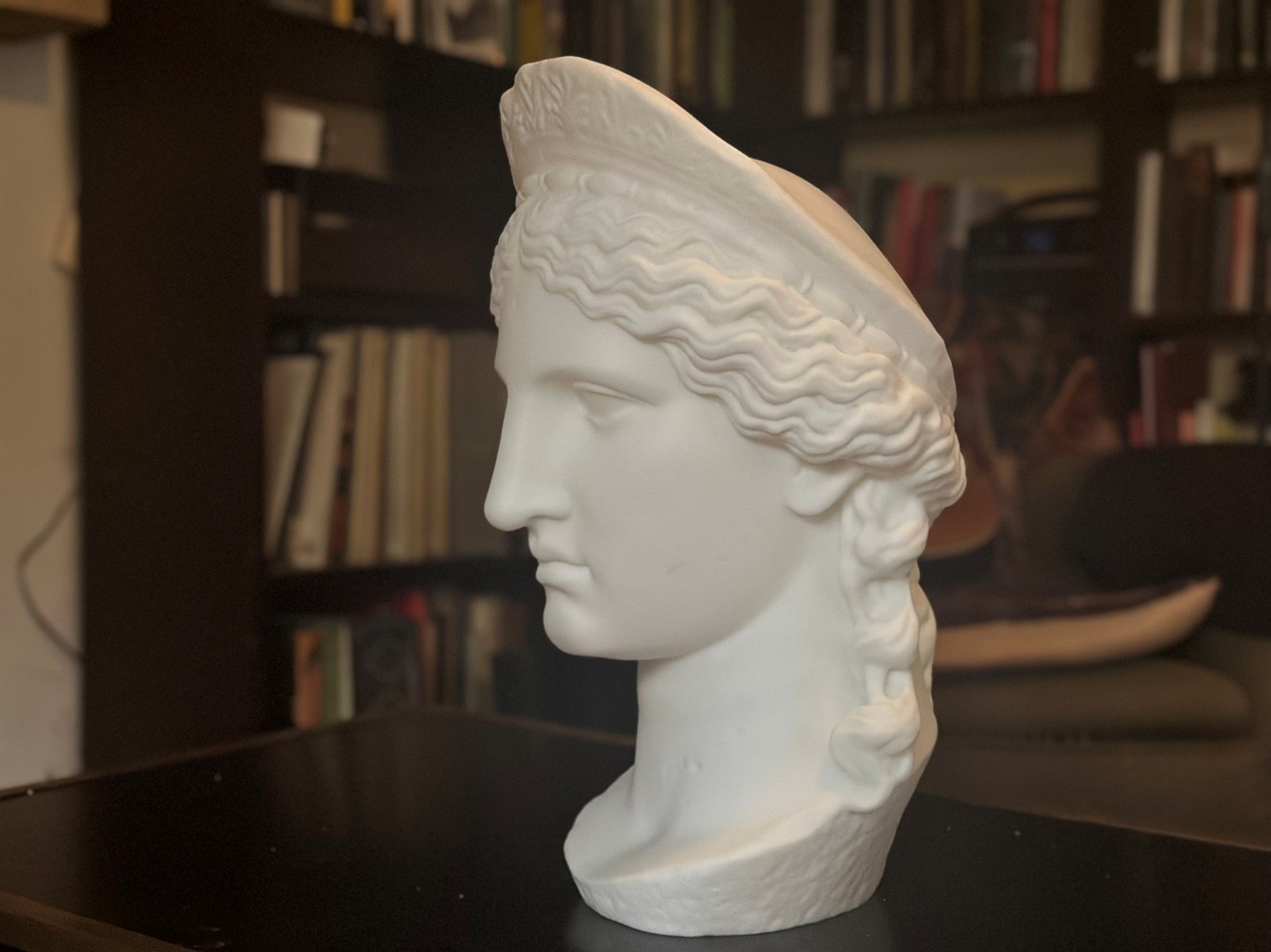
3D printed version of Juno ©Cliveden Conservation
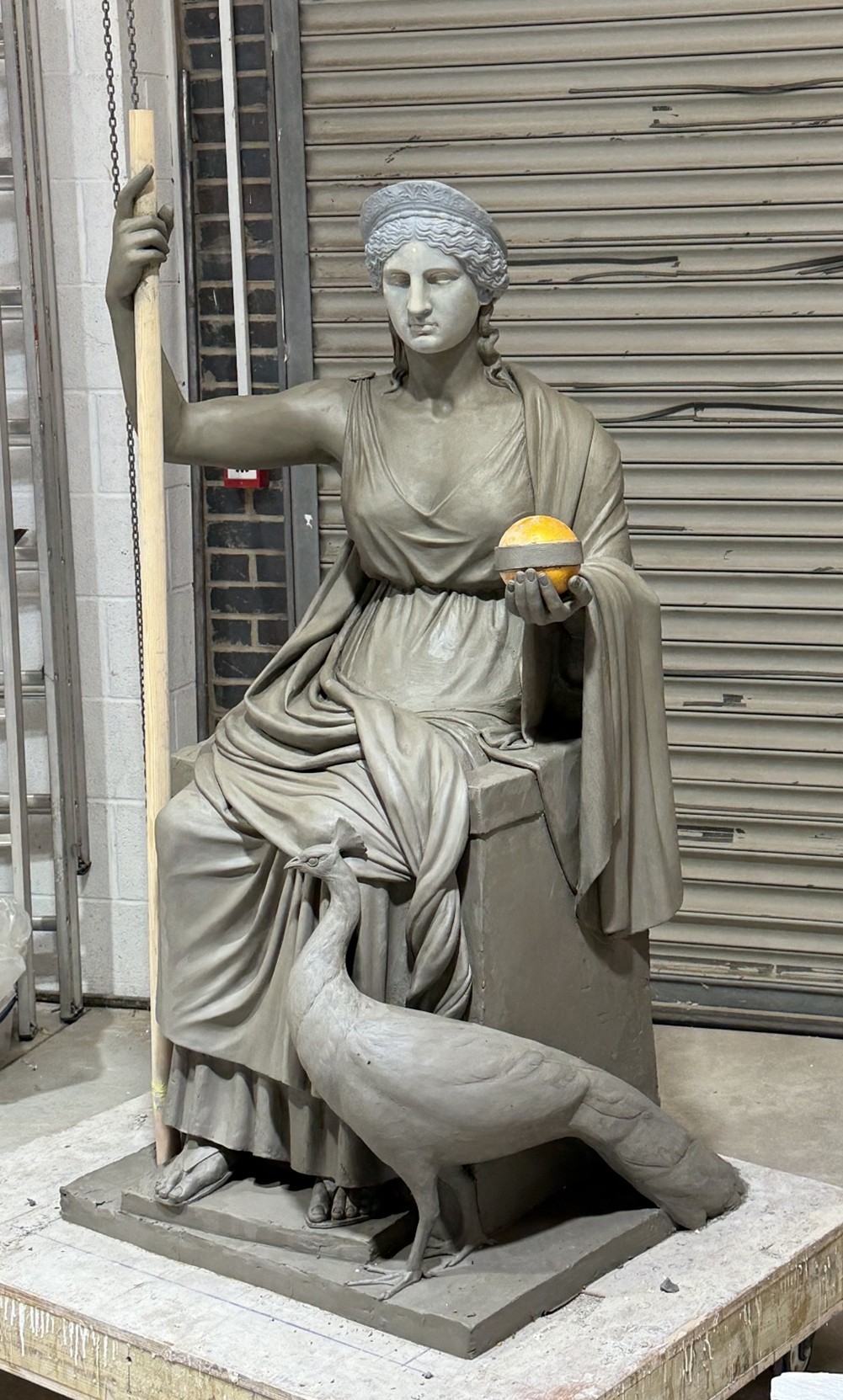
Juno complete clay with a 3D printed head ready to be moudled, September 2025 ©Steelworks Sculpture Ltd
Juno after being cast after cast and fettled at the Cliveden Conservation workshop before its undercoat of keim ©Cliveden Conservation
Rebuilding Cybele from the scan was a unique challenge. We had to respect the original while acknowledging that this is a new artwork. Every decision was rooted in evidence, but also in sensitivity to Stowe’s architecture.Sam Steel of Steelworks Sculpture Limited
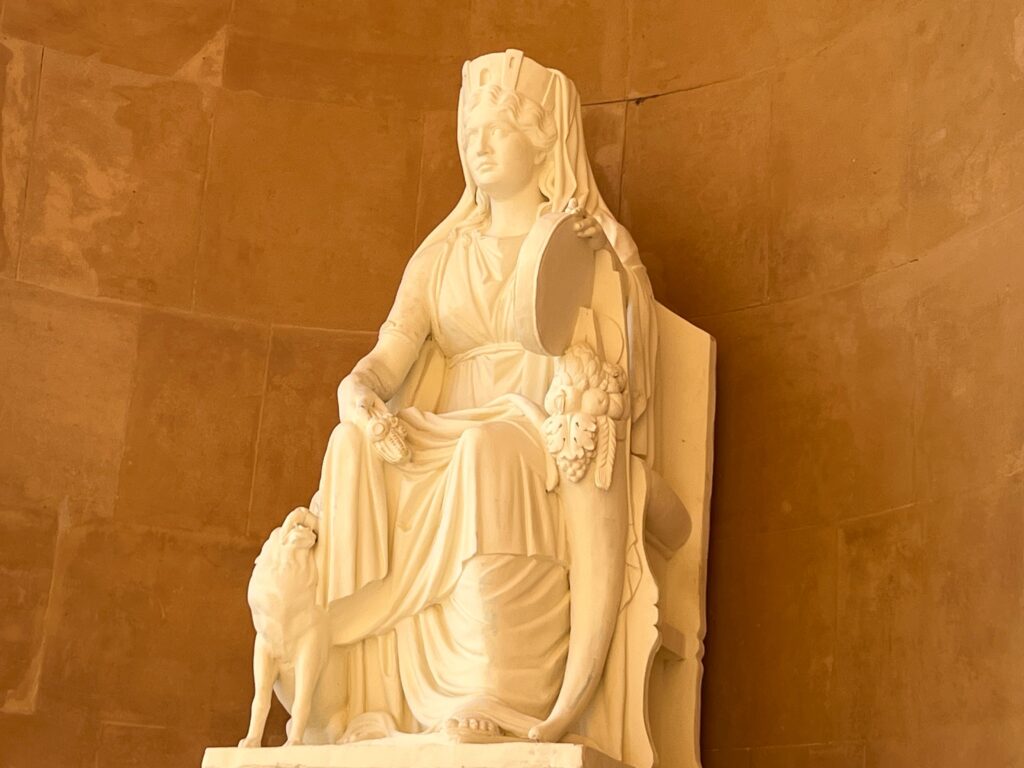
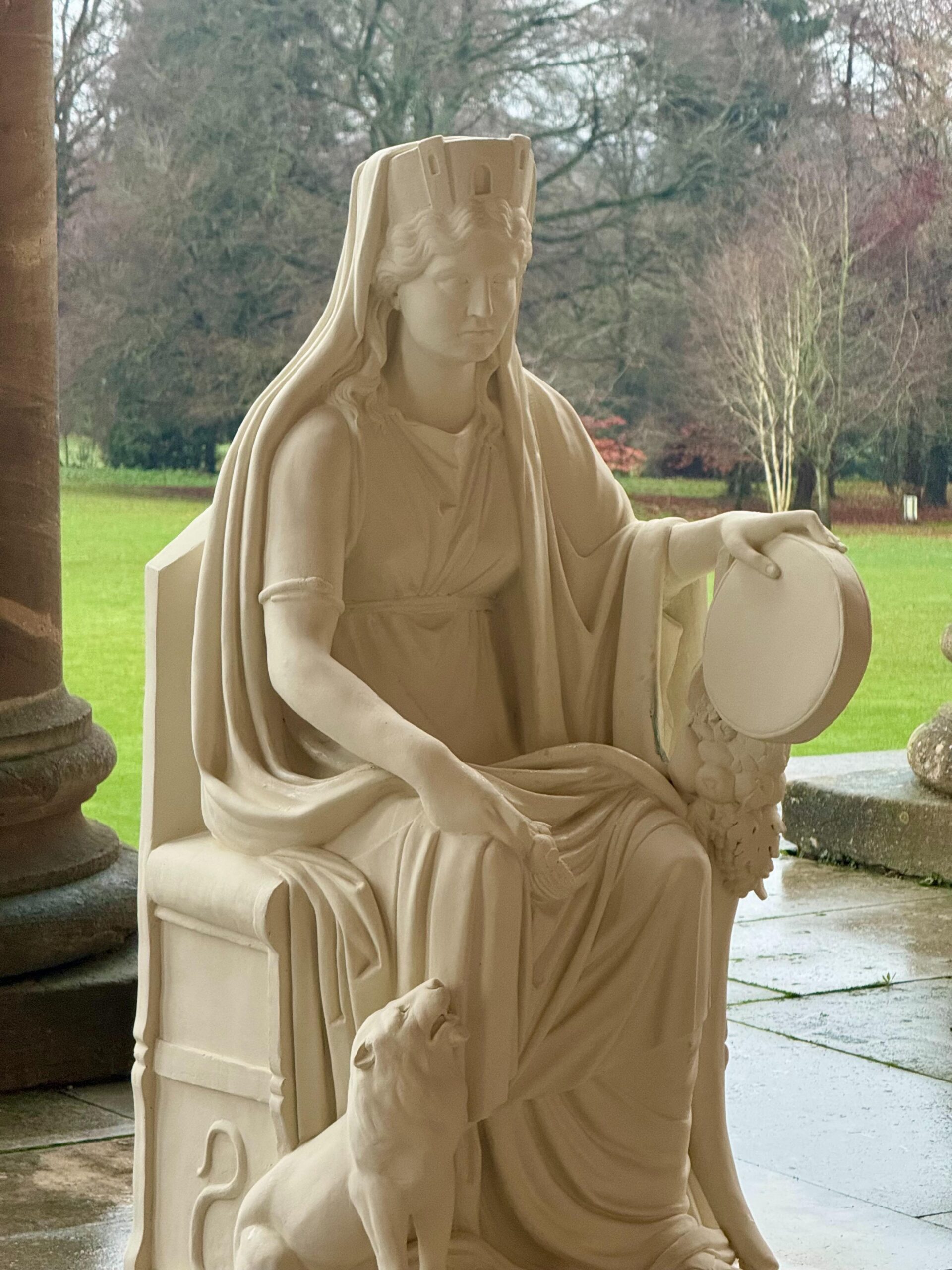
Cybele’s attributes were carefully reconsidered, including her tower crown as protector of cities, the lion symbolising her power over wild animals, a ruder to represent control and the cornucopia representing agriculture and fertility. Historic depictions also show her holding a tympanum, or hand drum, central to the ecstatic rites of her cult. Sam was able to seamlessly incorporate this into the sculpture, with the reconstructed hand resting naturally across the top of the cornucopia and rudder.
Transforming Cybele into Juno
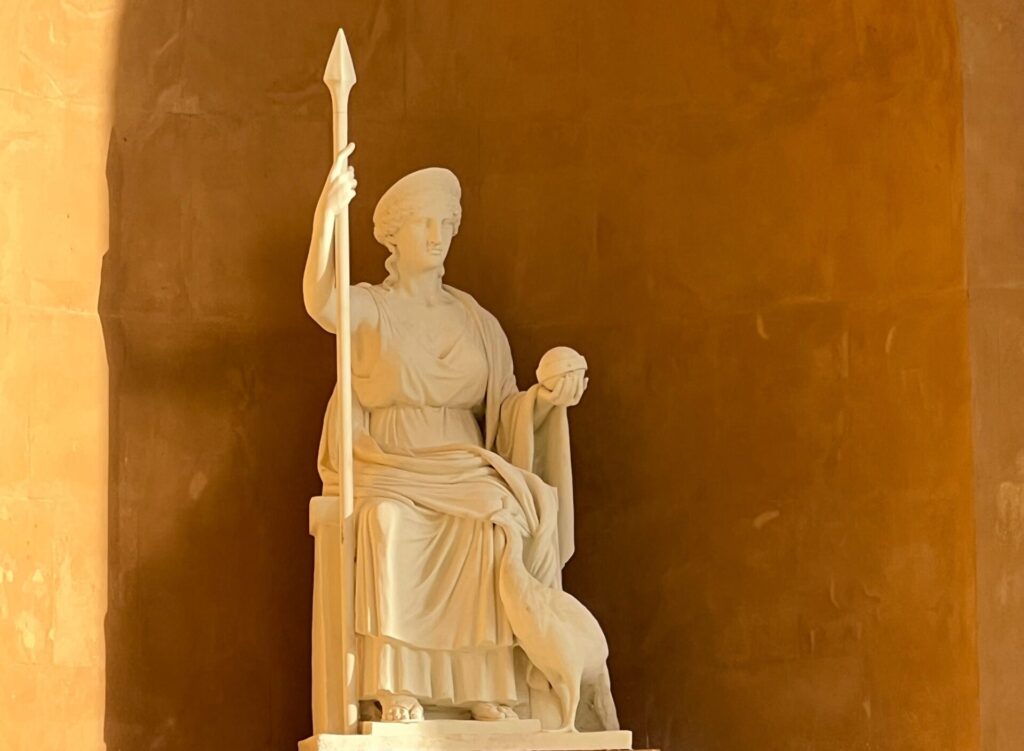
Once Cybele was complete, attention turned to Juno. Rather than starting again, Sam adapted the Cybele model to create Juno through a series of subtle but significant changes. These included altering the pose to a more gently reclining form, reworking the drapery, removing the lion, and introducing Juno’s peacock, a symbol of divine authority.
A new head was added, modelled from a 3D scan used in the recent North Hall bust project and derived from the celebrated Roman Juno Ludovisi. The result is a sculpture that is historically grounded while being carefully tailored to Stowe’s architectural setting.
With both clay figures complete, Cliveden Conservation took silicone rubber moulds and cast the finished statues in a stone concrete mix.
Installation and Visual Harmony Restored
The reinstatement of Cybele and Juno has restored not only the architectural rhythm of the South Front, but also a richly layered narrative across the portico.
Viewed from the bottom of the garden steps, the composition now reads as a balanced sequence. The eye moves from Cybele’s lion, up through her seated figure and across to the tympanum, before mirroring that movement through Juno’s peacock and her more relaxed pose.
Juno’s position also carries a wider mythological meaning. Behind her stand the colossal statues of Minerva and the Three Fates, Clotho, Lachesis and Atropos, installed in 2018 from casts of the original statues once at Stowe. In Roman mythology, even Juno, Queen of the Gods, is subject to the will of the Fates, a theme explored in Virgil’s Aeneid.
This hierarchy is subtly echoed in the architecture. The Three Fates stand upright and larger in scale, while Juno sits slightly to one side. Whether intentional or not, the arrangement reflects a powerful classical idea: that destiny stands above even divine authority.
With Cybele and Juno now reinstated, the South Front portico is complete once more. Their return reunites the full sculptural programme, alongside the freestanding groups of Hercules wrestling Antaeus and Samson defeating the Philistines, returned in 2018, restoring a dialogue between architecture, mythology and landscape interrupted for nearly two centuries.
See the Installation Unfold
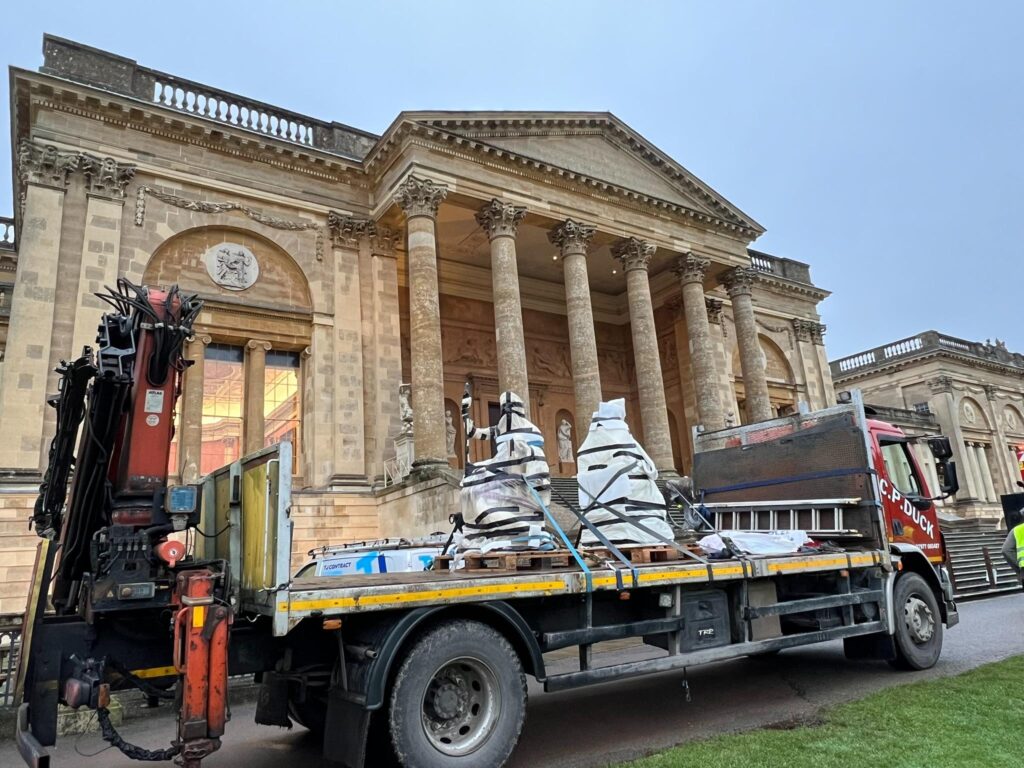
Excitement was in the air as the statues arrived at Stowe House. ©Stowe House Preservation Trust
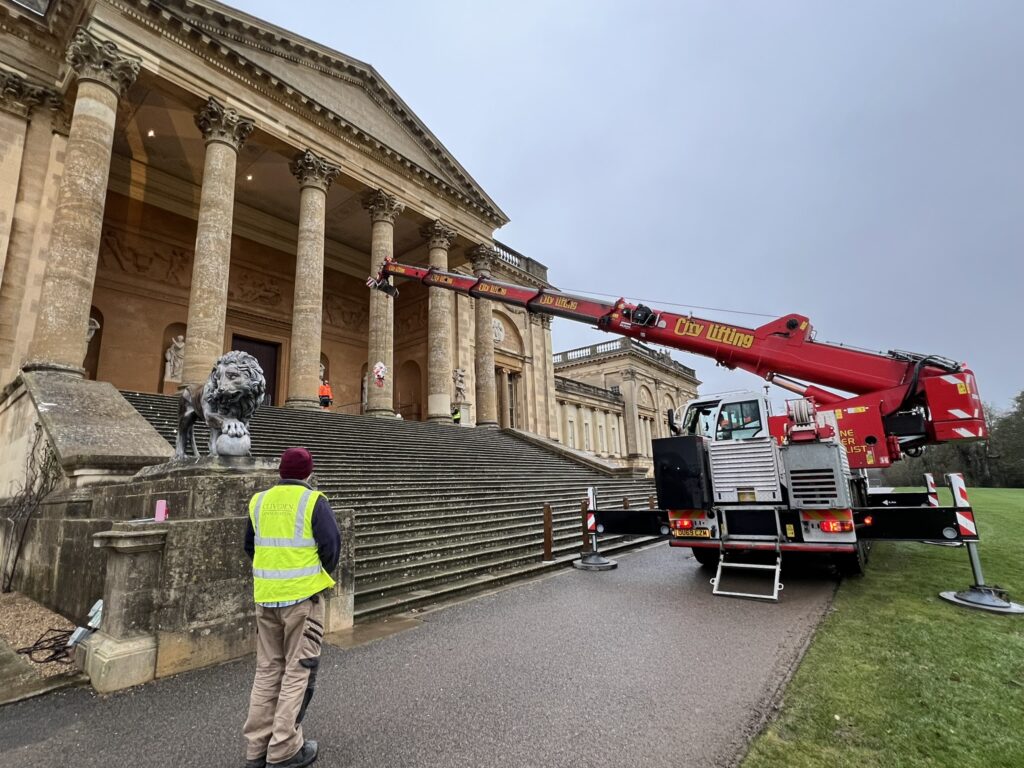
Before the statues were moved, a test run was carried out by the crane operative. ©Stowe House Preservation Trust
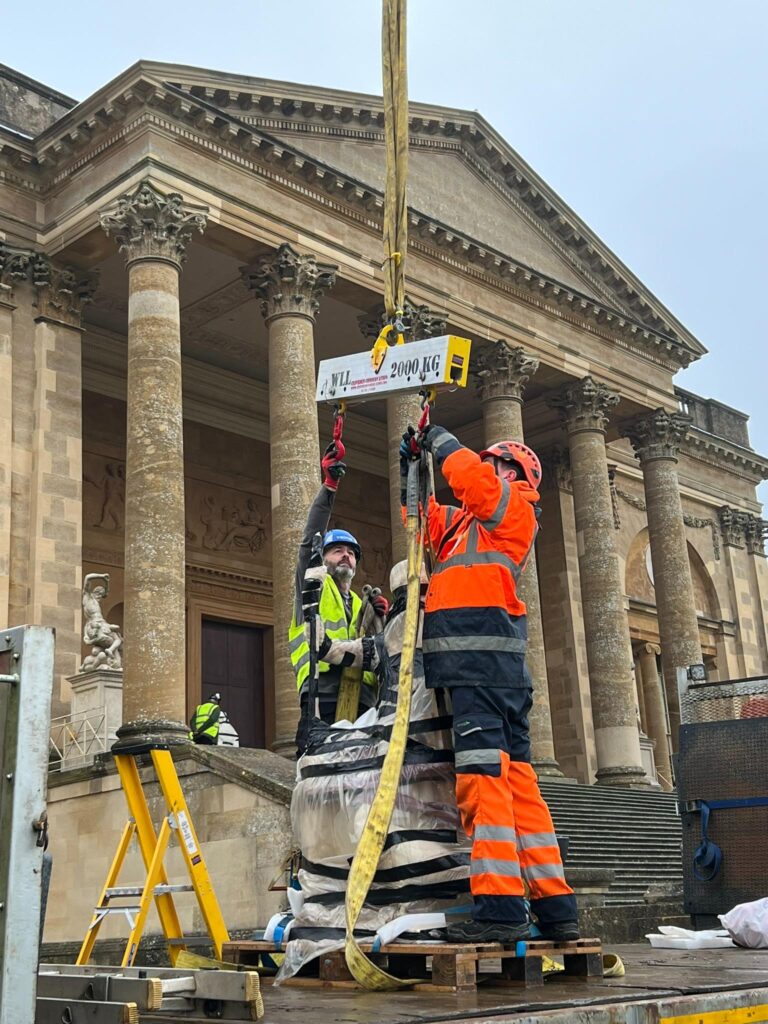
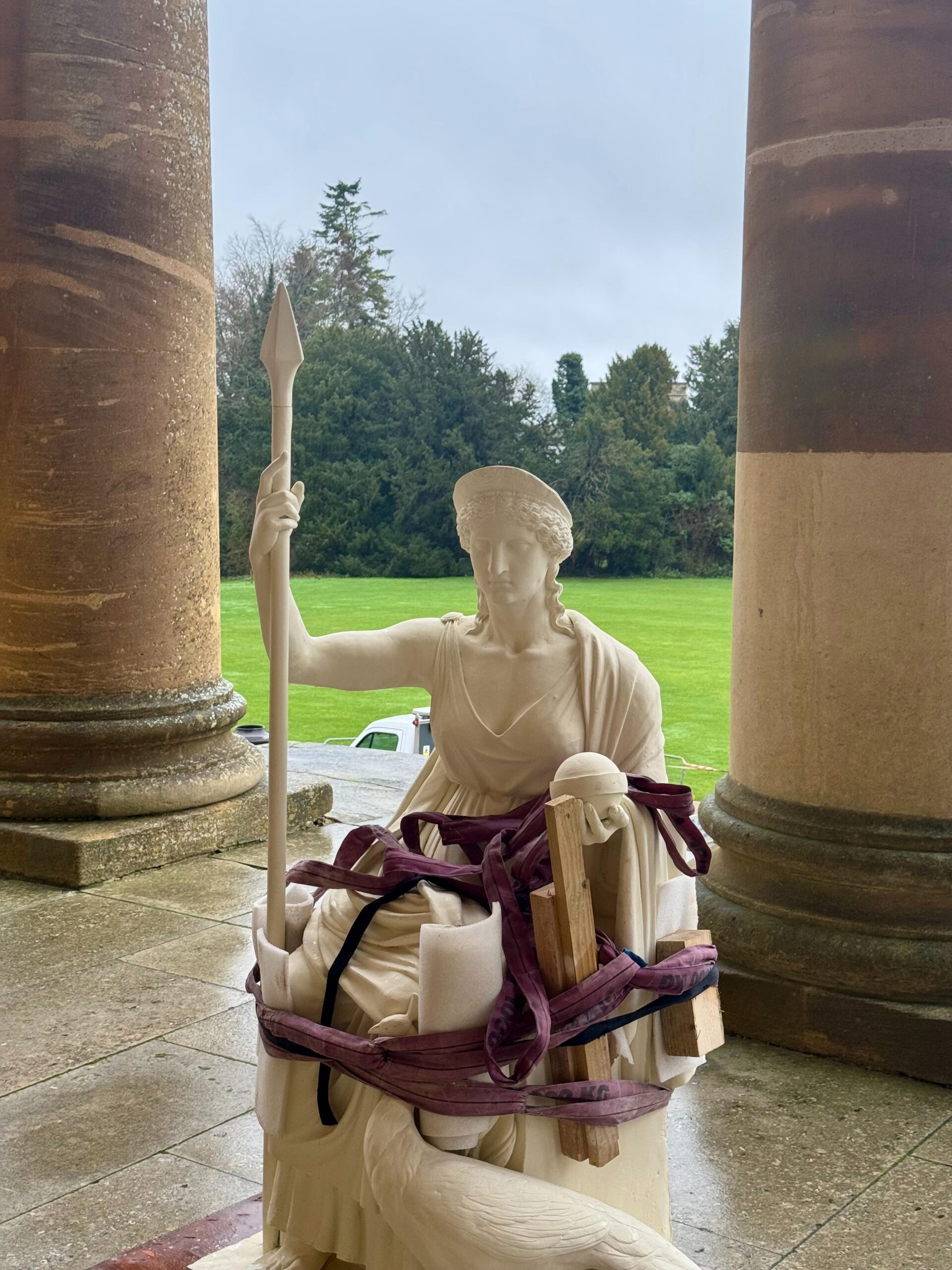
Each statue had to be carefully strapped and prepared for lifting. ©Stowe House Preservation Trust
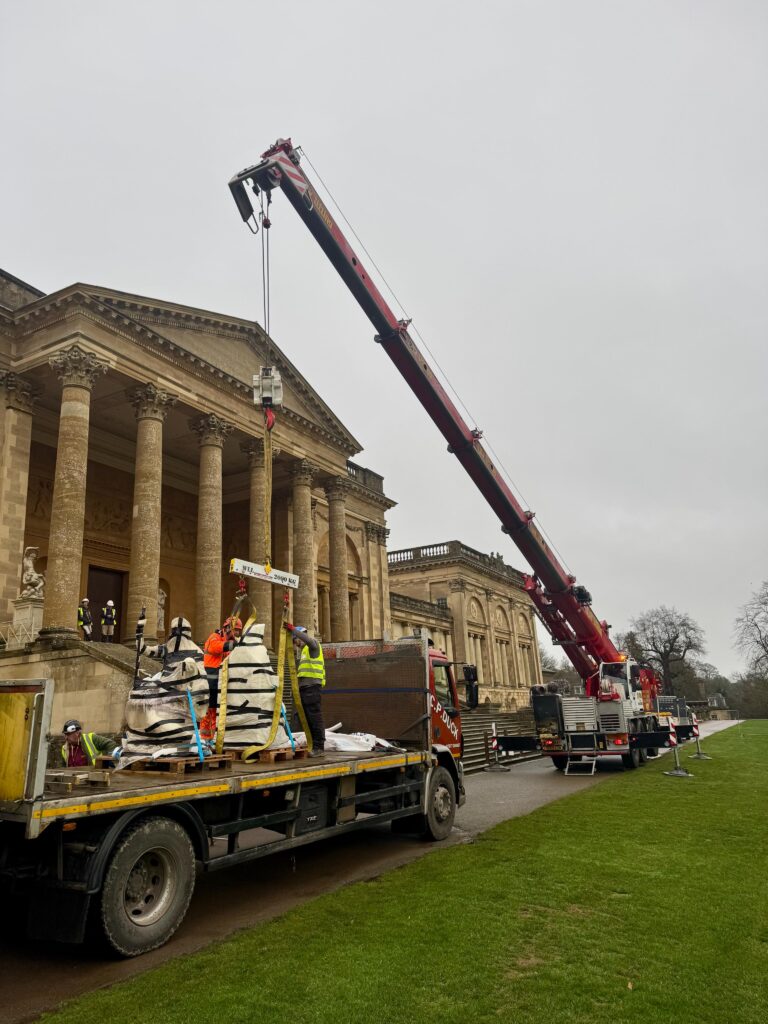
Each statue weighed 700kg ©Stowe House Preservation Trust, David Hayhurst-France
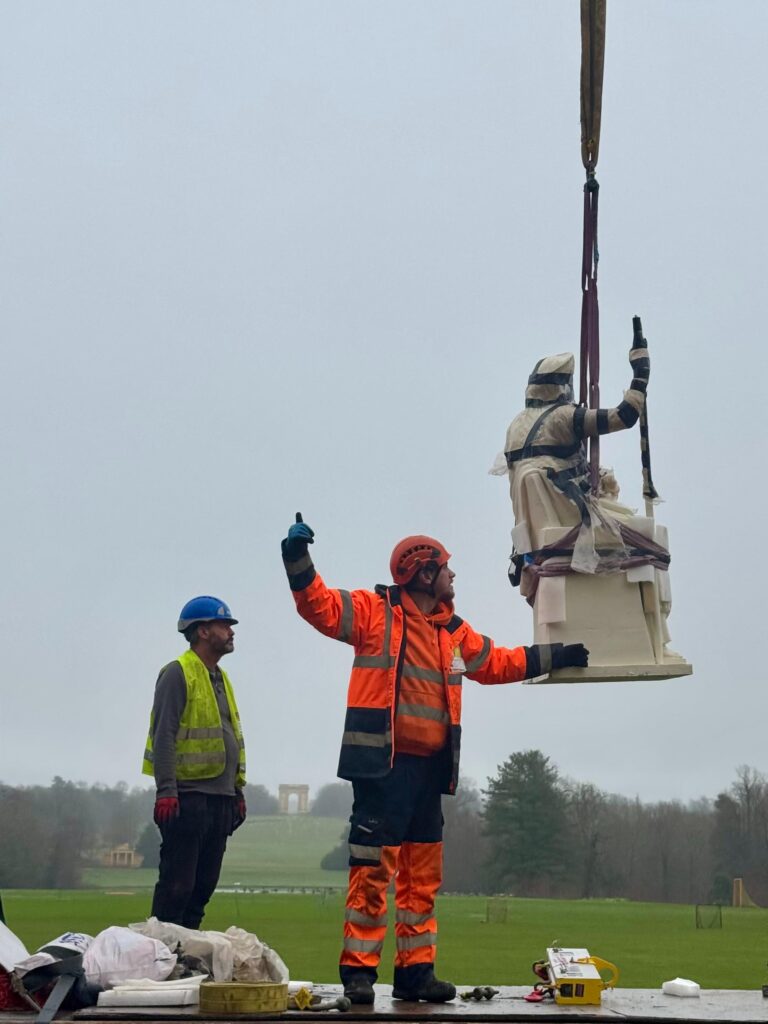
Juno is lifted from the flatbed truck after transport. ©Stowe House Preservation Trust, David Hayhurst-France
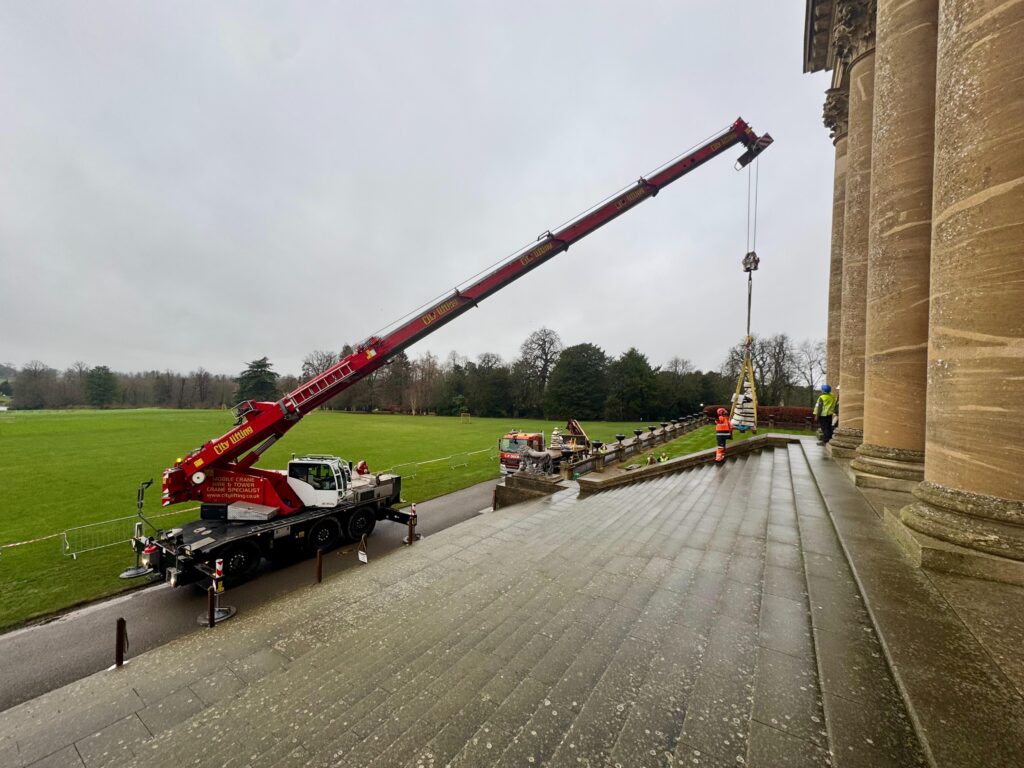
Rising over the steps and up between the columns of the South Front Portico. ©Stowe House Preservation Trust, David Hayhurst-France
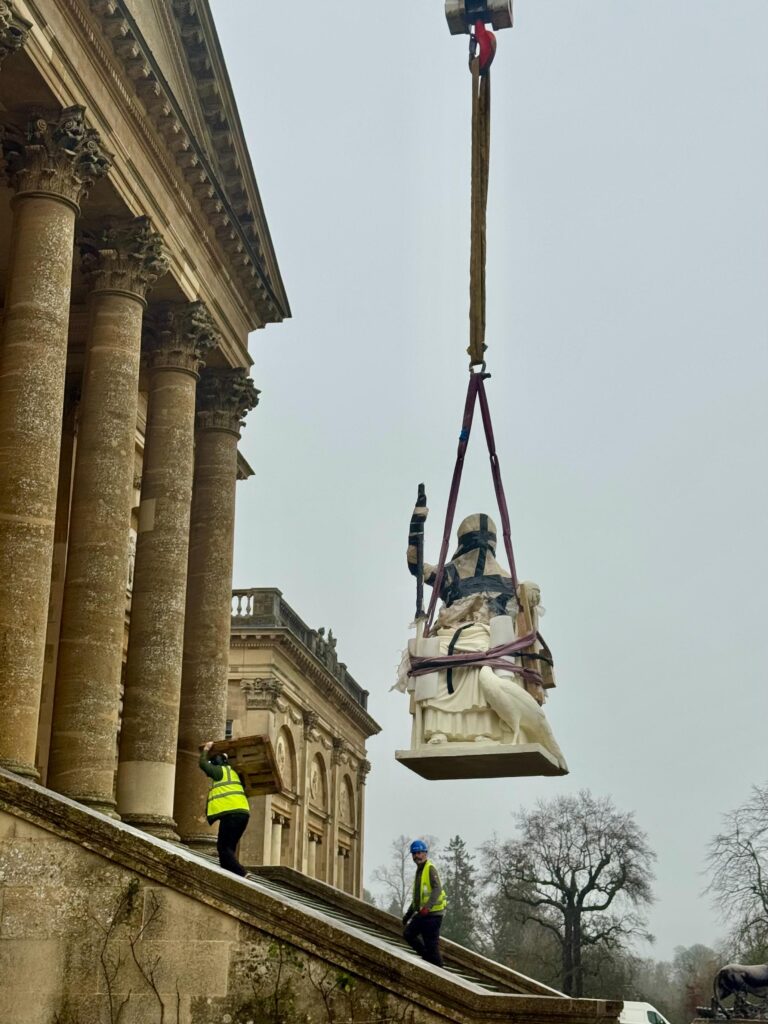
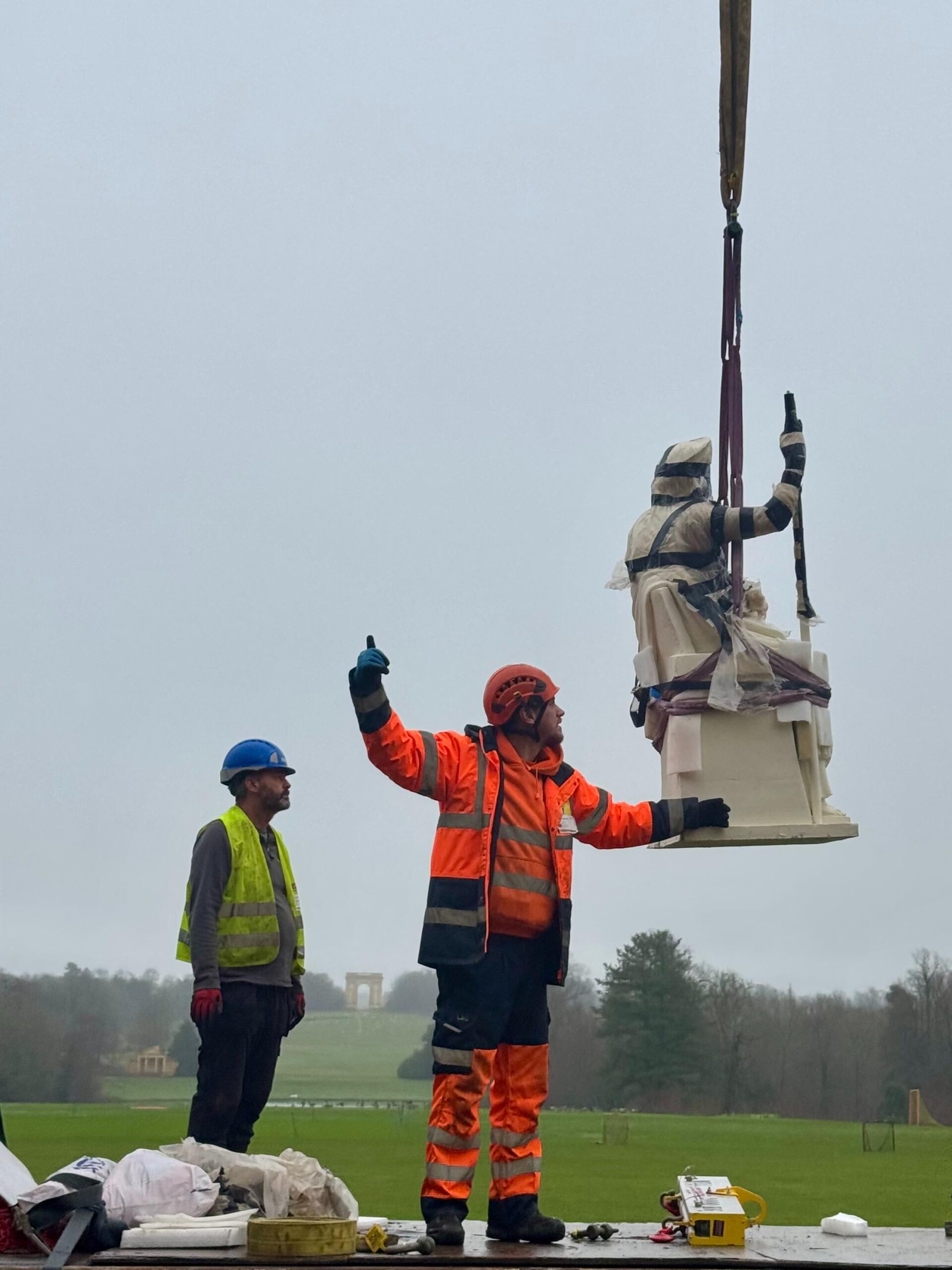
Juno mid-air. ©Stowe House Preservation Trust, David Hayhurst-France
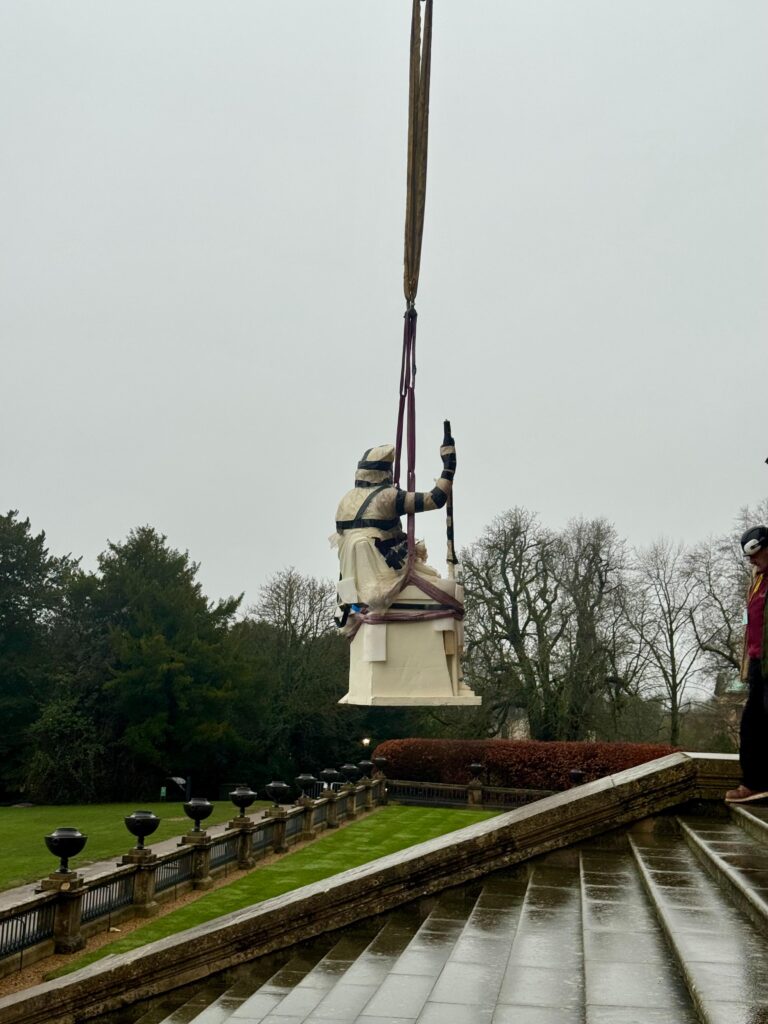
Seeing the statues rise above the steps was quite a feat to behold. ©Stowe House Preservation Trust, David Hayhurst-France
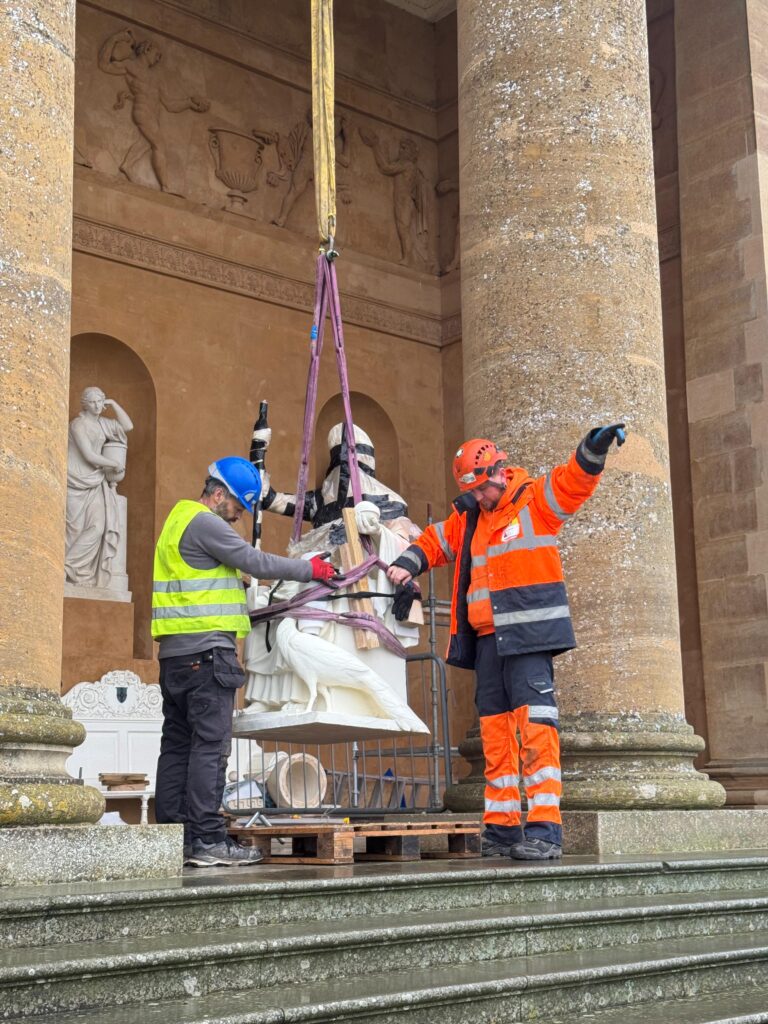
Working together, our contractors safely delivered the statues. It does make you reflect as to how these tasks were carried out centuries ago without the modern technology we have today. ©Stowe House Preservation Trust, David Hayhurst-France
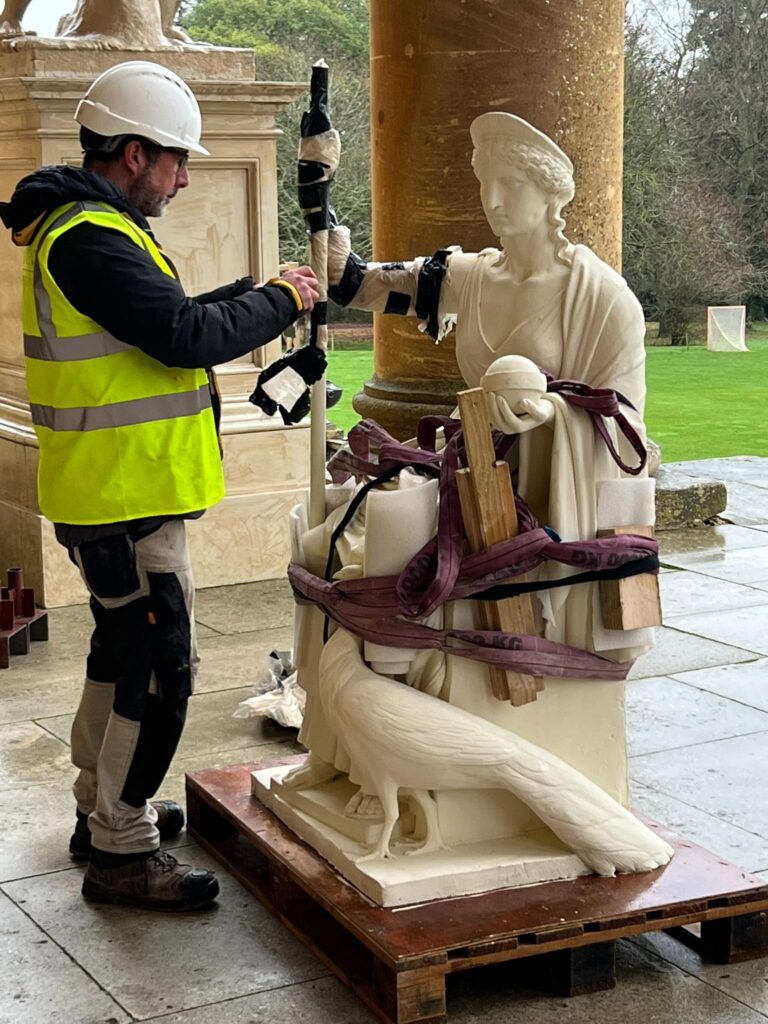
Juno safely on the portico and being unwrapped. ©Stowe House Preservation Trust
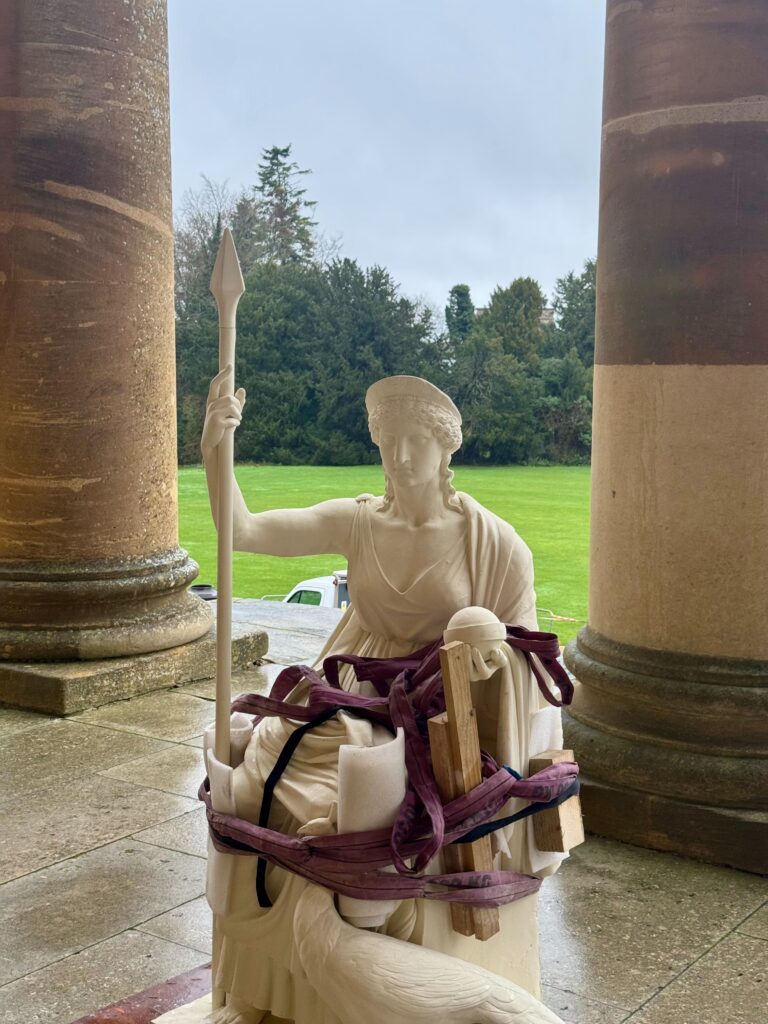
With Juno now on the Portico, it was the turn of Cybele. ©Stowe House Preservation Trust, David Hayhurst-France
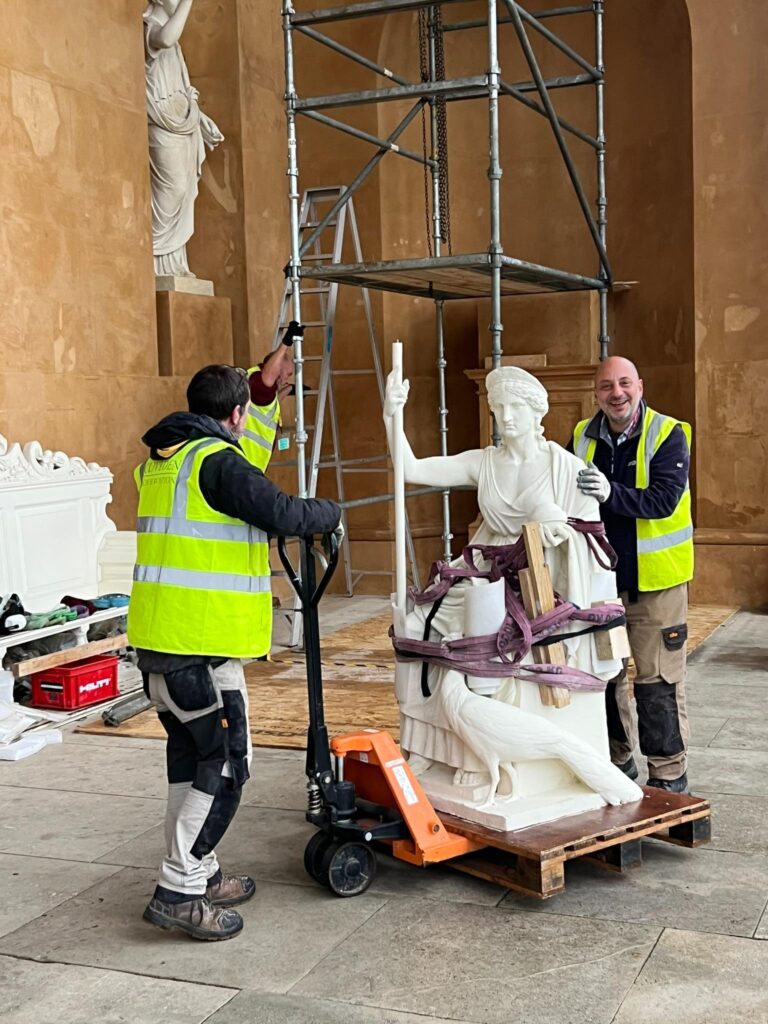
The team from Cliveden Conservation move Juno in preparation to be hoisted onto her plinth. ©Stowe House Preservation Trust
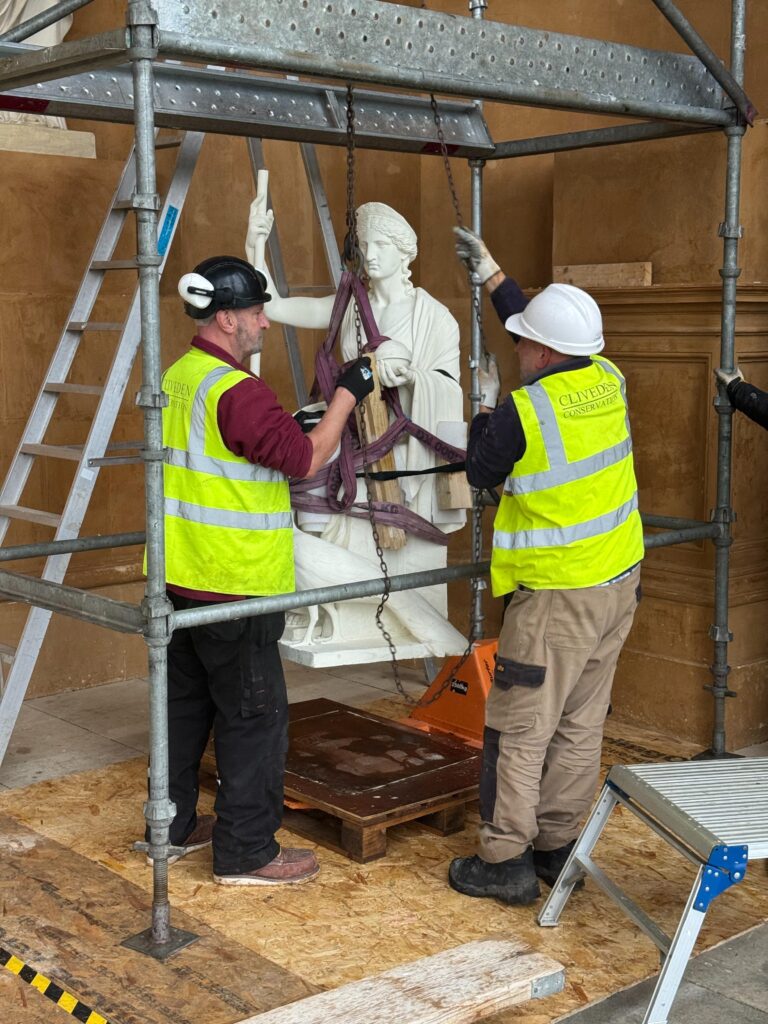
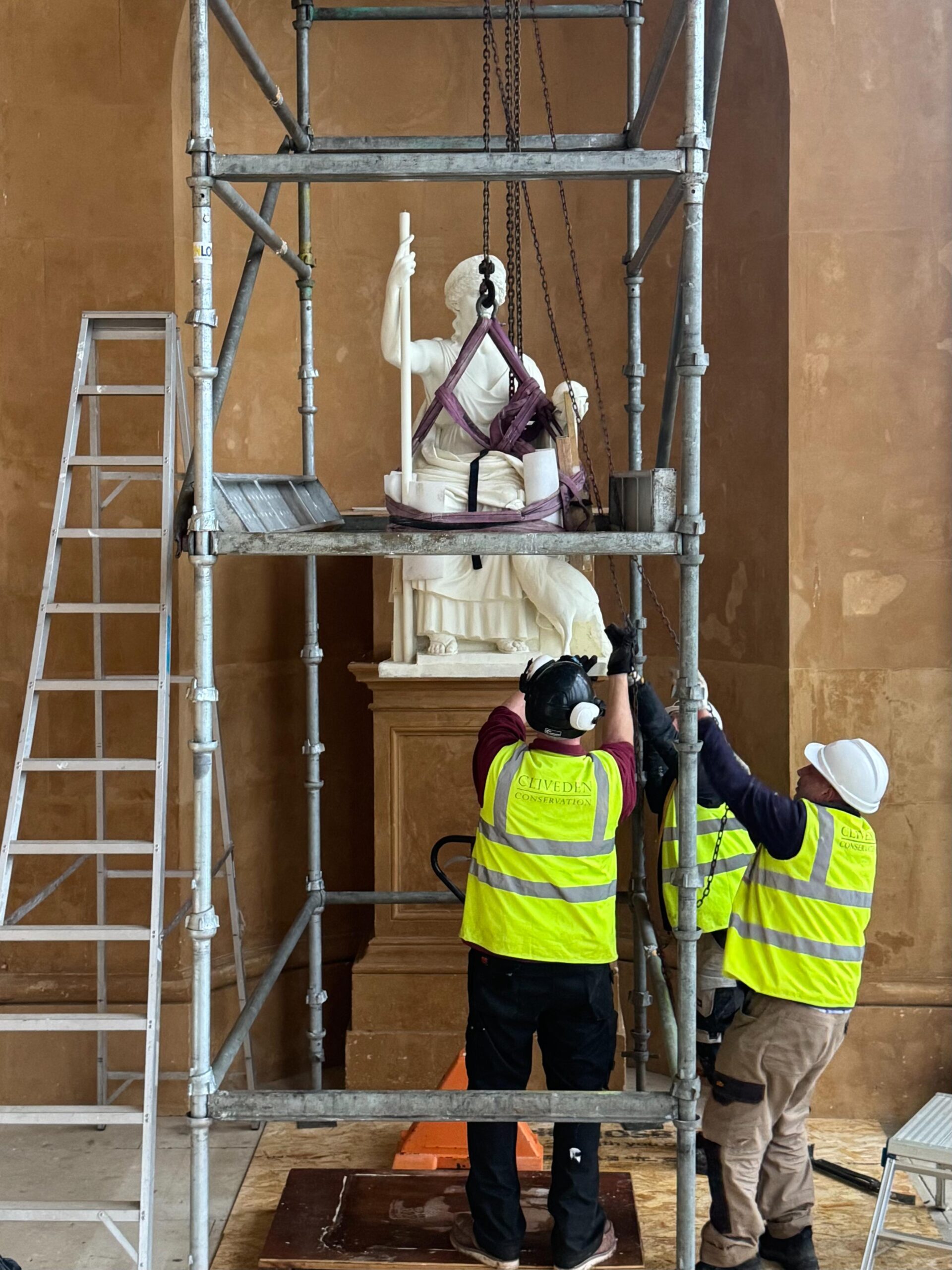
Juno being hoisted through a scaffolding tower. ©Stowe House Preservation Trust, David Hayhurst-France
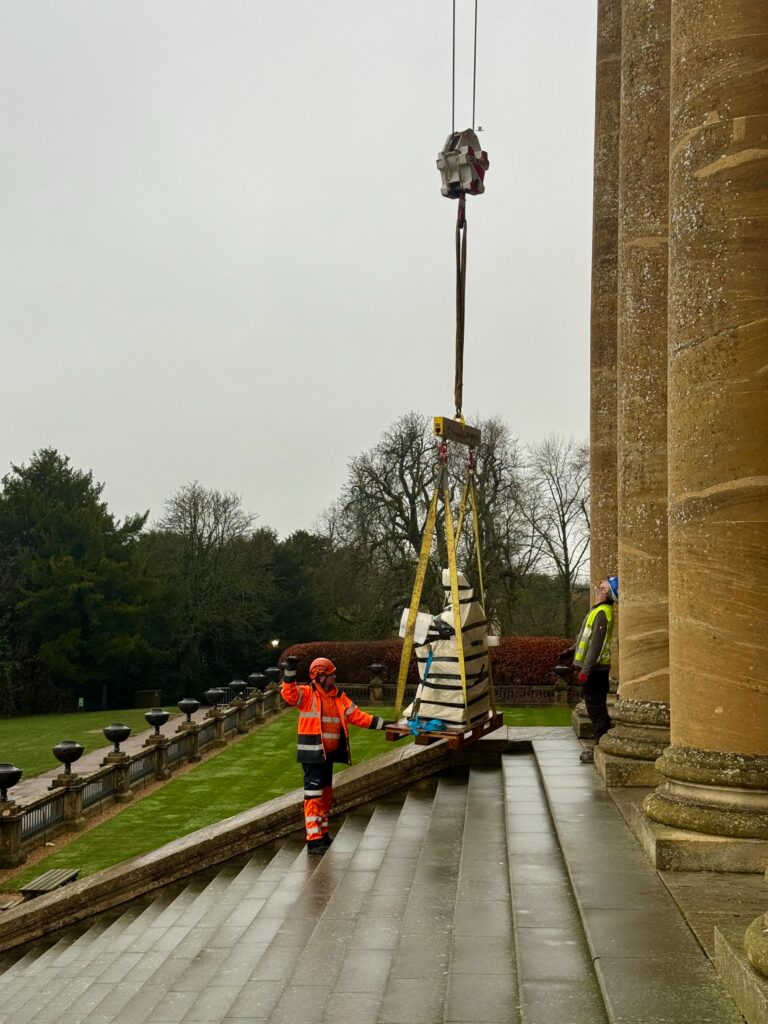
Precision manvouring by the banksman and crane operative working in tandem to ensure the safe delivery of the statues. ©Stowe House Preservation Trust, David Hayhurst-France
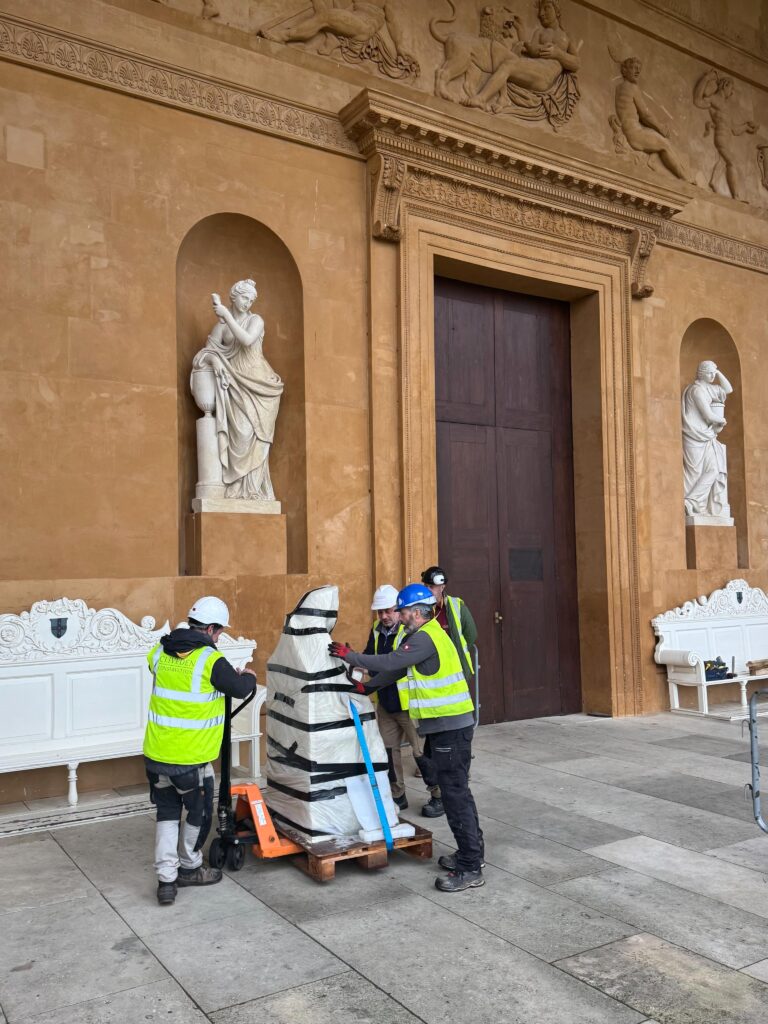
Cybele being moved using a pump truck nearer to her plinth. ©Stowe House Preservation Trust, David Hayhurst-France
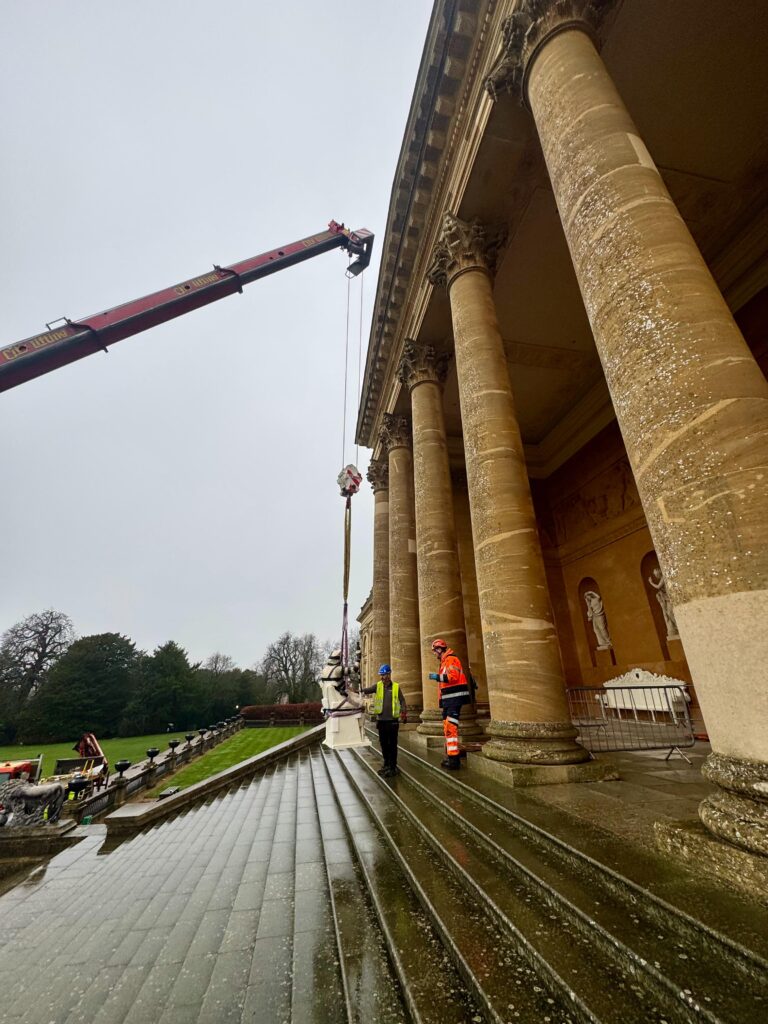
Nearly there! ©Stowe House Preservation Trust, David Hayhurst-France
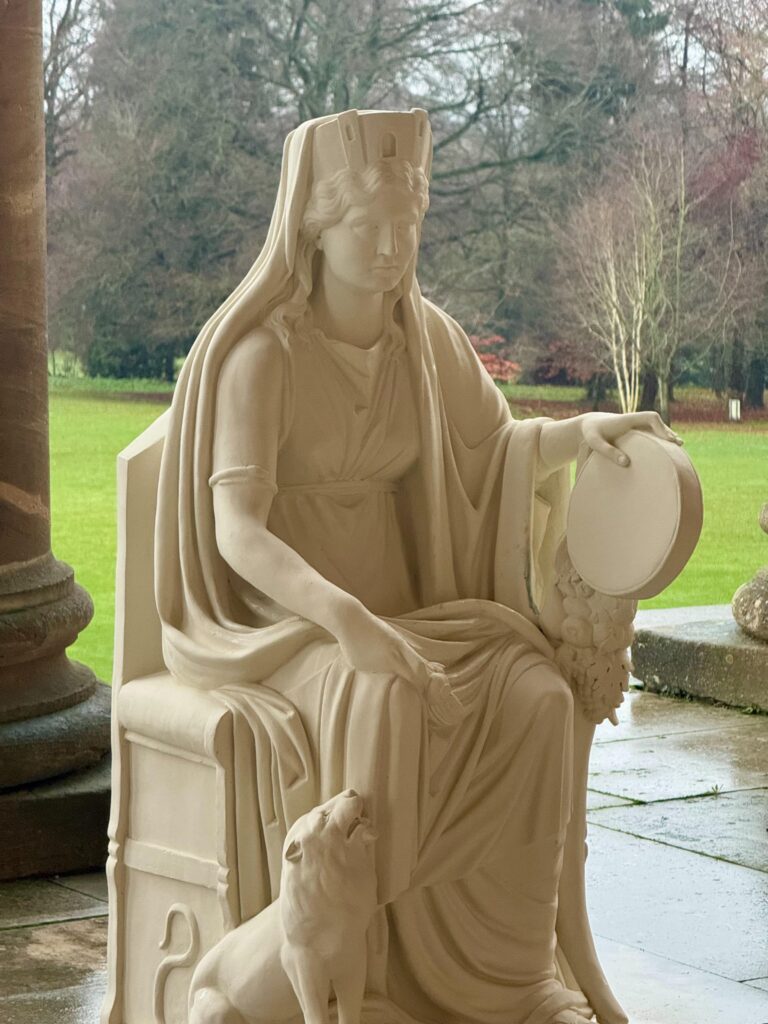
Cybele unwrapped on on the Portico ©Stowe House Preservation Trust, David Hayhurst-France
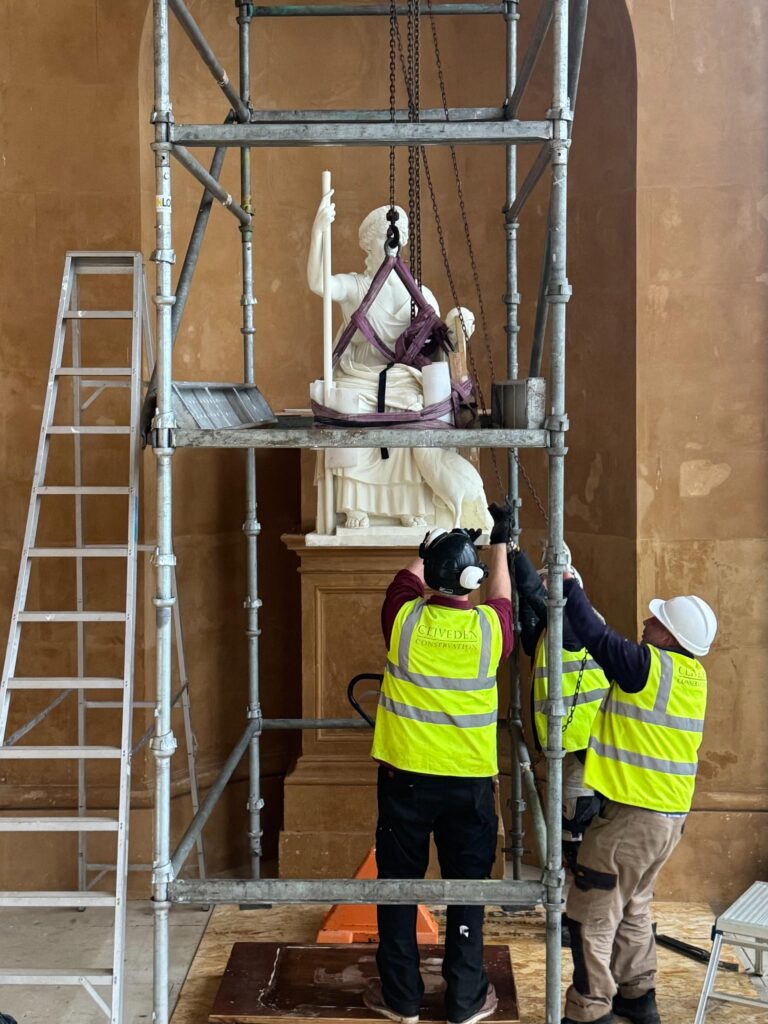
Juno nears the height of her plinth as the team from Cliveden Conservation hoist her up. ©Stowe House Preservation Trust, David Hayhurst-France
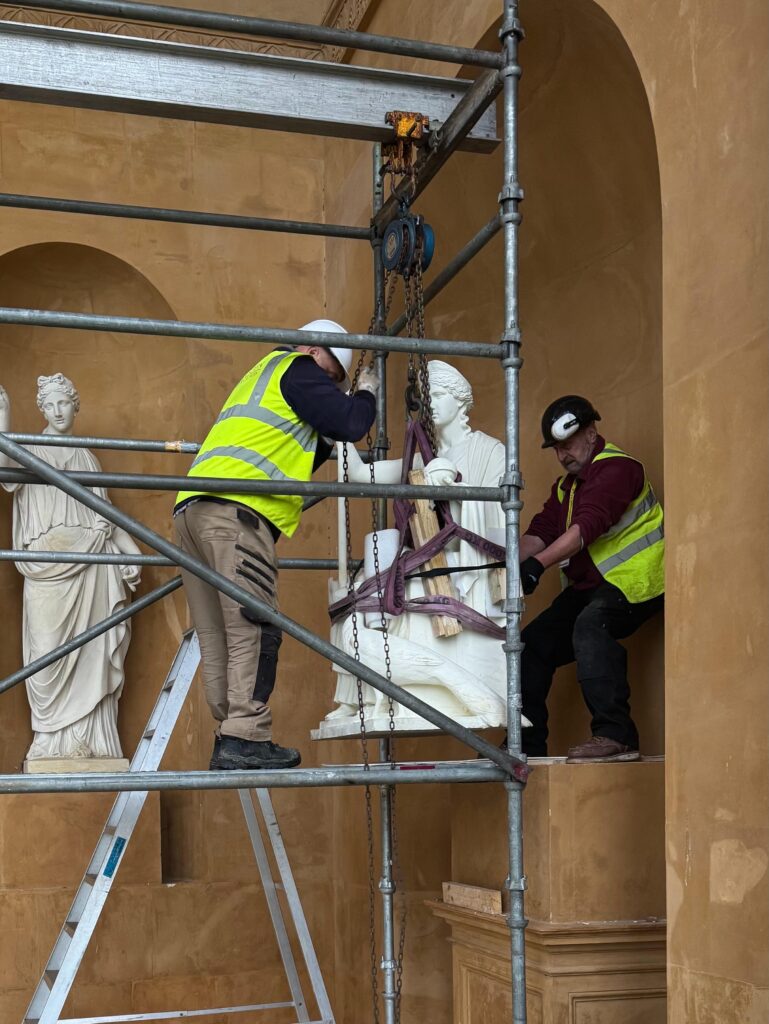
Time to manoeuvre Juno into place. ©Stowe House Preservation Trust, David Hayhurst-France
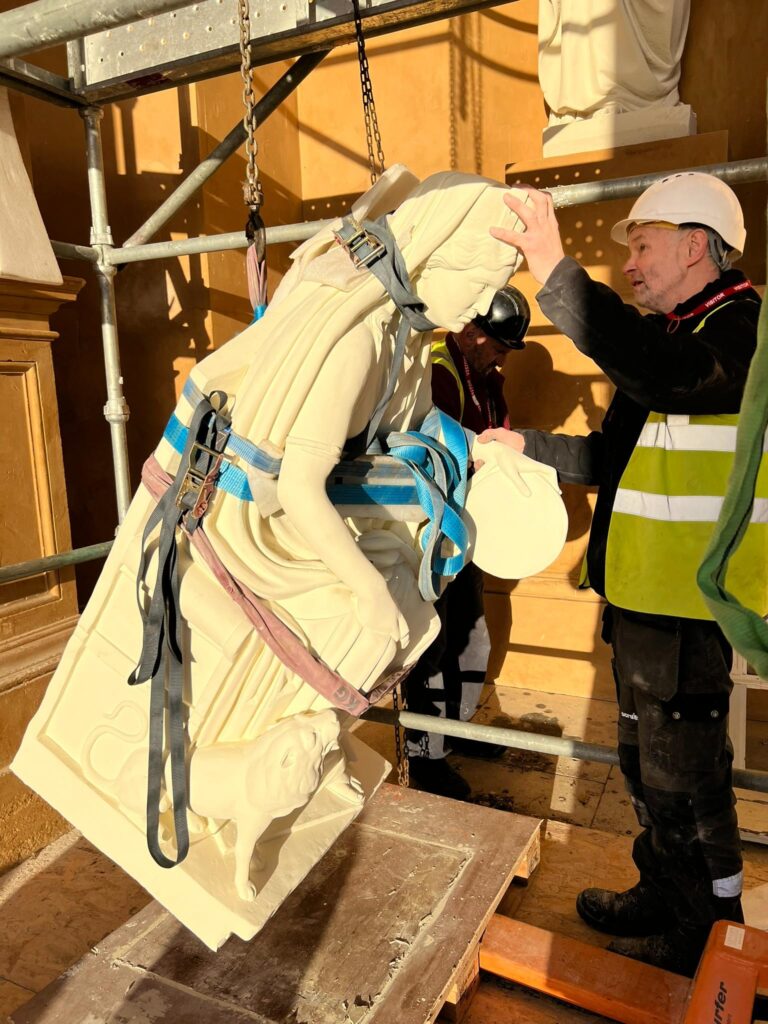
Cybele's distribution of weight made her a trickier challenge than Juno. She had to be hoisted at an angle to reach her plinth. ©Stowe House Preservation Trust
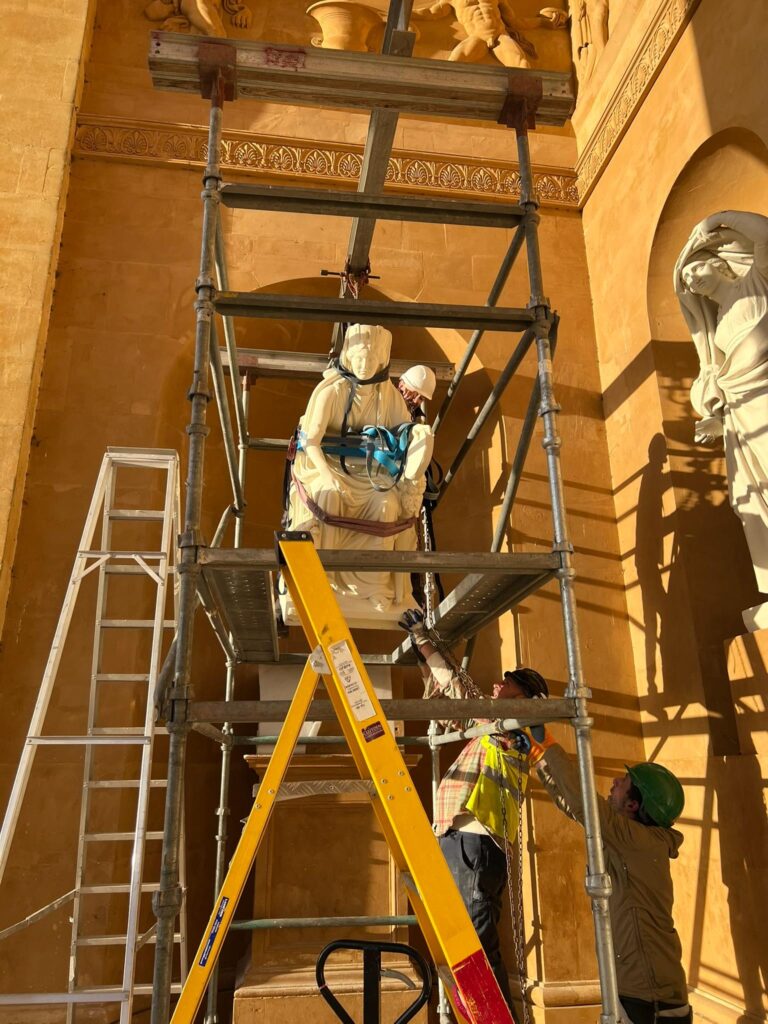
Juno nearing her plinth. ©Stowe House Preservation Trust
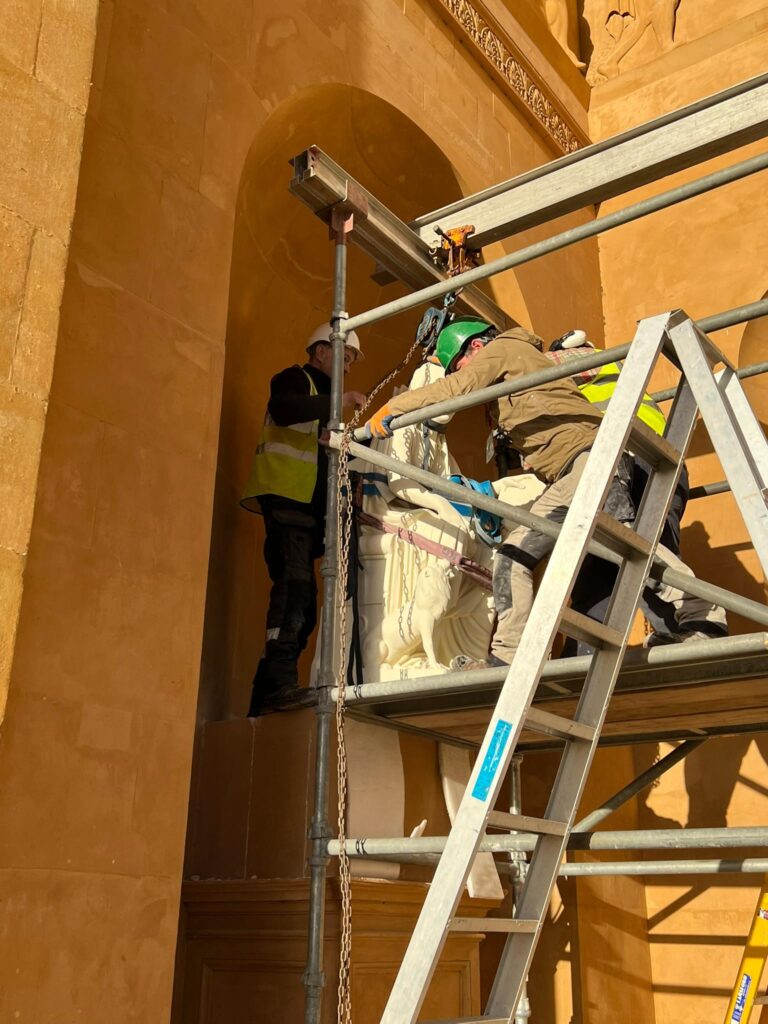
Moving Juno back into the niche. ©Stowe House Preservation
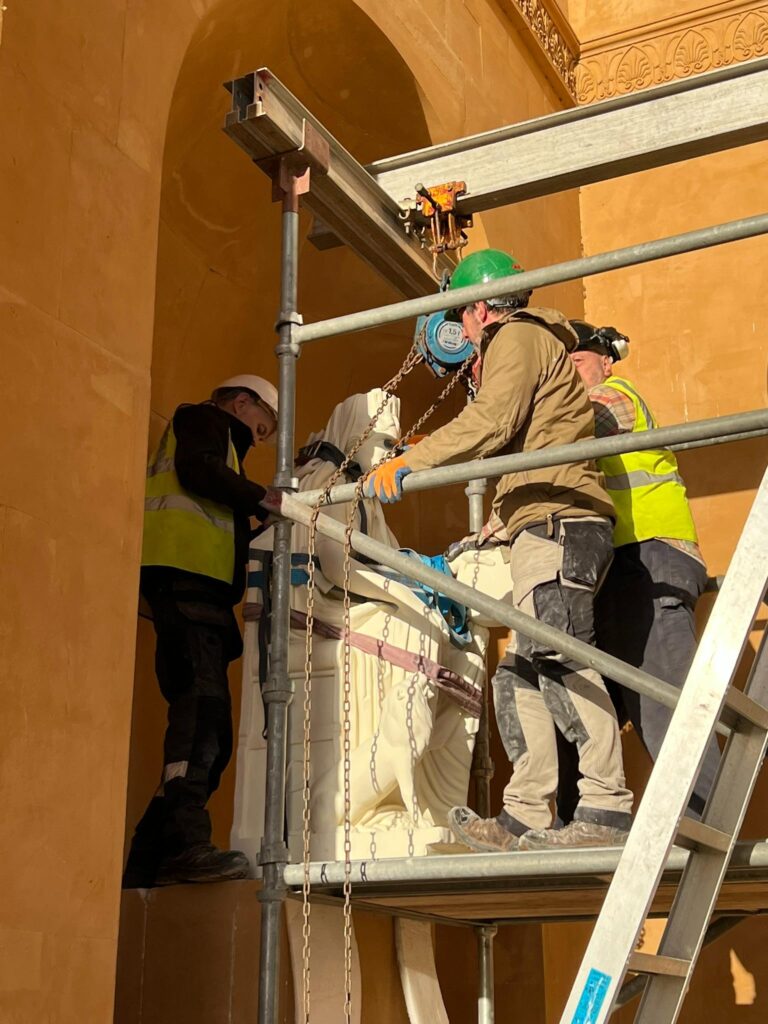
Teflon was used under the statue to help slide it back into position. ©Stowe House Preservation Trust
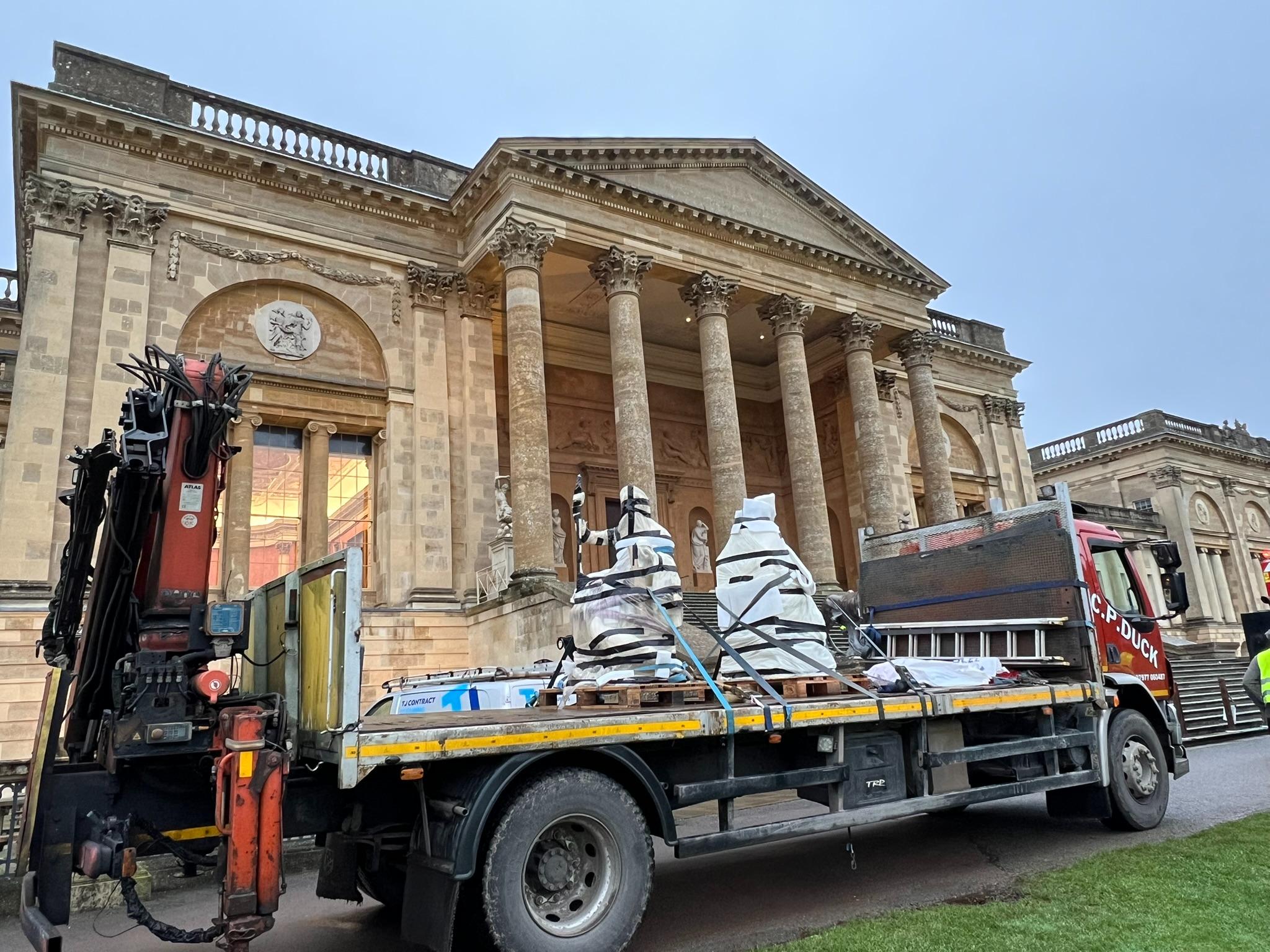
Excitement was in the air as the statues arrived at Stowe House. ©Stowe House Preservation Trust
Before the statues were moved, a test run was carried out by the crane operative. ©Stowe House Preservation Trust
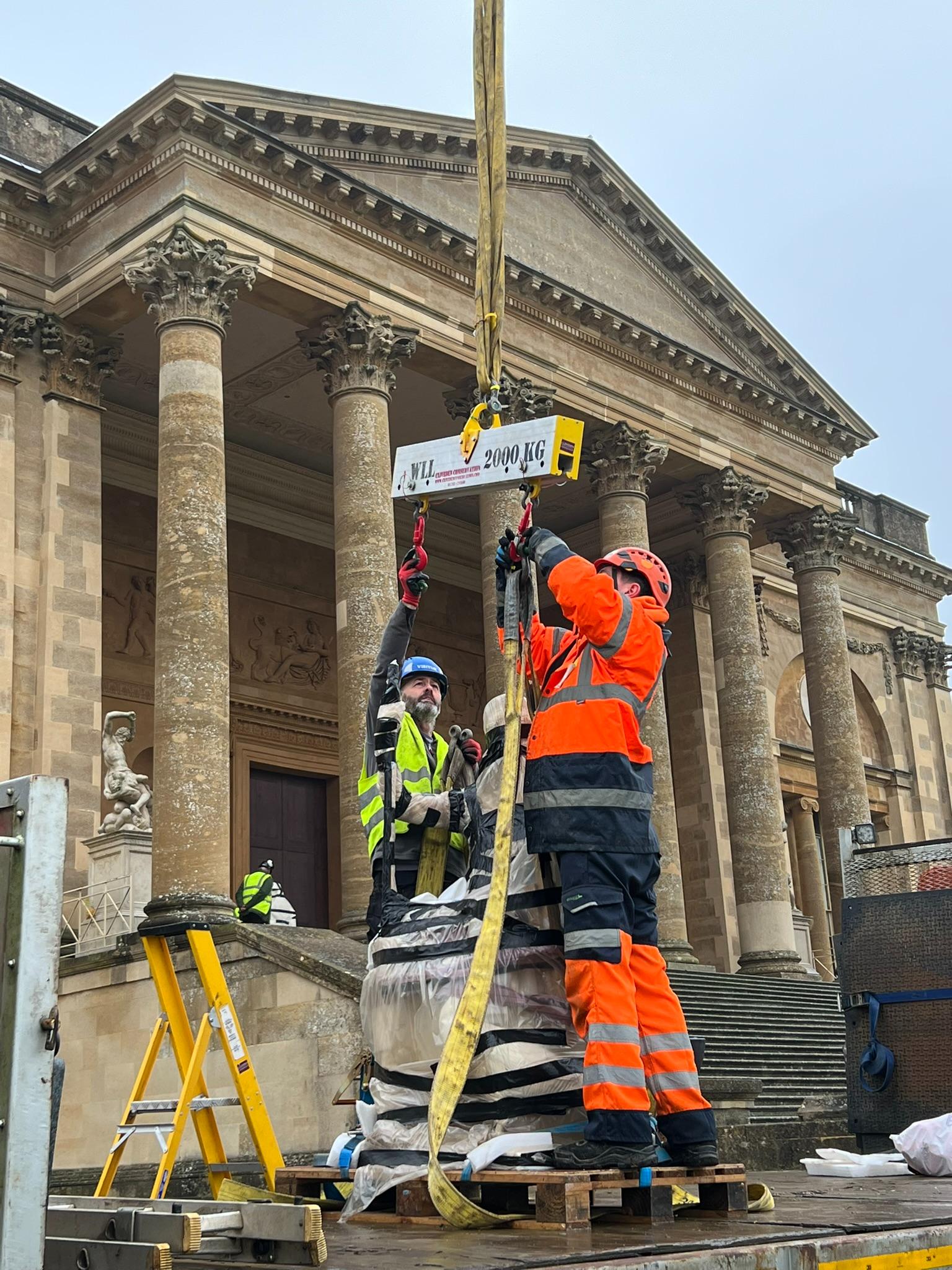
Each statue had to be carefully strapped and prepared for lifting. ©Stowe House Preservation Trust
Each statue weighed 700kg ©Stowe House Preservation Trust, David Hayhurst-France
Juno is lifted from the flatbed truck after transport. ©Stowe House Preservation Trust, David Hayhurst-France
Rising over the steps and up between the columns of the South Front Portico. ©Stowe House Preservation Trust, David Hayhurst-France
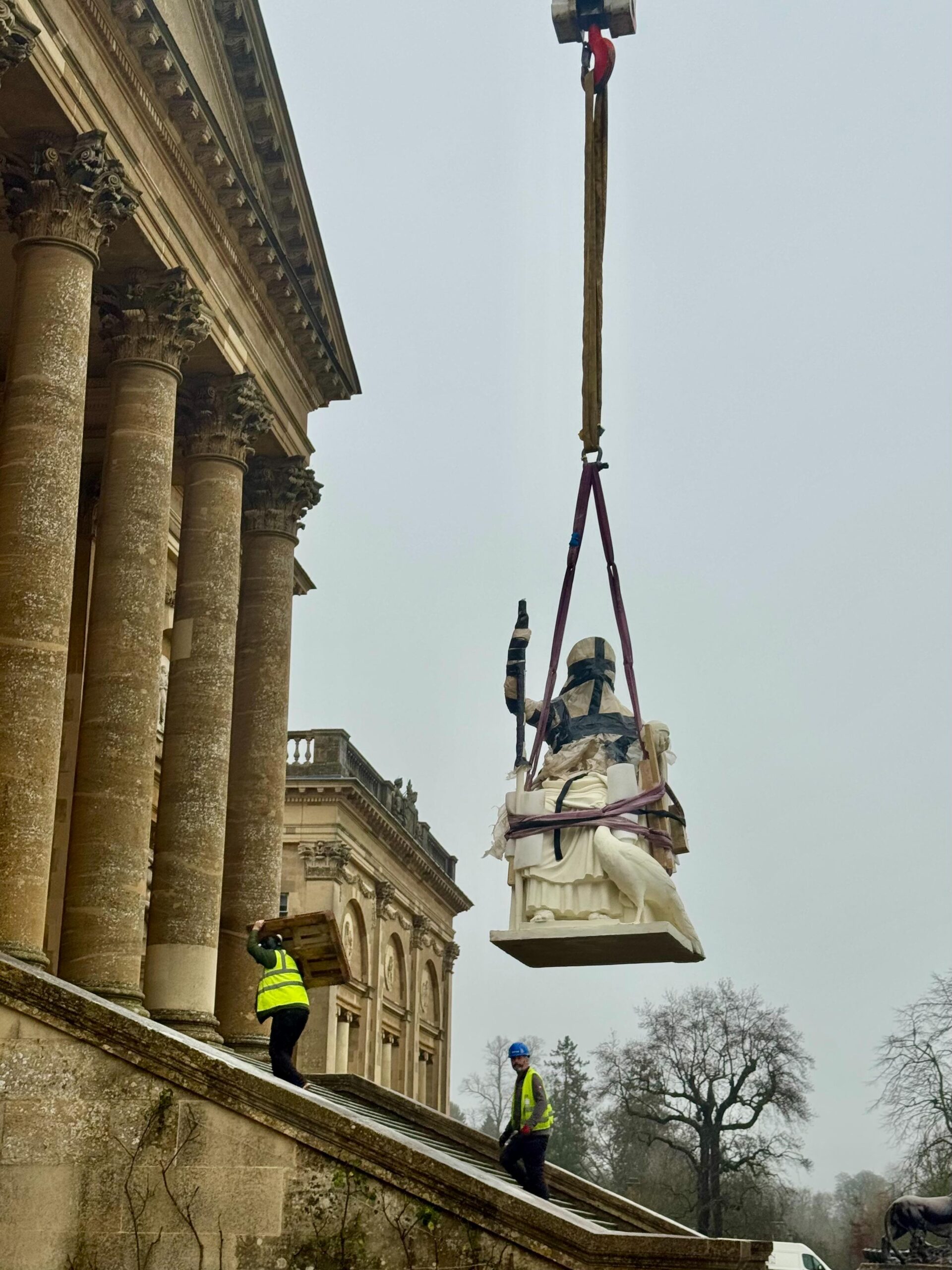
Juno mid-air. ©Stowe House Preservation Trust, David Hayhurst-France
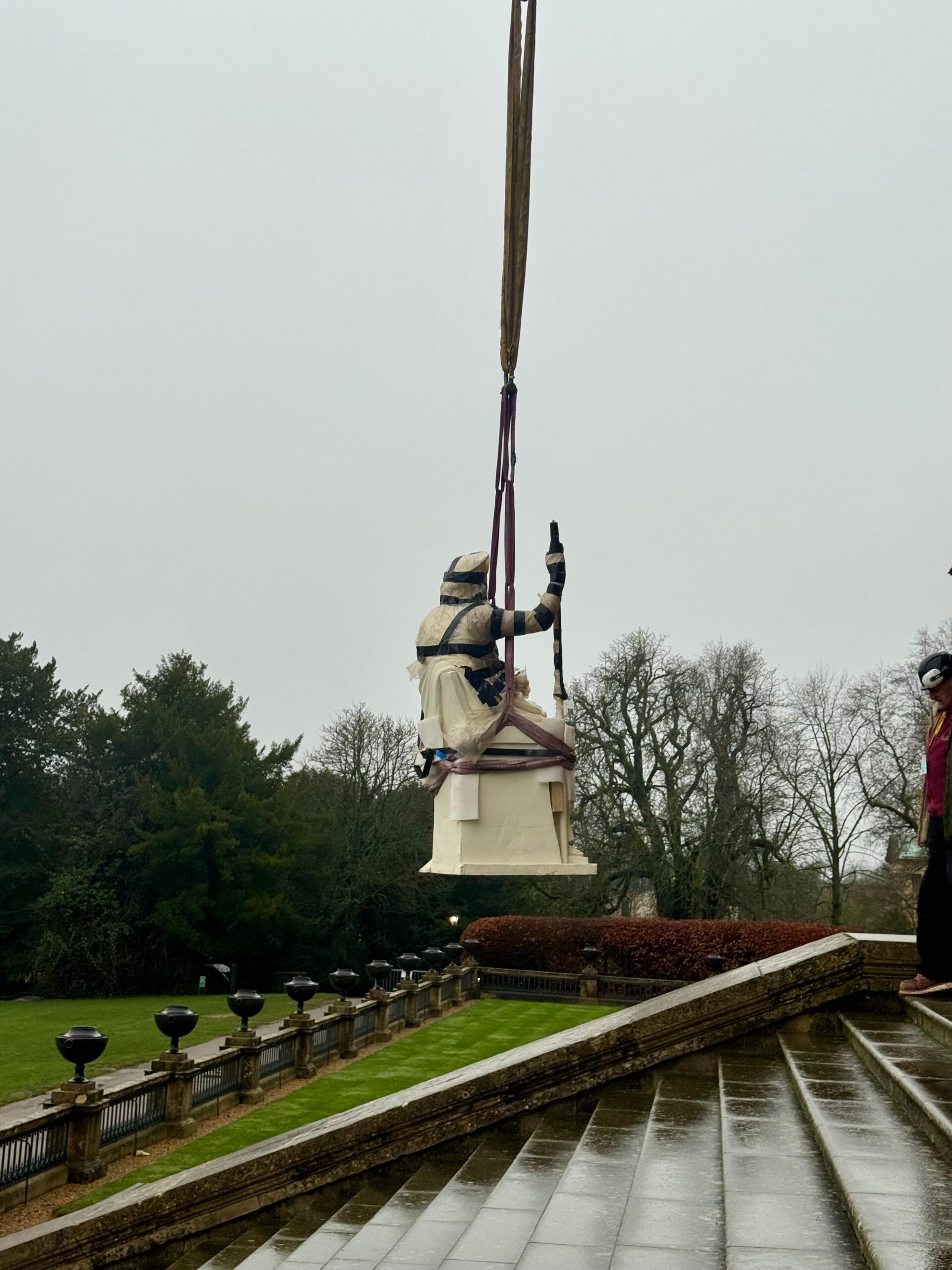
Seeing the statues rise above the steps was quite a feat to behold. ©Stowe House Preservation Trust, David Hayhurst-France
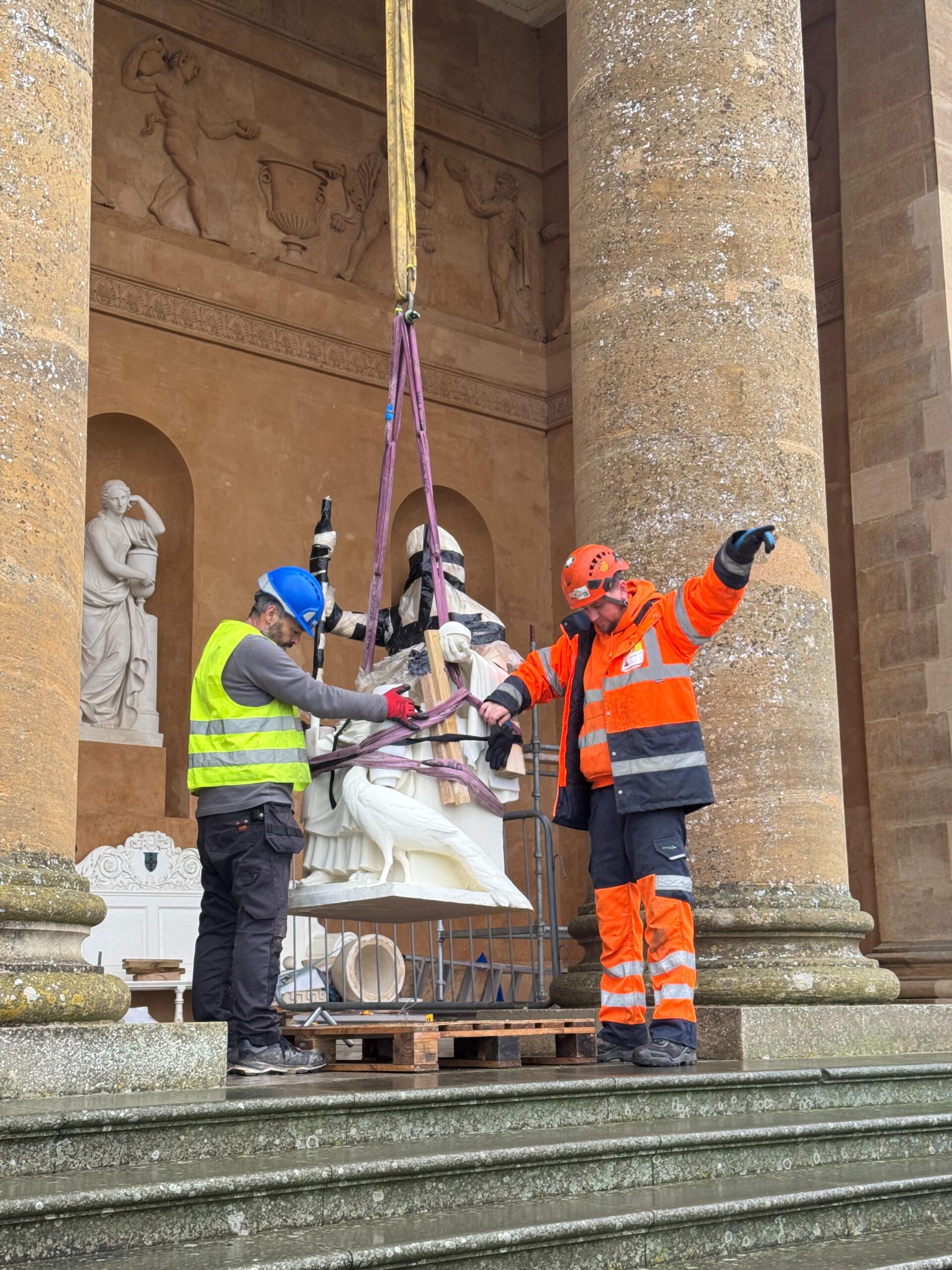
Working together, our contractors safely delivered the statues. It does make you reflect as to how these tasks were carried out centuries ago without the modern technology we have today. ©Stowe House Preservation Trust, David Hayhurst-France
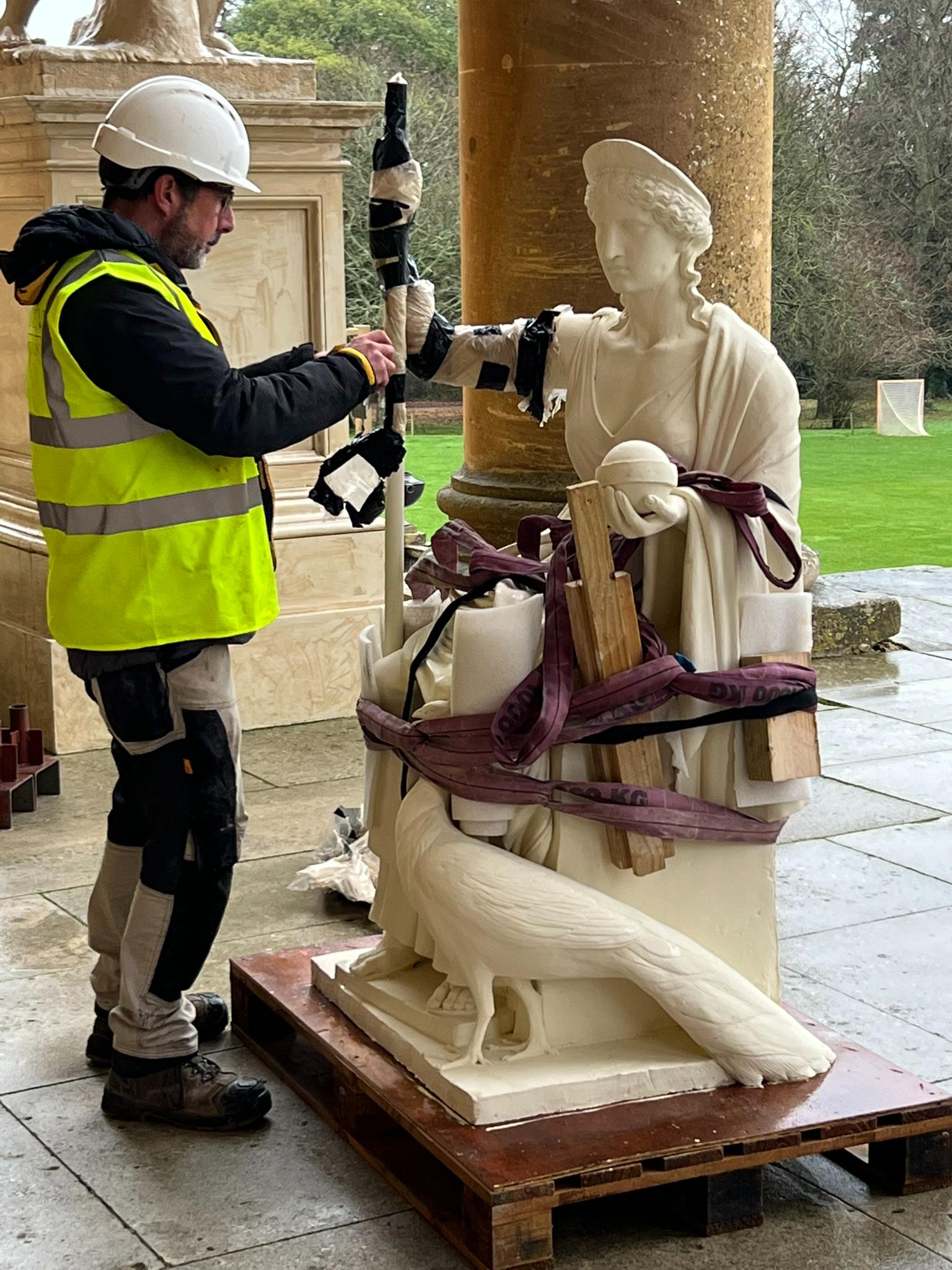
Juno safely on the portico and being unwrapped. ©Stowe House Preservation Trust
With Juno now on the Portico, it was the turn of Cybele. ©Stowe House Preservation Trust, David Hayhurst-France
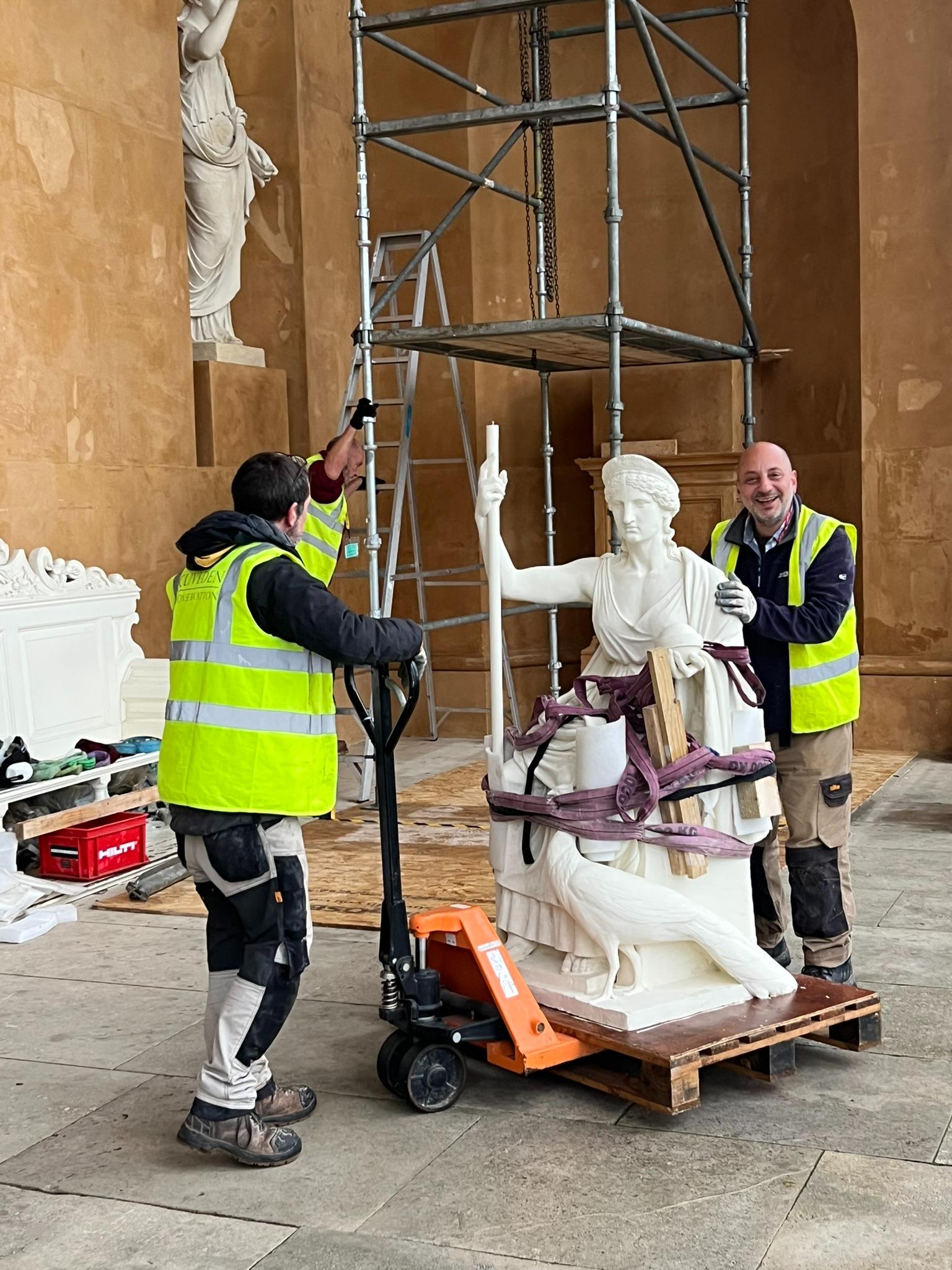
The team from Cliveden Conservation move Juno in preparation to be hoisted onto her plinth. ©Stowe House Preservation Trust
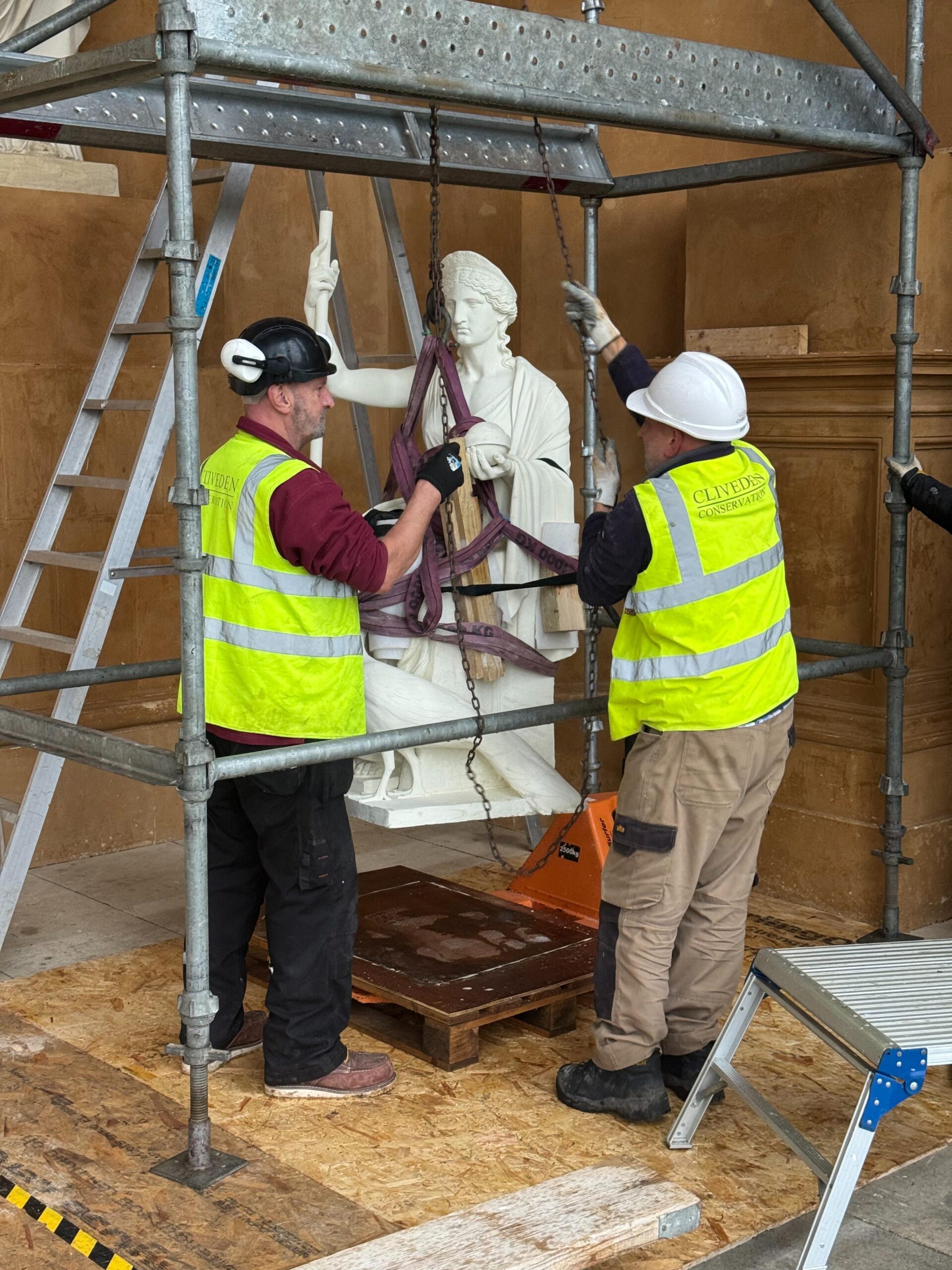
Juno being hoisted through a scaffolding tower. ©Stowe House Preservation Trust, David Hayhurst-France
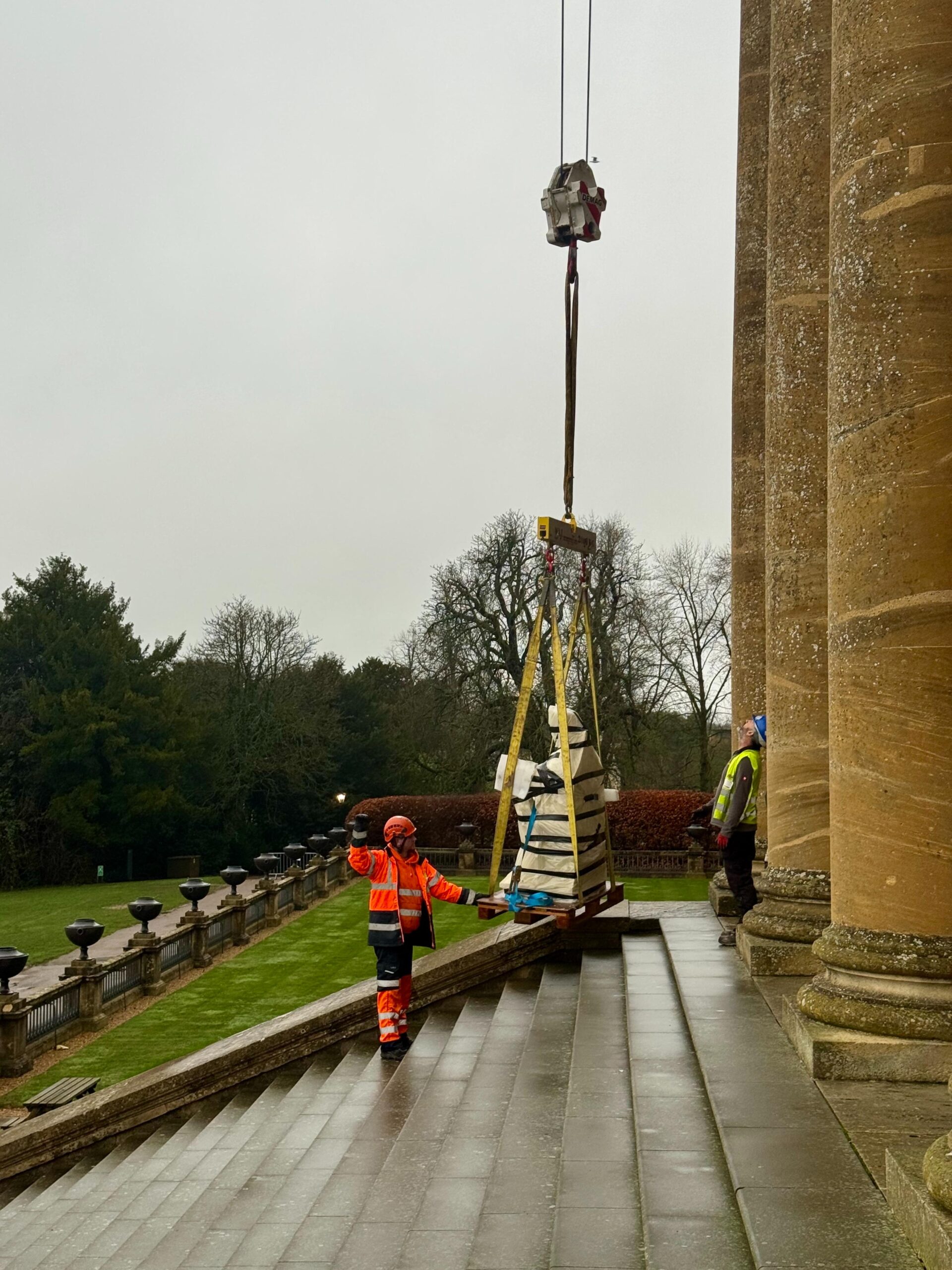
Precision manvouring by the banksman and crane operative working in tandem to ensure the safe delivery of the statues. ©Stowe House Preservation Trust, David Hayhurst-France
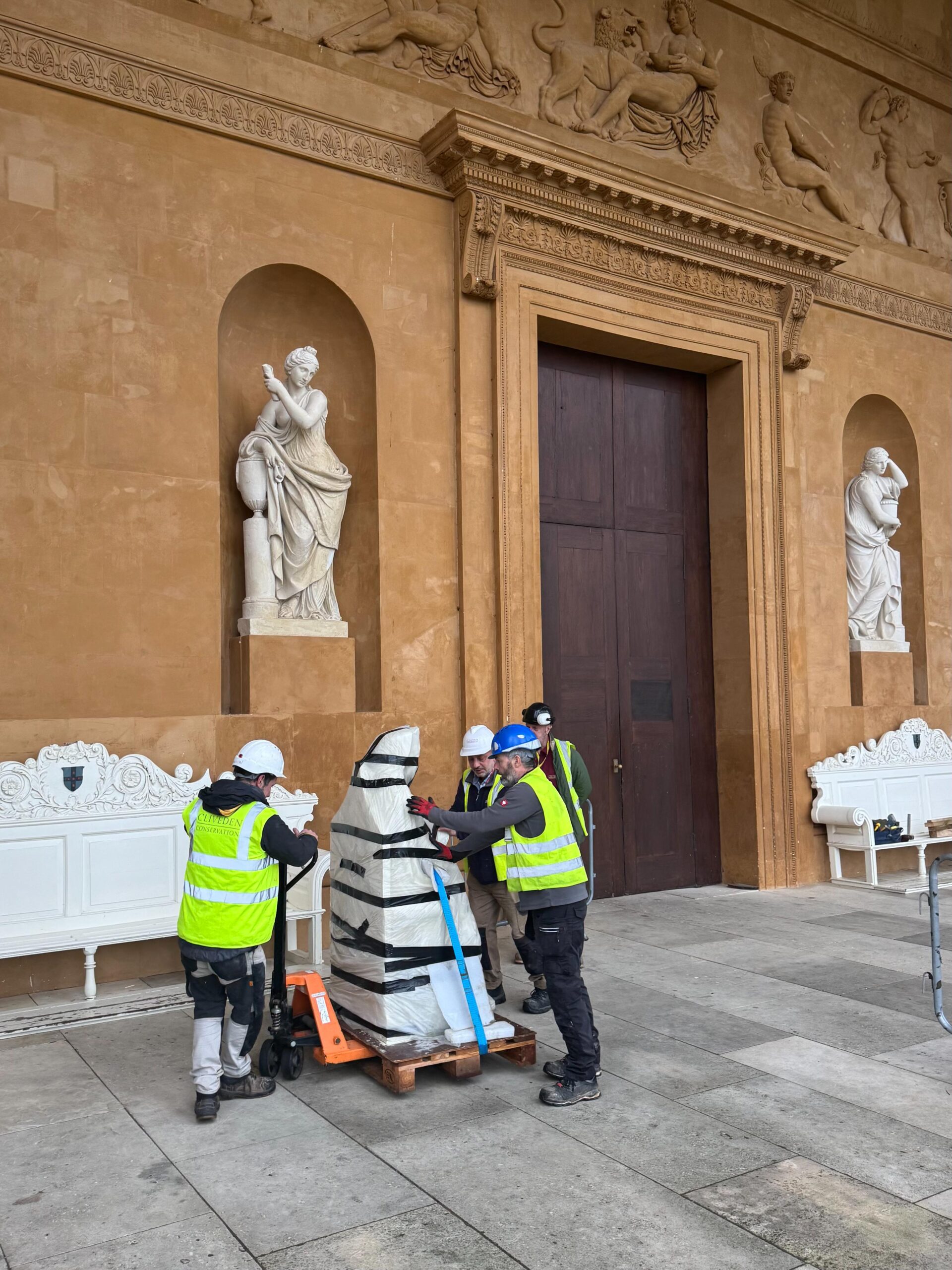
Cybele being moved using a pump truck nearer to her plinth. ©Stowe House Preservation Trust, David Hayhurst-France
Nearly there! ©Stowe House Preservation Trust, David Hayhurst-France
Cybele unwrapped on on the Portico ©Stowe House Preservation Trust, David Hayhurst-France
Juno nears the height of her plinth as the team from Cliveden Conservation hoist her up. ©Stowe House Preservation Trust, David Hayhurst-France
Time to manoeuvre Juno into place. ©Stowe House Preservation Trust, David Hayhurst-France
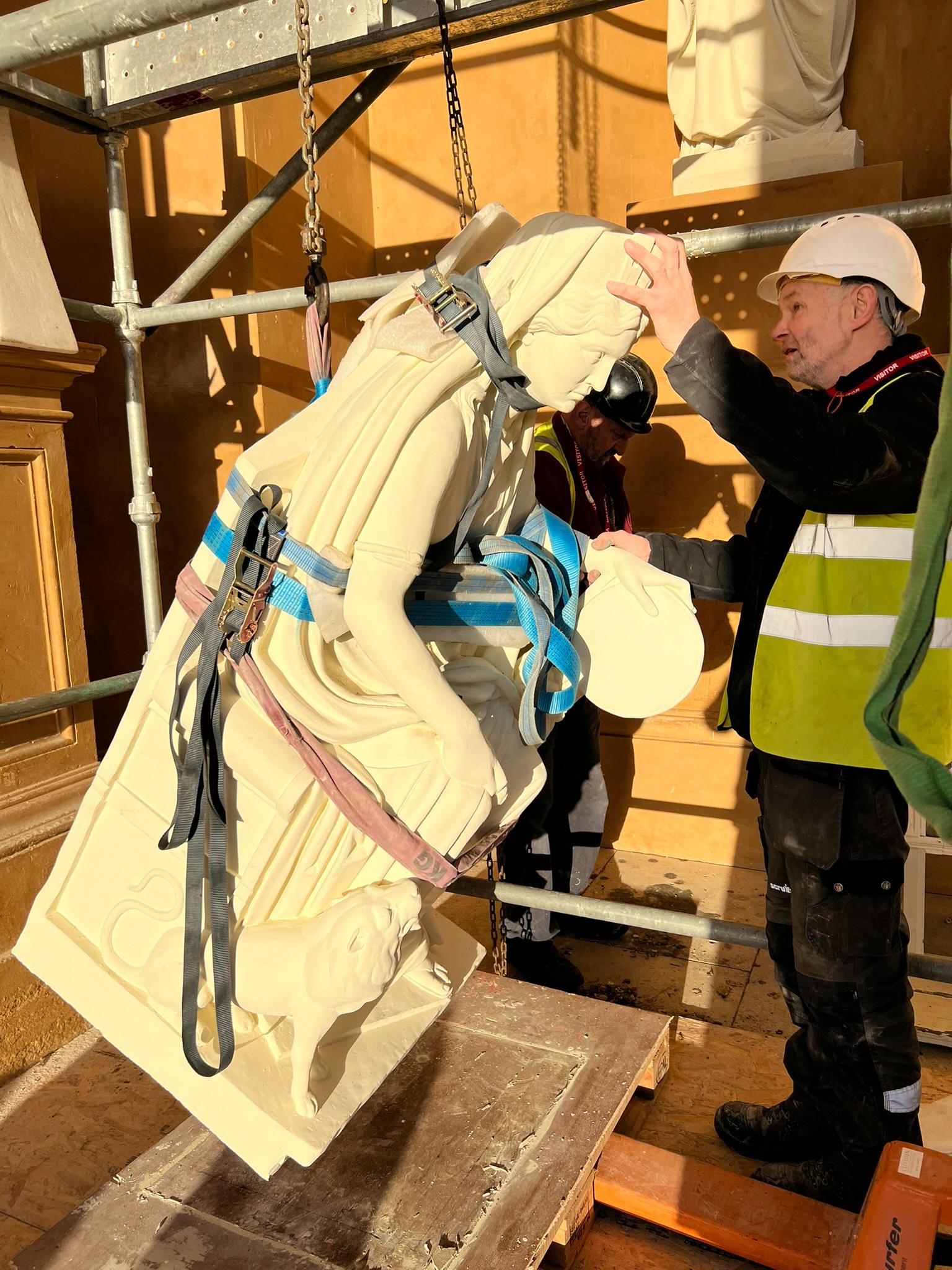
Cybele's distribution of weight made her a trickier challenge than Juno. She had to be hoisted at an angle to reach her plinth. ©Stowe House Preservation Trust
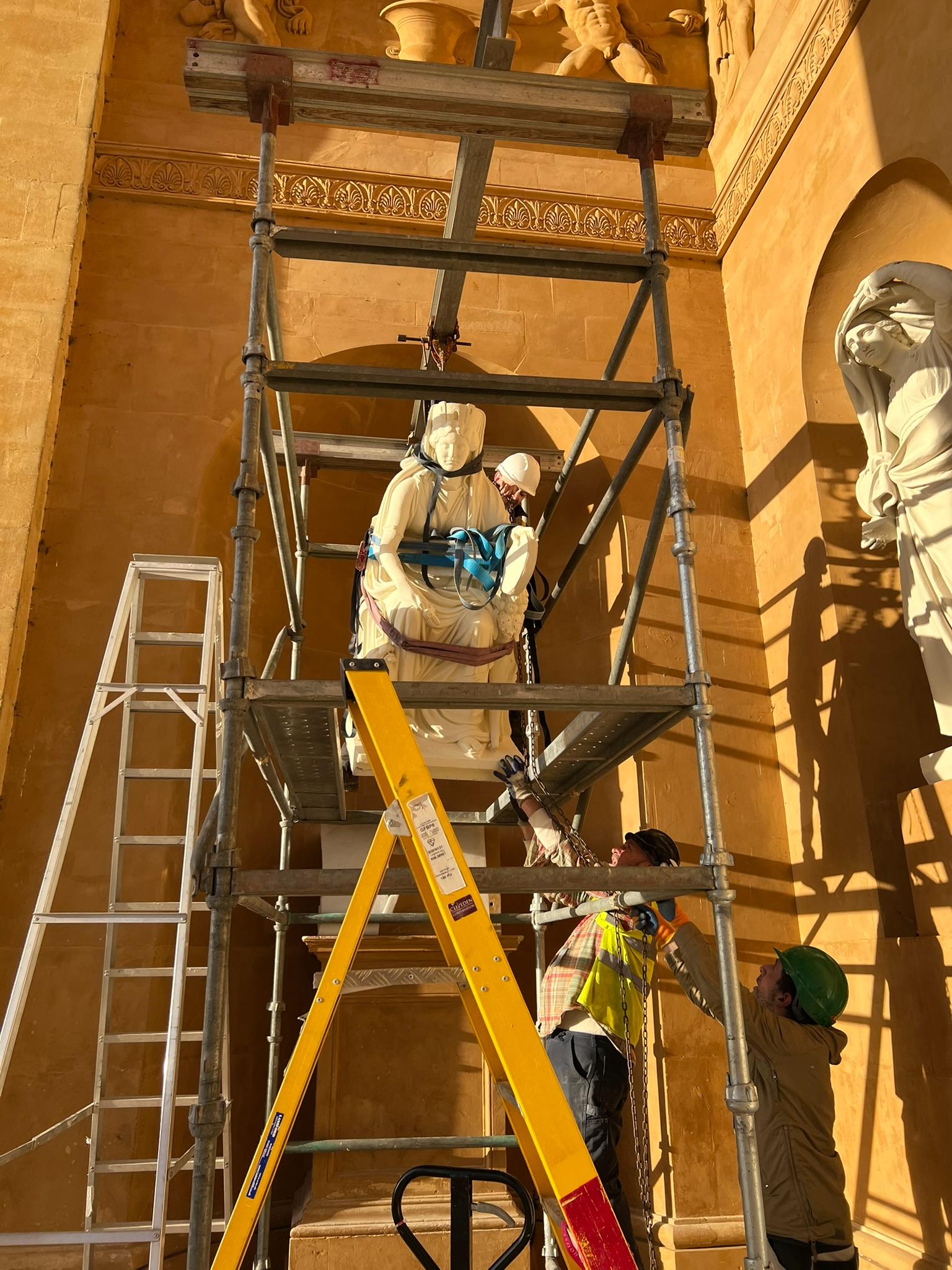
Juno nearing her plinth. ©Stowe House Preservation Trust
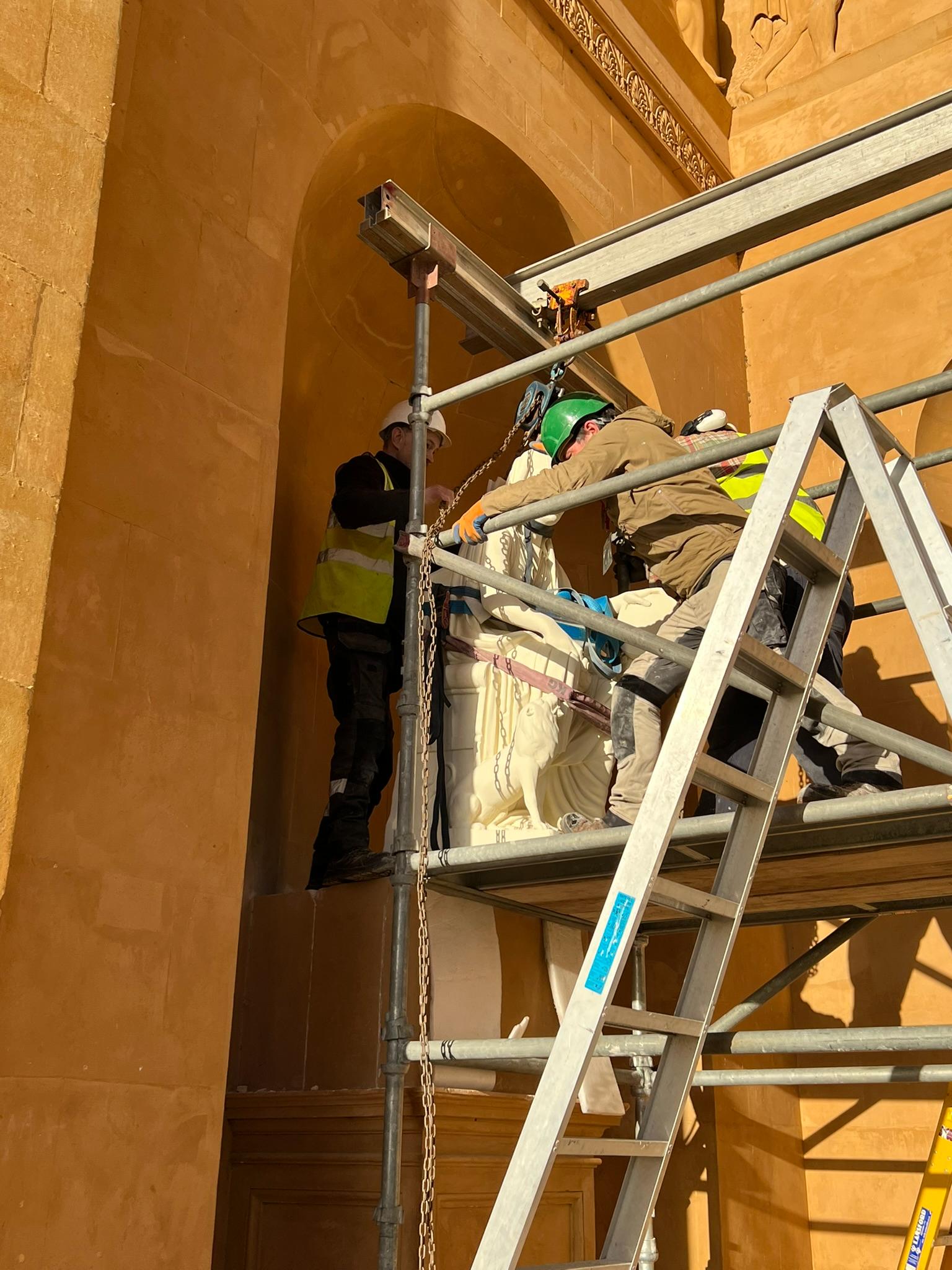
Moving Juno back into the niche. ©Stowe House Preservation
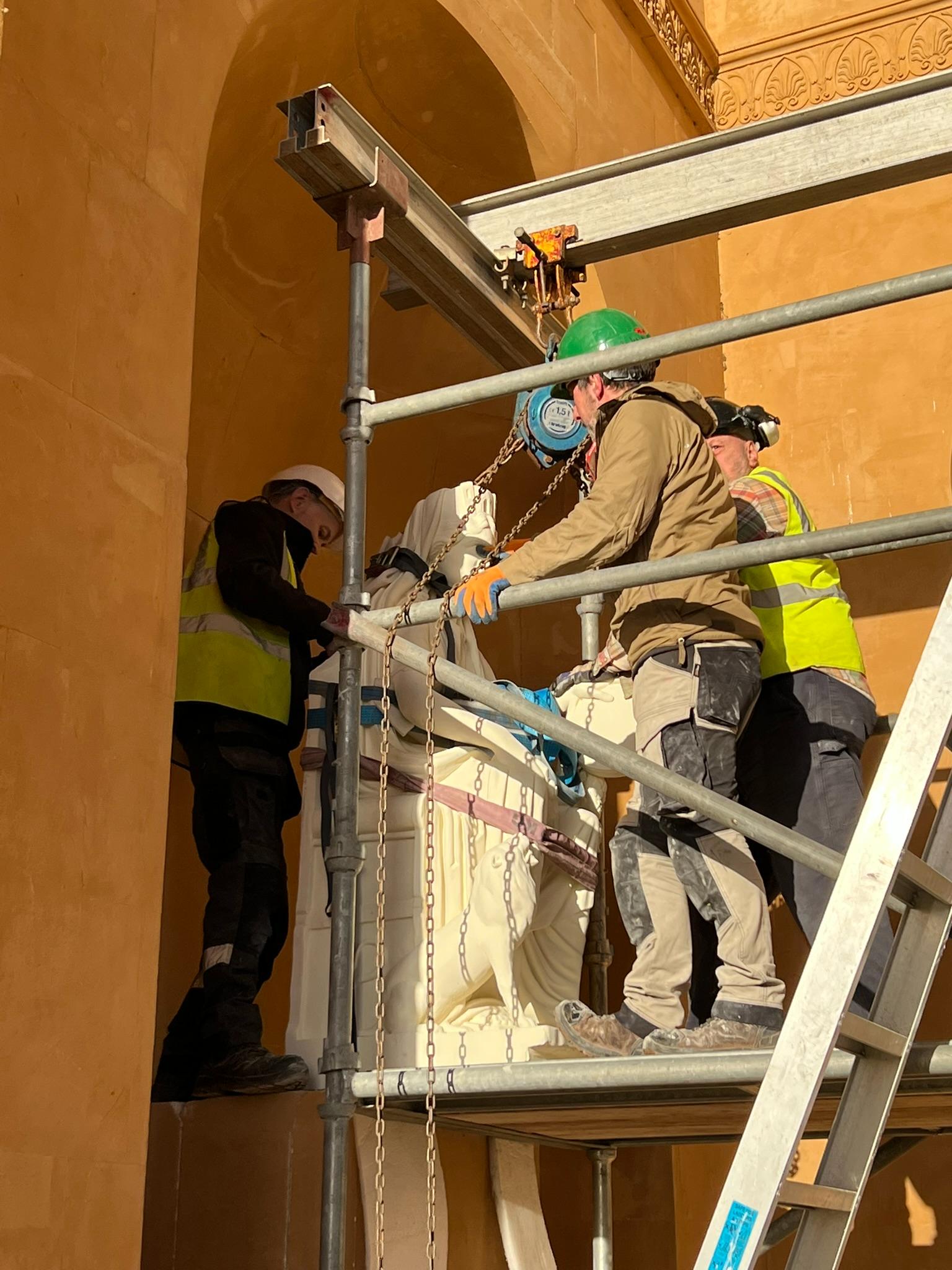
Teflon was used under the statue to help slide it back into position. ©Stowe House Preservation Trust

The Return of Cybele and Juno
Most major conservation work happens behind the scenes. Here, we share rare footage from installation day, documenting every moment as Cybele and Juno were lifted into place.

Behind the Sculptures: Sam Steel on Recreating Cybele and Juno
Sculptor Sam Steel reflects on recreating Cybele and adapting her form to create a historically informed interpretation of Juno.
An Achievement Made Possible by Support
Stowe House Preservation Trust is an independent charity and receives no government funding. Projects like this are only possible thanks to visitor admissions, donations, gifts in wills, retail income, and the generosity of supporters, including the anonymous donor who funded this project.
To support future conservation work, click the link below.
Statues of the South Front
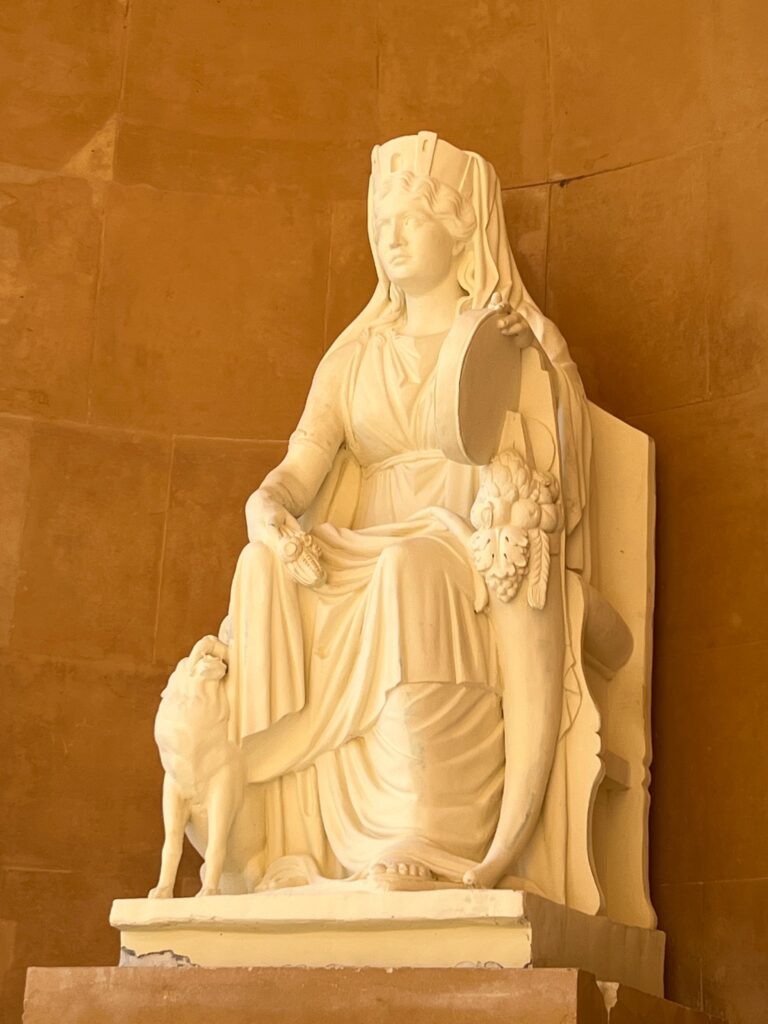
A close up of Cybele newly installed on her plinth. ©Stowe House Preservation Trust
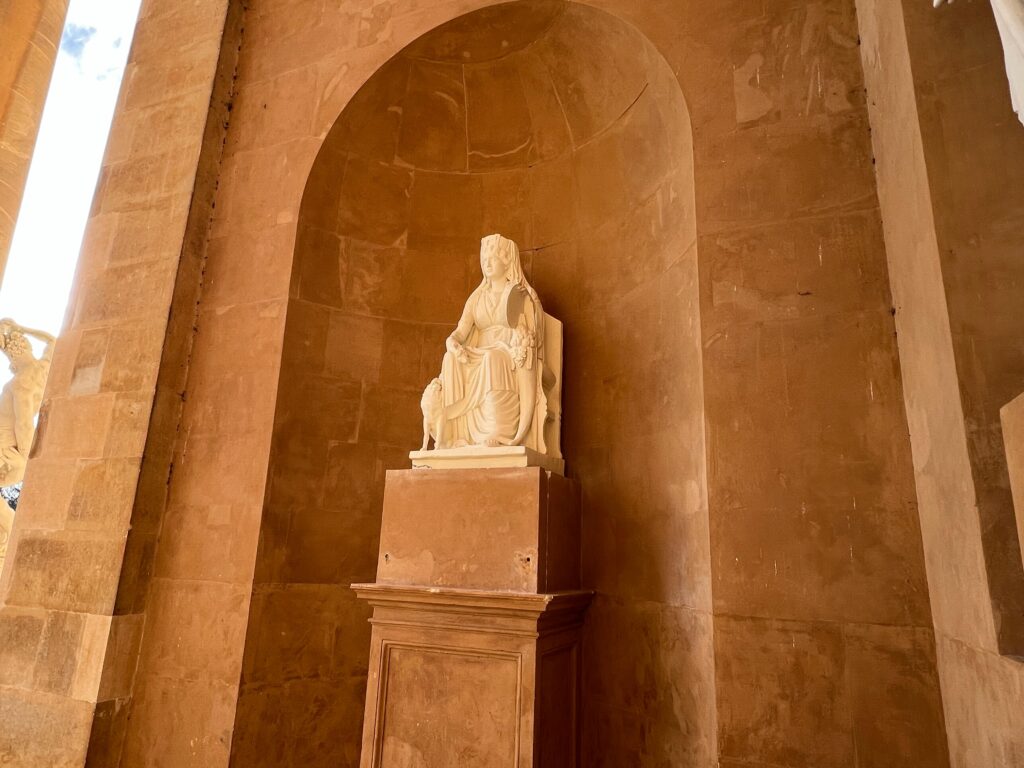
A view of Cybele in her niche. ©Stowe House Preservation Trust
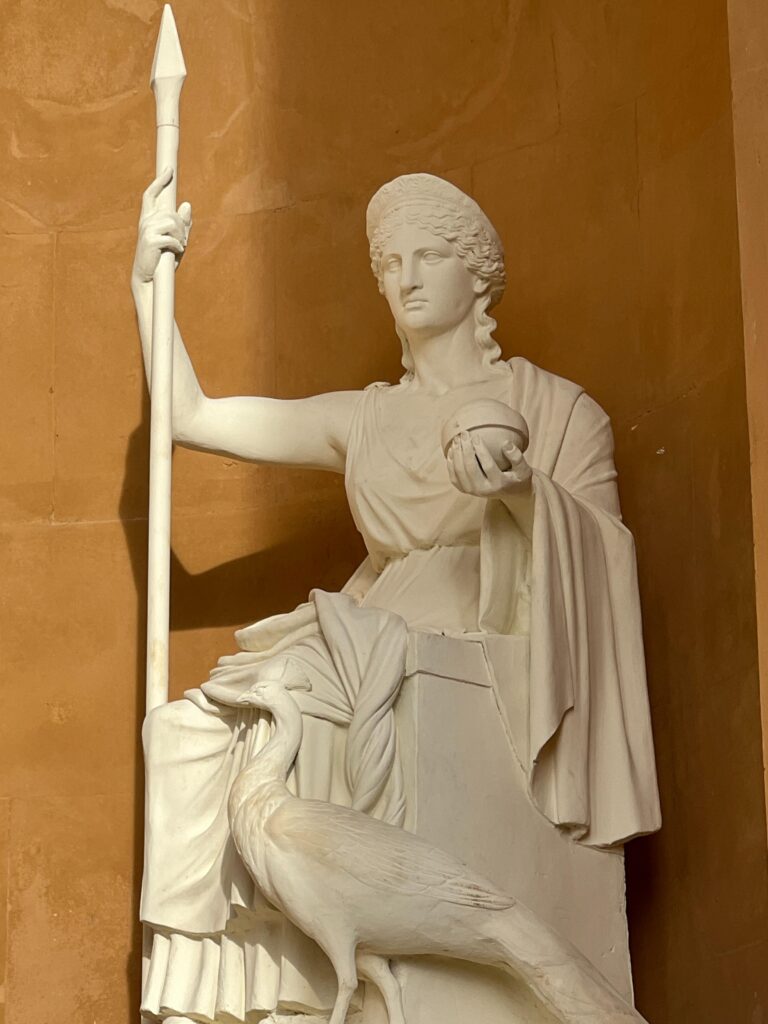
Juno's attributes include a peacock, an orb and her spear. ©Stowe House Preservation Trust
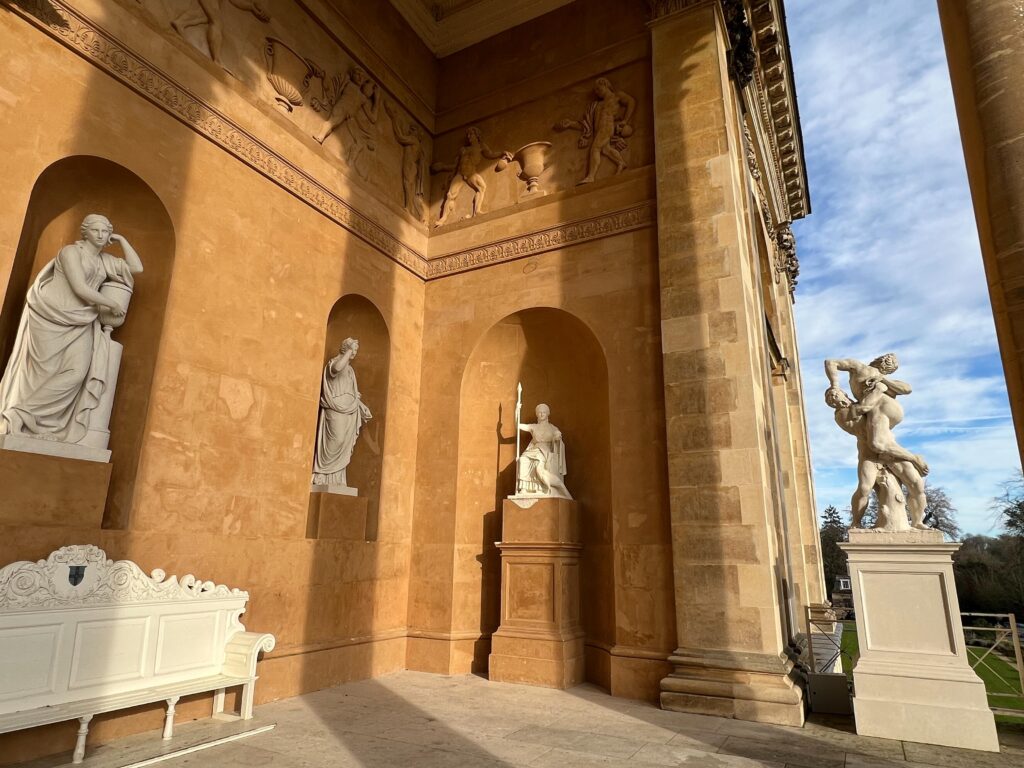
To Juno's left are the statues of the Fates whilst to her right is a statue of Hercules wrestling the giant Antaeus. ©Stowe House Preservation Trust
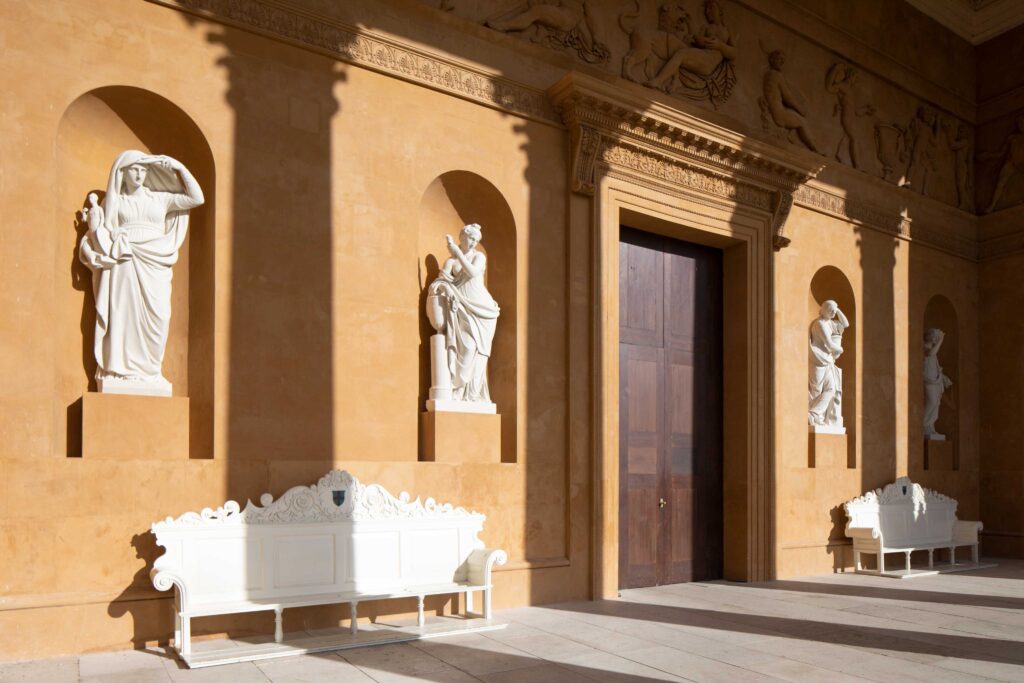
Statues of Minerva and The Fates were copied and returned to empty niches on the South Front Portico in 2018.
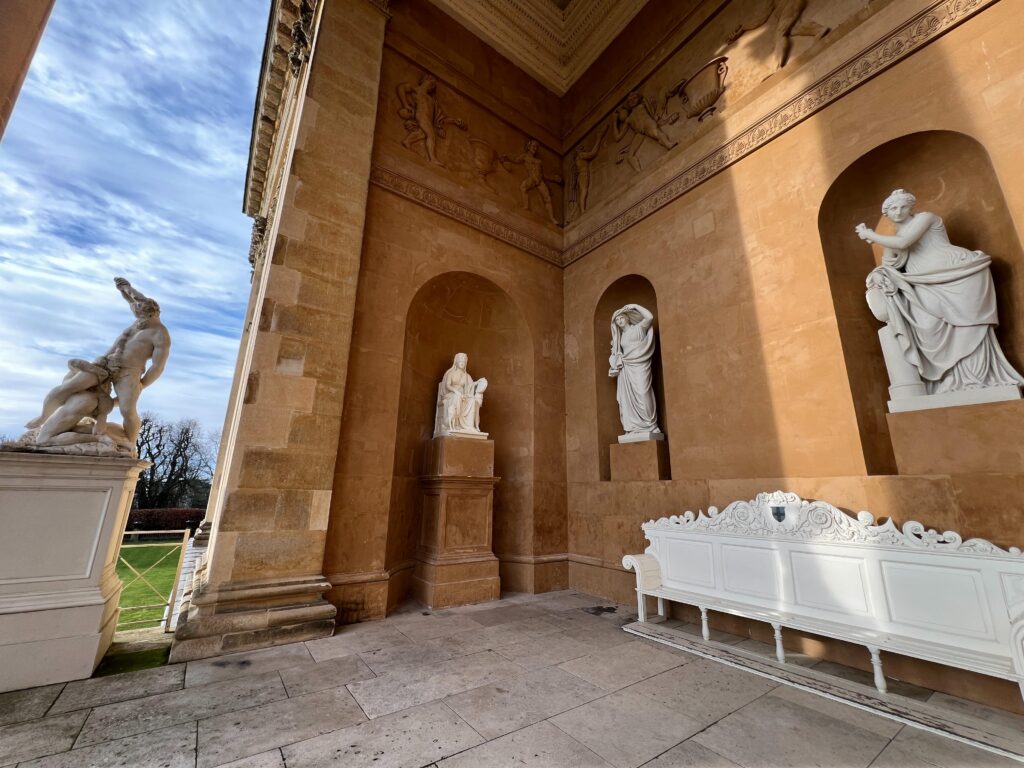
Cybele can be seen near to the statues of Minerva and Samson defeating the Philistines. ©Stowe House Preservation Trust
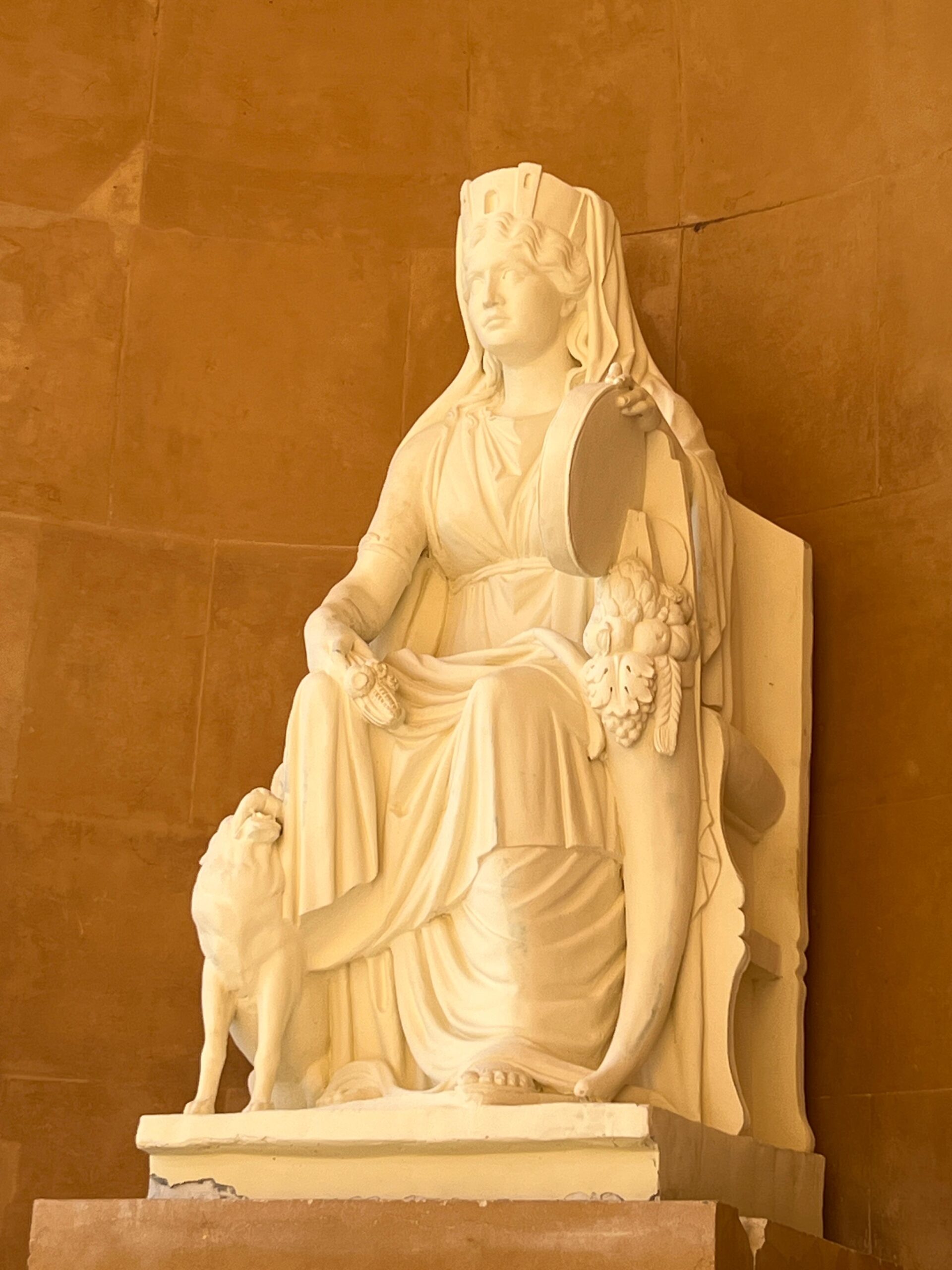
A close up of Cybele newly installed on her plinth. ©Stowe House Preservation Trust
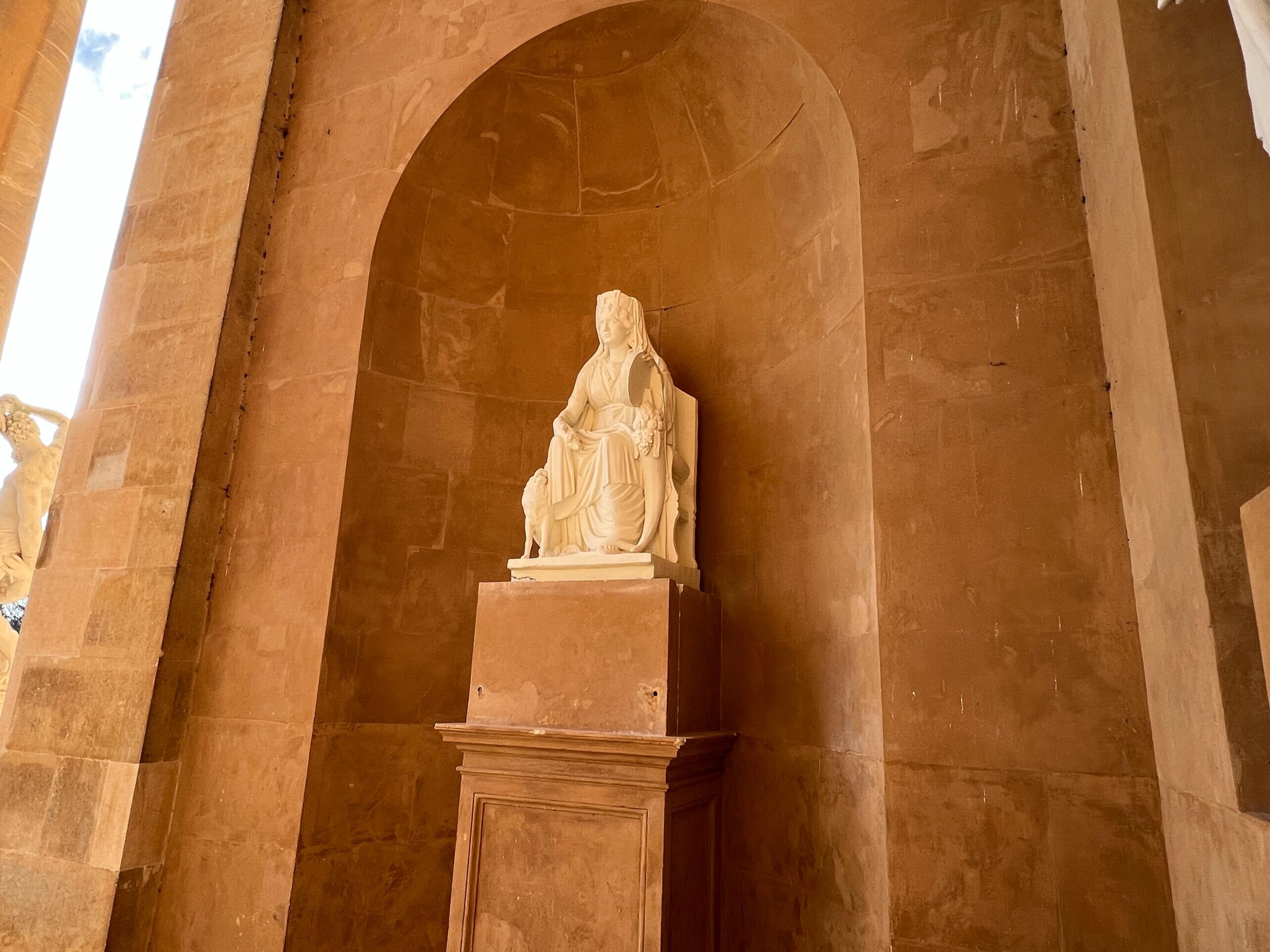
A view of Cybele in her niche. ©Stowe House Preservation Trust
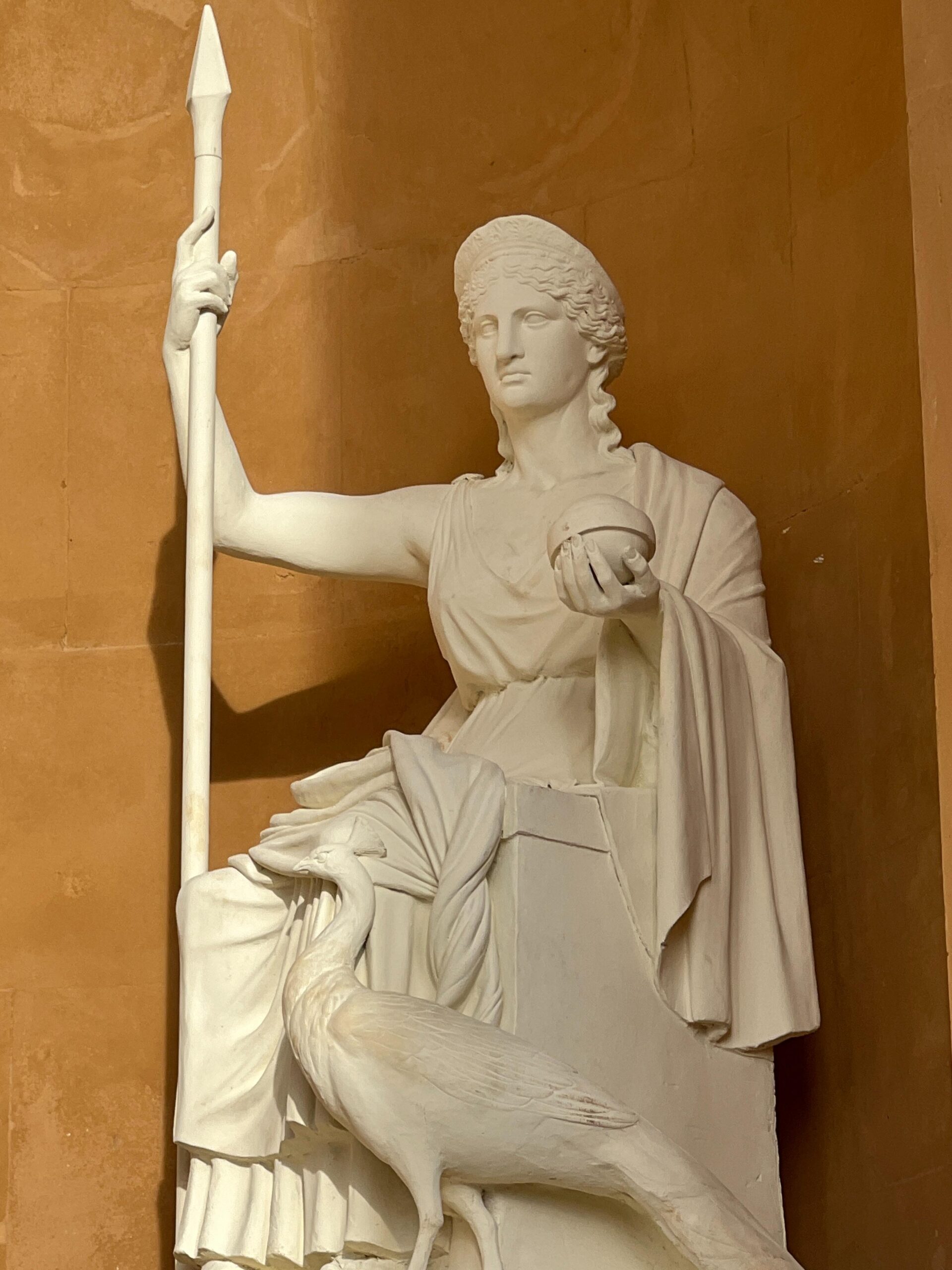
Juno's attributes include a peacock, an orb and her spear. ©Stowe House Preservation Trust
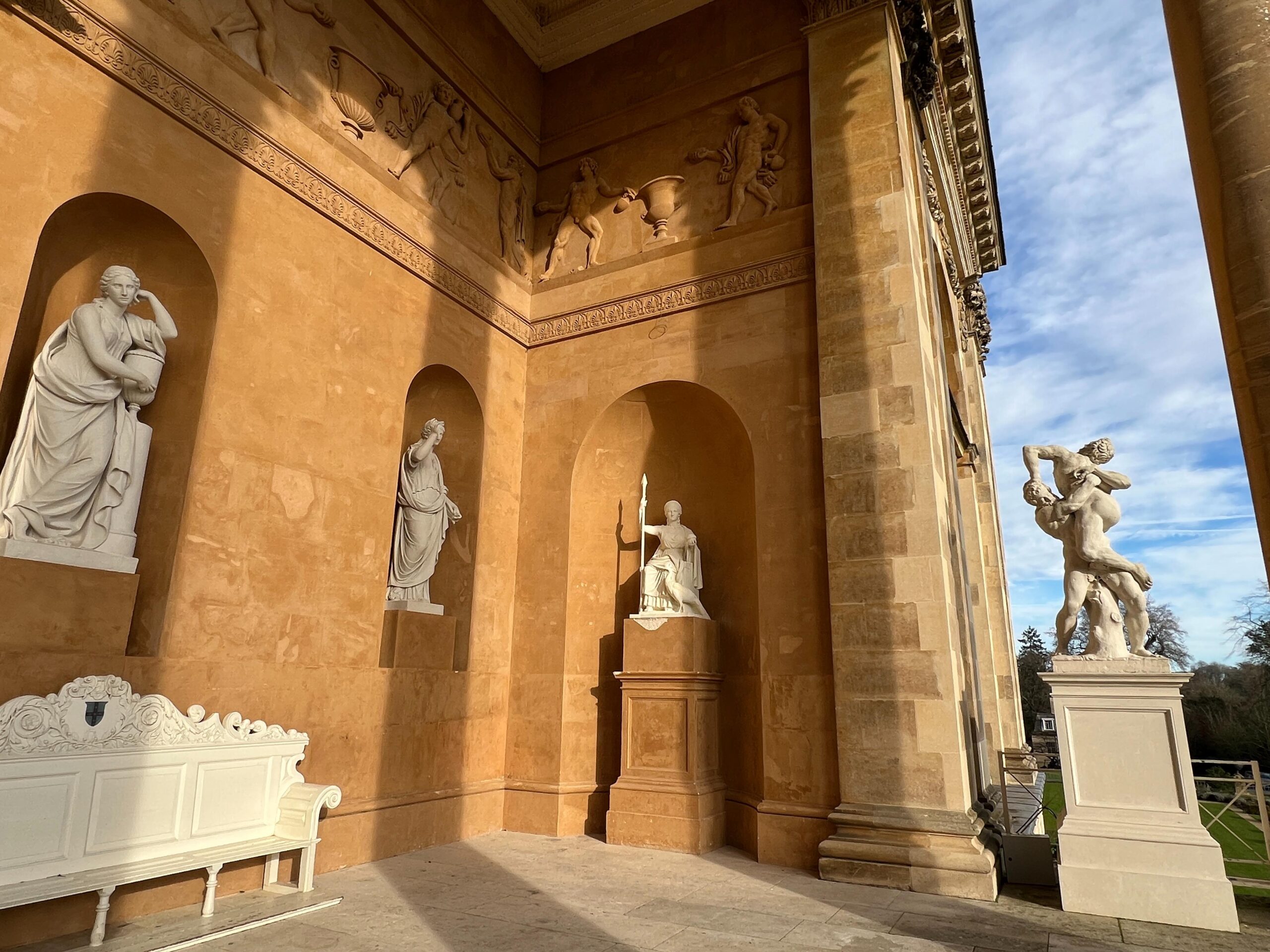
To Juno's left are the statues of the Fates whilst to her right is a statue of Hercules wrestling the giant Antaeus. ©Stowe House Preservation Trust
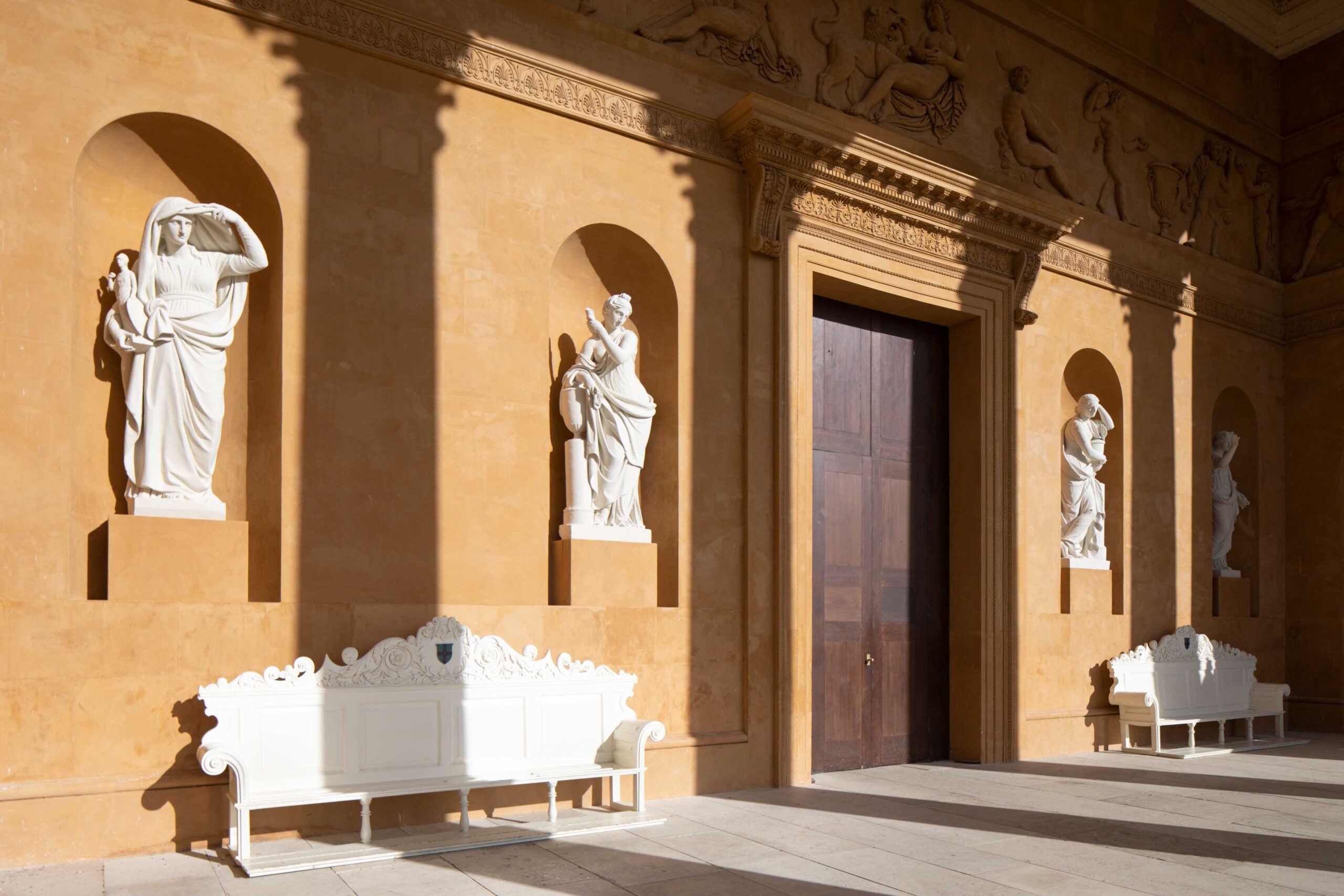
Statues of Minerva and The Fates were copied and returned to empty niches on the South Front Portico in 2018.
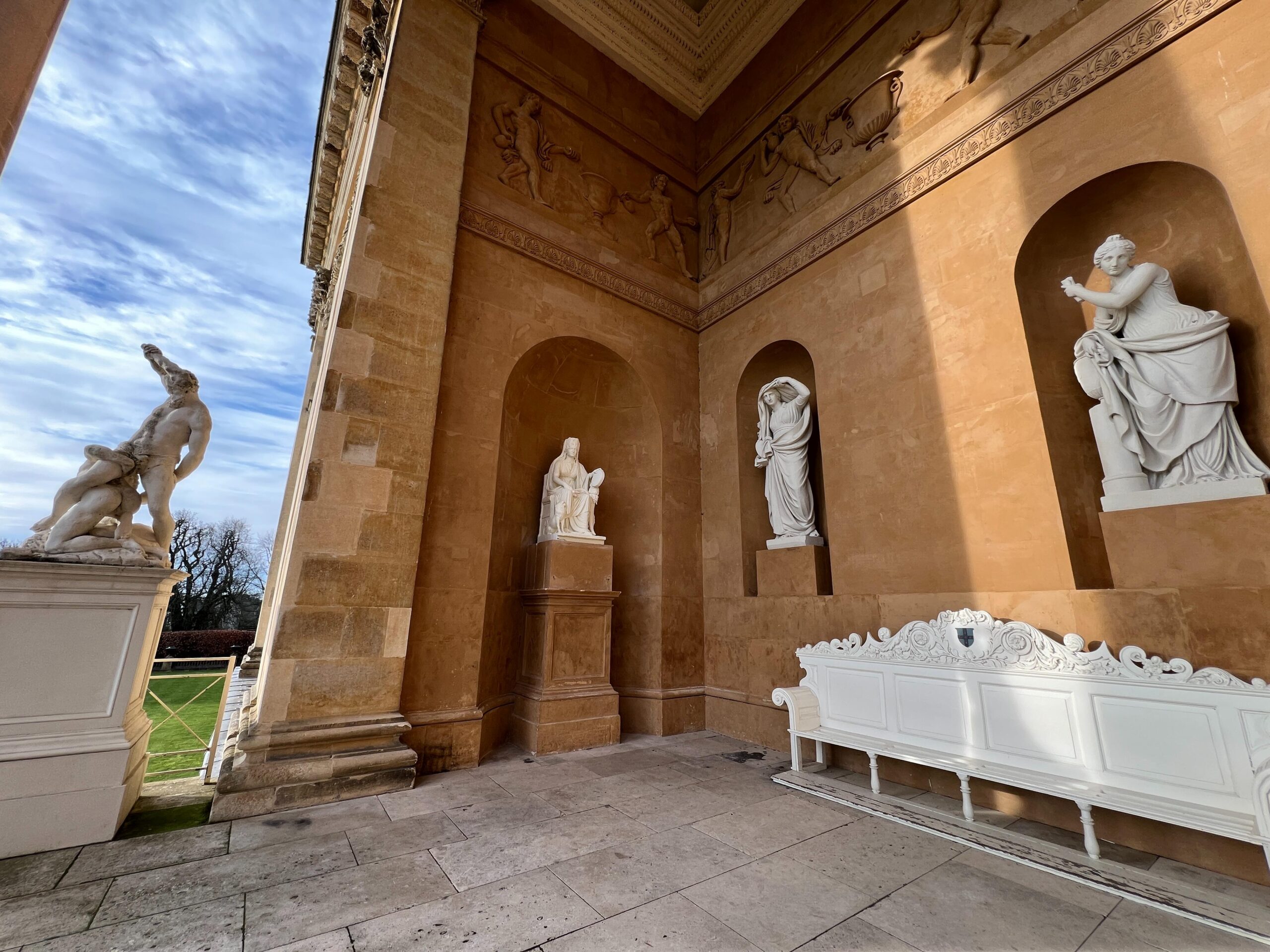
Cybele can be seen near to the statues of Minerva and Samson defeating the Philistines. ©Stowe House Preservation Trust
Thanks To
We are deeply grateful to the Getty for their support and our talented contractors – Cliveden Conservation and Sam Steel. This project would not have been possible without the generosity of an anonymous donor – thank you.



Recent Projects at Stowe House
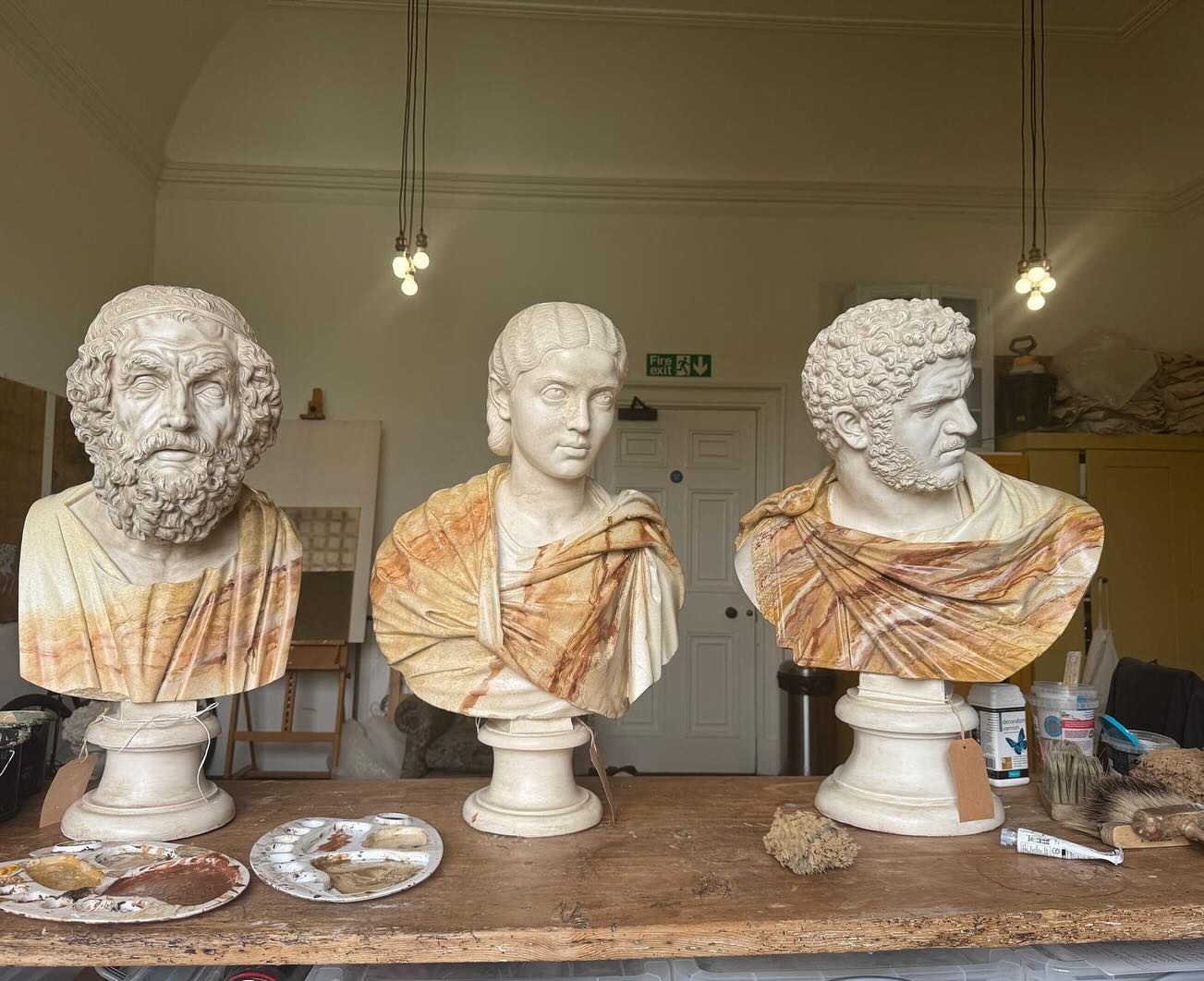
In the summer of 2025, the North Hall saw nine new busts to fill empty plinths and corbels. Read about the project in this visual article.
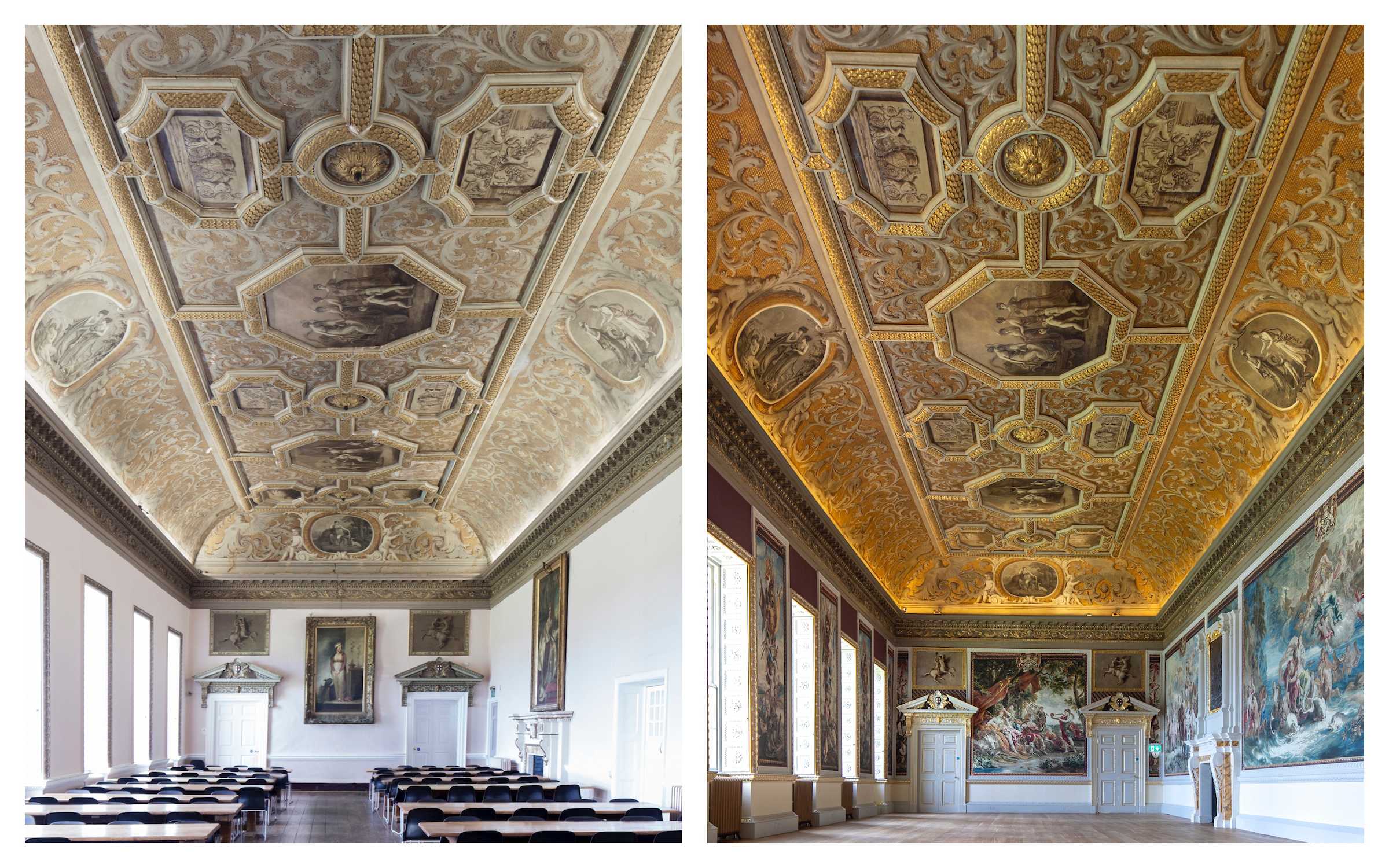
From plain white walls to opulent replica tapestries crafted from wipe‑clean wallpaper, discover the ingenious techniques used to restore the State Dining Room to its former splendour. Turn the page with us to learn more.