Archives: Objects
A post type for Qi Objects.

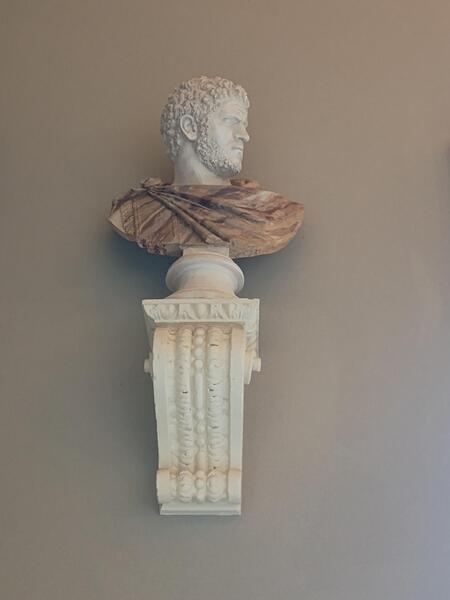
Bust of Empress Salonina
Details
- Date
- 2024
- Author / Artist
- Dimensions
- 71cm
- Material
- Jesomite
- Catalogue number
- SHPT.32
- Current location
- North Hall
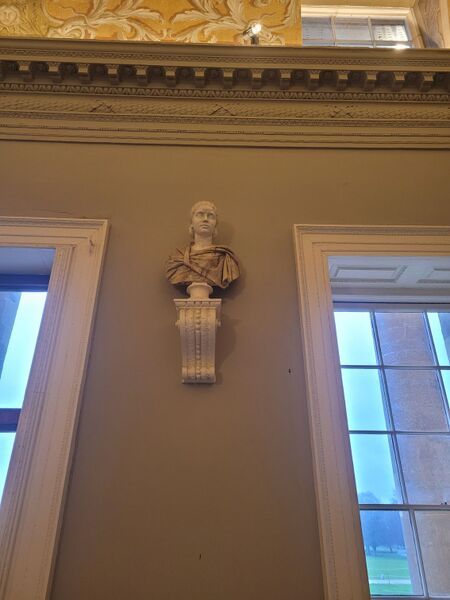
Copy of the bust of Empress Salonina. The original from Holkham Hall in Norfolk was purchased in Rome in 1754 by Matthew Brettingham for Thomas Coke. This replaces the one of the busts from North Hall sold in the 1848 sale.
Enquire about Bust of Empress Salonina
Related Collection Items
Bust of Homer
Details
- Date
- 2024
- Author / Artist
- Dimensions
- 71cm
- Material
- Jesomite
- Catalogue number
- SHPT.33
- Current location
- North Hall
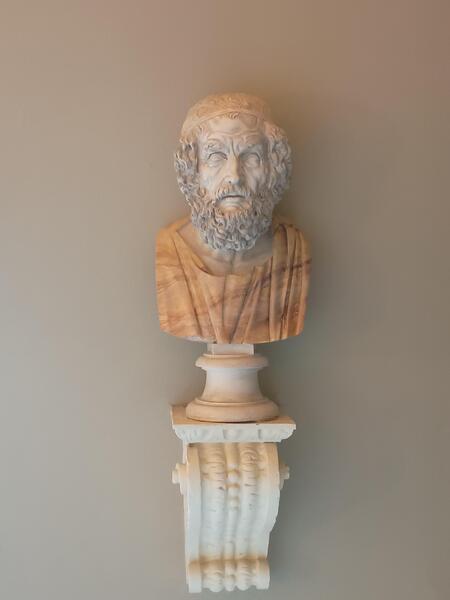
Copy of the marble of Homer. Matthew Brettingham comissioned a marble copy of the bust of Homer in the Farnese Collection, likely created by Peter von Verschaffelt, this was brought by Thomas Coke in 1752 for his home Holkham Hall. This replaces the one of the busts from North Hall sold in the 1848 sale.
Enquire about Bust of Homer
Related Collection Items
Bust of The Pseudo Seneca
Details
- Date
- 2024
- Author / Artist
- Dimensions
- 64cm
- Material
- Jesomite
- Catalogue number
- SHPT.34
- Current location
- North Hall
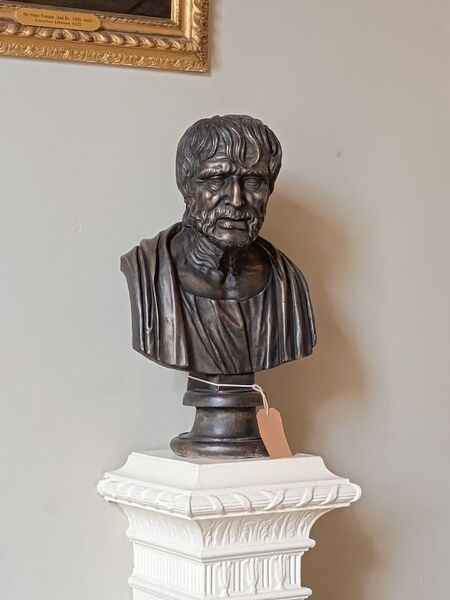
A bronze painted copy of a marble of The Pseudo Seneca. The original from Holkham Hall in Norfolk was purchased in Rome by Matthew Brettingham. This replaces the one of the busts from North Hall sold in the 1848 sale, the original was bronze.
Enquire about Bust of The Pseudo Seneca
Related Collection Items
Bust of Emperor Hadrian
Details
- Date
- 2025
- Author / Artist
- Dimensions
- 70cm
- Material
- Jesomite
- Catalogue number
- SHPT.35
- Current location
- North Hall
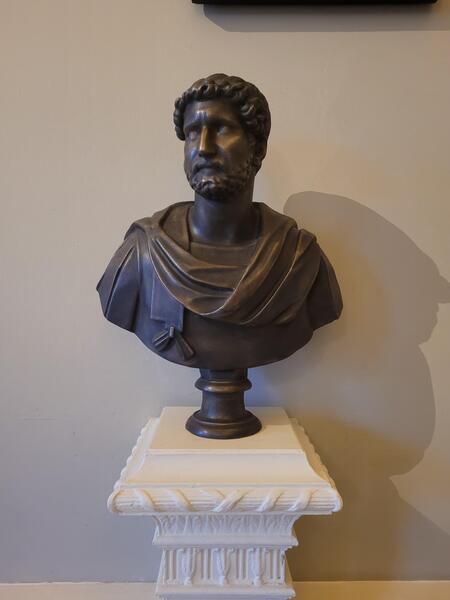
A bronze painted bust of Emperor Hadiran, AD 78-138, created from a scan likely taken from a portrait bust of Hadrian in middle life, head slightly turned to the right with a short moustache and beard. his replaces the one of the busts from North Hall sold in the 1848 sale, the original was bronze.
Enquire about Bust of Emperor Hadrian
Related Collection Items
Bust of Emperor Tiberius
Details
- Date
- 2025
- Author / Artist
- Dimensions
- 72cm
- Material
- Plaster
- Catalogue number
- SHPT.36
- Current location
- North Hall
Plaster bust of Emperor Tiberius 42 BC – 37 AD, copied from the 17th century marble at Powis Castle. This replaces the one of the busts from North Hall sold in the 1848 sale.
Enquire about Bust of Emperor Tiberius
Related Collection Items


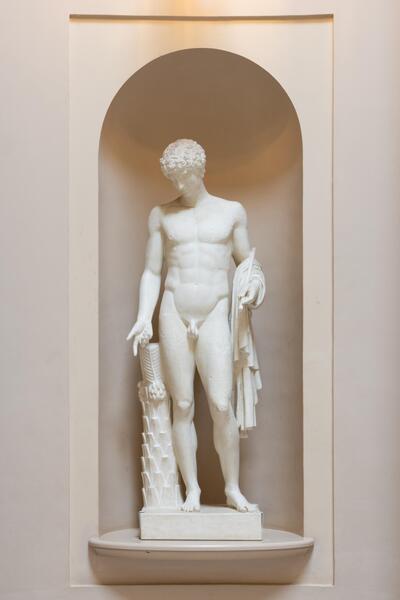
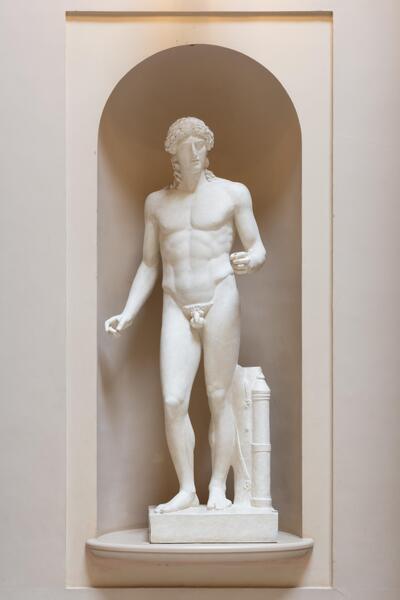
Bust of Emperor Nero
Details
- Date
- 2025
- Author / Artist
- Dimensions
- 72cm
- Material
- Plaster
- Catalogue number
- SHPT.37
- Current location
- North Hall
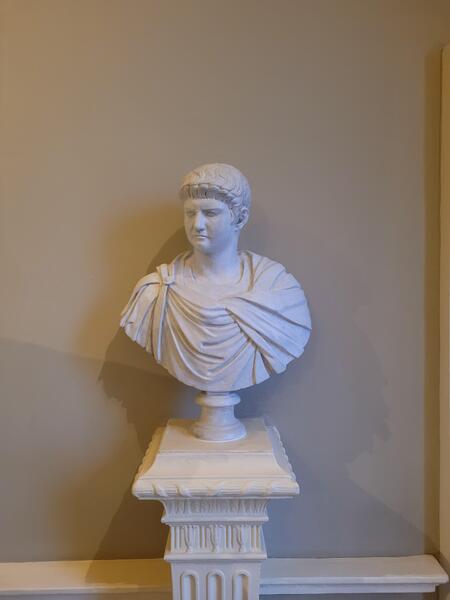
Plaster bust of Emperor Nero 37 – 68 AD, copied from the 17th century marble at Powis Castle. This replaces the one of the busts from North Hall sold in the 1848 sale.
Enquire about Bust of Emperor Nero
Related Collection Items
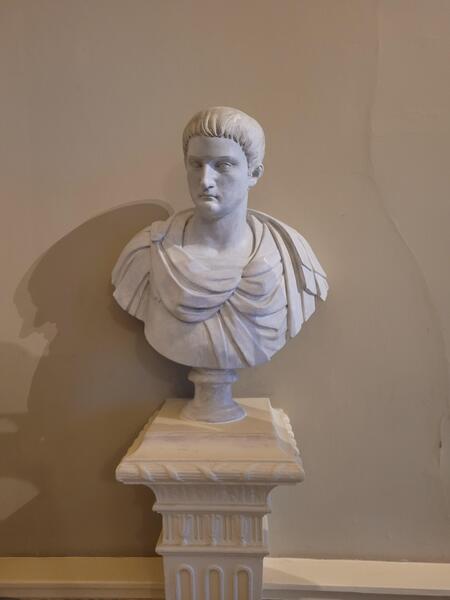
Seated Statue of Cybele
Details
- Date
- 2025
- Author / Artist
- Dimensions
- 162cm
- Material
- Portland cement
- Catalogue number
- SHPT.38
- Current location
- South Portico
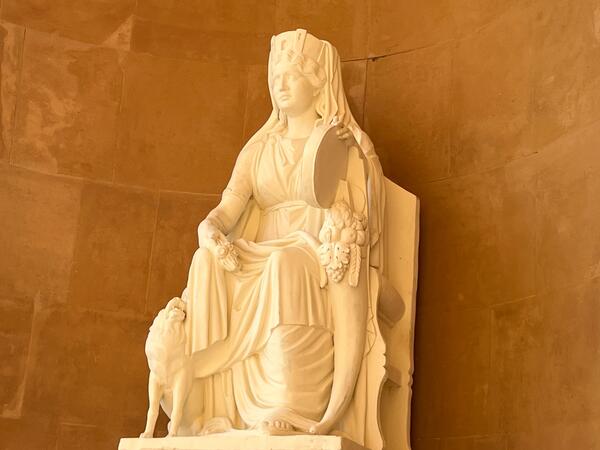
Recreation of the seated statue of Cybele. The mother goddess, with many of her attributes, each signifying a different role. She wears a crown in the form of a towered wall, a symbol of her role as protectress of cities. Her right hand holds a bunch of wheat and poppy heads, a symbol of her role as a goddess of agriculture. Her most famous attribute, the lion, sits at her feet, symbolizing her power over wild animals. In her left hand she holds a tympanum with a cornucopia below. This statue’s most unusual feature is its face, which belongs to an older Roman matron, not an idealized goddess. Wealthy Roman women would frequently commission portraits of themselves depicted as if they were goddesses. Cybele is an unusual choice, however, which may indicate that this woman was a priestess in the goddess’s service. Cybele’s cult was introduced to Rome in 204 B.C. from its home in the Near East. Worship in the cult included ritual flagellation and castration; it was initially discouraged for Roman citizens. By the time this portrait was created, however, many of the cult’s wilder aspects had been tamed or eliminated. This statue was brought by the 1st Marquess of Buckingham by 1777 from Gavin Hamilton, it was sold in the 1848 sale and is now at the Getty Museum in Los Angeles.
Enquire about Seated Statue of Cybele
Related Collection Items
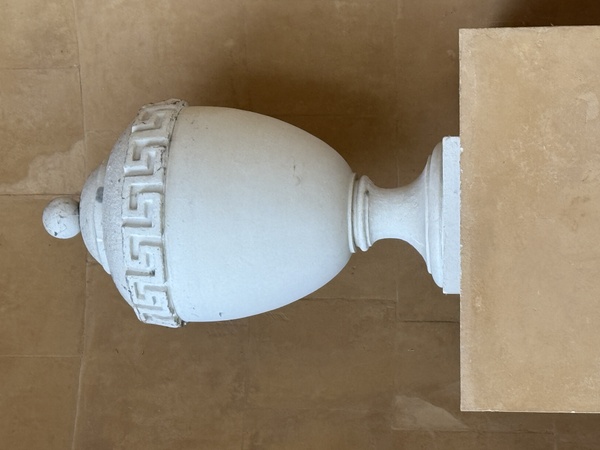
Seated Statue of Juno
Details
- Date
- 2025
- Author / Artist
- Dimensions
- 200cm
- Material
- Portland cement
- Catalogue number
- SHPT.39
- Current location
- South Portico
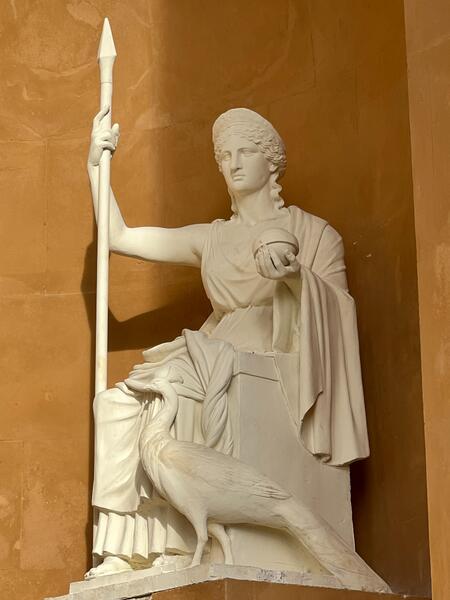
Recreation of the seated statue of Juno. Little evidence was able to be uncovered about the original seated Juno at Stowe, it was sold to Lady Glamis in the 1848 sale, listed as ‘the companion’ to Cybele. Like Cybele, Juno was first sculpted in clay with her positioning opposite to the of Cybele as we know that historically they sat opposite each other on the Portico. The orb and spear represent the universe over which Juno rules and her role as protector of Rome. The peacock represents Juno’s celestial domain, the eyes are the stars scattered accross the night sky.
Enquire about Seated Statue of Juno
Related Collection Items
Hercules and Antaeus
Details
- Date
- 2018
- Author / Artist
- Cliveden Conservation
- Dimensions
- 400cm
- Material
- Portland cement
- Catalogue number
- SHPT.40
- Current location
- South Portico
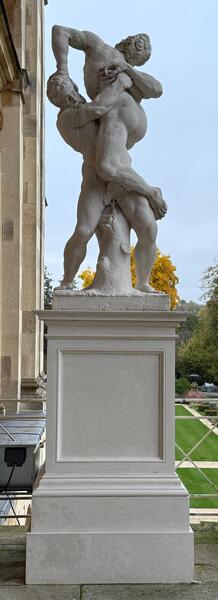
Hercules and Antaeus, copied from garden sculptures at St Paul’s Walden, originally at Stowe. In Greek mythology, Antaeus was the son of Poseidon and Gaia, and derived his strength from contact with the earth. Hercules defeats him by lifting him from the ground.
Enquire about Hercules and Antaeus
Related Collection Items
Samson slaying a Philistine
Details
- Date
- 2018
- Author / Artist
- Cliveden Conservation
- Dimensions
- 400cm
- Material
- Portland cement
- Catalogue number
- SHPT.41
- Current location
- South Portico
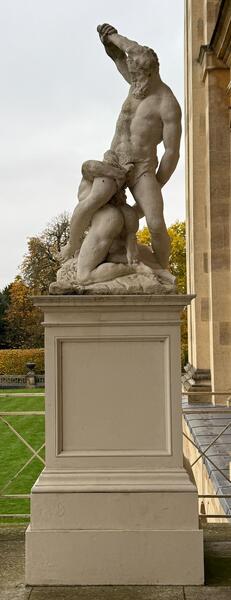
Samson slaying a Philistine, copied from garden sculptures at St Paul’s Walden, originally at Stowe. The motif of the piece, ‘Samson Slaying a Philistine’, is taken from an episode described in the Bible, in the Old Testament’s Book of Judges: ‘And he (Samson) found a new jawbone of an ass, and put his hand and took it and slew a thousand men therewith’.